Drone Wing Fix: A Beginner's Guide to Fixed-Wing Repairs
Step-by-step guide to diagnosing and fixing wing damage on fixed-wing drones. Practical tools, safe techniques, and beginner-friendly best practices today.


You will learn how to diagnose common wing damage on a fixed-wing drone and perform safe, effective repairs using standard tools. This quick guide covers visual inspection, material choices, alignment checks, quick fixes, and flight tests to verify airworthiness before your next mission. It emphasizes safety, proper hand tools, and when to seek professional help.
Why Wing Integrity Matters
A fixed-wing drone relies on the wing's structural integrity to generate lift and maintain balance in air. Even small cracks or delamination can distort aerodynamics, increase drag, or cause asymmetric loading that affects roll stability. For beginners, ignoring wing damage can lead to unpredictable behavior in flight, or worse, a loss of the aircraft. Regular visual checks before every flight are essential, especially after a hard landing or a rough landing on uneven terrain. The wing is not just a cover for electronics—it is a critical load-bearing component. Maintaining wing integrity extends flight time, preserves battery life, and reduces repair costs over the drone's lifespan. Prioritize conservative repairs and proper materials to minimize the risk of mid-flight failures and help new pilots build confidence while learning.
Diagnosing Common Fixed-Wing Wing Issues
Before attempting any repair, start with a careful assessment of symptoms and evidence. Look for visible cracks along the leading or trailing edges, sunken or wrinkled skin, delaminated layers, or loose fasteners at wing tips. Check for warping or bending caused by impact, which can alter camber and lift. If control surfaces on the wing show looseness or excessive play, do not fly until you fix or replace the hinge components. Inspect internal spars where accessible; cracks in the main spar are especially critical because they carry primary load during flight. A rapid test on a bench with gentle flex and twist can reveal hidden damage that may not be obvious at rest. Maintain a consistent inspection routine and document findings after each flight; this habit makes future repairs easier and safer for beginners.
Materials, Tools, and Safety Considerations
Repairing a fixed-wing wing uses a mix of common adhesives, patch materials, and basic tools. Essential items include a hex key set, a two-part epoxy or structural adhesive, sandpaper for surface prep, clamps or masking tape to hold parts during curing, replacement wing skin or spar sections, and PPE such as safety glasses and gloves. Optional items like CA glue or heat tools may help with small cracks or reshaping materials, but should be used sparingly and only if you understand their behavior with your wing material. Work in a well-ventilated area away from flammable materials and heat sources, and keep a clean workspace to avoid contaminating surfaces. Temperature and humidity can affect adhesive cure times, so plan repairs on a calm day if possible. Always have spare fasteners and matching screws ready in case wing joints require reassembly.
Repair Strategies: Patch vs Reinforce vs Replace
In many cases, amateurs opt for a patch or reinforcement rather than full wing replacement. A light crack along non-load-bearing areas may be repaired with epoxy and a patch layer that distributes stress. For skin delamination, surface prep, a bonding agent, and a carefully cut patch can reestablish camber; avoid thick patches that alter aerodynamics. If the main spar or rib is cracked, patching alone may be insufficient; consider replacing the compromised section using the original material if possible. For critical load-bearing areas, replacement of the affected panel or spar is often safer and more durable than a field repair. Document every repair with photos and notes, and test the wing on a bench before any flight attempt. Remember: a repaired wing should behave predictably under gentle flex and vibration; if in doubt, consult a professional or opt for a full replacement to maintain safety margins.
After-Care and Flight Testing
Begin with a static check: mount the wing in its normal position, verify balance, alignment, and hinge operation. Then perform a controlled, low-power taxi test on a prepared surface to observe takeoff behavior and wing flex. Do not attempt full flight until you are confident the repaired wing maintains straight flight with no unusual yaw or roll. After a few short flights, recheck all fasteners and inspect for new signs of stress. Log the repair in your maintenance notebook and schedule periodic inspections, especially after hard landings or rough weather.
Tools & Materials
- Hex/Allen wrench set(Include sizes 1.5mm–3.0mm for common fasteners)
- Two-part epoxy or structural adhesive(Choose a cure time that fits your workflow)
- Replacement wing skin or spar sections(Match material (CF/FRP) and thickness)
- Sandpaper (grit 120-400)(For surface prep and smoothing edges)
- Clamps or masking tape(Hold parts in place during cure)
- Safety gear (goggles, gloves)(Personal protection during adhesive work)
- CA glue (optional)(For small cracks or quick fixes)
- Marker or calipers(Mark cut lines and measure wing features)
- Heat gun (optional)(Only if reshaping or softening certain plastics)
Steps
Estimated time: 3-5 hours
- 1
Power down and secure the drone
Power off the drone and remove the battery. Secure the unit on a stable work surface to prevent movement during inspection. This reduces the risk of accidental startup or component damage while you assess the wing.
Tip: Always unplug and store the battery away from the workspace. - 2
Inspect and document damage
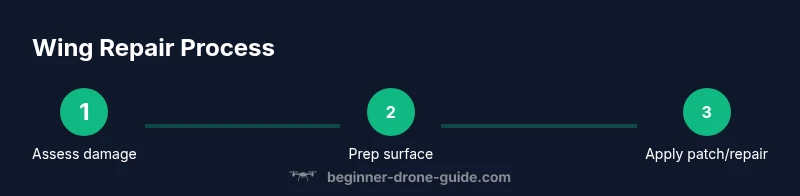
Carefully inspect all wing surfaces for cracks, delamination, or warping. Photograph and label exact locations to guide repair decisions. Note whether damage is near hinges or fasteners.
Tip: Use a ruler to measure crack length and keep photos with notes. - 3
Choose repair path
Decide between patching, reinforcement, or spar replacement based on damage location and load-bearing role. If in doubt about structural integrity, lean toward replacement or professional evaluation.
Tip: Prioritize structural integrity over cosmetic fixes. - 4
Prepare the surface
Clean the wing surface thoroughly and roughen edges with sandpaper to improve adhesion. Wipe away dust and ensure the area is dry before applying patch material.
Tip: Avoid overheating the surface; use light, even sanding. - 5
Apply patch or reinforcement
Cut a patch to overlap damaged area by at least 1 cm. Apply epoxy and bond patch, then clamp until cured. Ensure patch sits flush with the wing surface and does not cause new bends.
Tip: Check alignment against a mirror image wing if possible. - 6
Cure, reassemble, and test
Allow the adhesive to cure completely per product specs. Reassemble components and perform bench checks, then a controlled taxi test before flight.
Tip: Do not fly until static and bench checks pass.
Frequently Asked Questions
Is a fixed-wing wing repair safe for regular flight?
If the wing is repaired to a reliable strength and properly cured, bench-tested, it can be safe. Always verify with a controlled test flight before regular use.
Yes, but only after thorough bench testing and proper curing.
When should I replace a wing segment rather than patching?
Replace if cracks are near the spar, extend beyond a few inches, or compromise the overall structural integrity.
Replace when cracks threaten the structure; patches are often temporary.
What materials are best for wing patches on fixed-wing drones?
Use patch materials that match the wing’s construction, such as CFRP for carbon fiber wings or reinforced fabric with epoxy for traditional foam/wood wings.
Choose patch materials that match your wing's construction.
How long does a typical wing repair take?
Most repairs take several hours, including cure time and bench testing before a flight test.
A few hours from start to a cautious test flight.
Can I perform wing repairs myself as a beginner?
Yes, with careful assessment, proper tools, and safety precautions; start with non-load-bearing areas and gradually tackle more complex repairs.
Yes, with patience and the right safety steps.
Watch Video
Quick Summary
- Inspect wing damage thoroughly before repair
- Choose repair paths by structural importance, not cosmetic look
- Cure times and testing are essential before flight
- Maintain a repair log for ongoing safety