How to Fix a Broken Drone Wing: A Beginner Guide
Learn how to fix a broken drone wing with beginner-friendly steps, essential tools, safety tips, and when replacement is necessary. A practical, hands-on guide from Beginner Drone Guide.


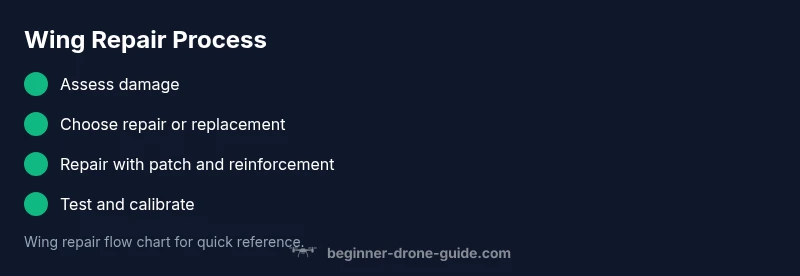
To answer how to fix broken drone wing, stop flying immediately and assess the damage. According to Beginner Drone Guide, for minor cracks or delamination you can perform a careful repair using approved adhesives or reinforcement, but for any structural compromise replacement parts or professional repair is recommended. Always consult the drone manual and observe safety guidelines before attempting any fix.
Assessing Damage and Safety for how to fix broken drone wing
Damage to a drone wing can range from cosmetic scuffs to structural cracks that compromise rigidity. Before attempting any repair, stop flying immediately and secure the drone in a stable, well-lit workspace. The goal of this assessment is to decide whether a simple field repair is possible or if the wing must be replaced and the drone taken out of service until a safe part is installed. Begin with a visual inspection: look for visible cracks along the main spar, delamination between skins and the core, bent or twisted ribs, or loose joints where the wing attaches to the fuselage. Gentle prodding with a non-metallic tool can reveal hidden delamination, but avoid forcing any material. If you discover deep cracks, significant warping, or a soft, flexible wing structure, treat it as a safety-critical issue and stop; avoid attempting a repair that could alter flight dynamics. When in doubt, consult the manufacturer’s maintenance guide or schedule a professional assessment.
Determining Repair vs. Replacement Options
Deciding between repair and replacement hinges on three factors: wing core integrity, the extent of damage, and how the airframe will balance after any fix. If the core is intact and the damage is localized to the skin or a small spar, a field repair or patch may restore strength. If the spar is cracked through, the rib is bent, or there is significant delamination, replacement parts are usually safer and more reliable. Always compare the repair’s estimated impact on weight, center of gravity, and flight characteristics. Remember, a lighter repair that preserves balance is generally preferable to a heavy, makeshift patch. In all cases, consult the aircraft manual or a qualified tech before committing to a permanent fix. If you’re unsure, plan for a replacement wing and professional evaluation to ensure flight safety.
Gather Tools and Materials
Before you begin, assemble a focused, lightweight toolkit and the replacement parts you will need. Essential items include precision screwdrivers, a replacement wing segment if available, appropriate adhesive (two-part epoxy or CA glue), lightweight reinforcement material (carbon fiber tape or fiberglass cloth), cleaning supplies (isopropyl alcohol), soft clamps or a jig for cure, fine-grit sandpaper, safety gear (gloves and eye protection), and small containers to organize hardware. Having everything ready minimizes delays and helps maintain safe working conditions. Keep a clean, flat workspace and ensure you have stable lighting. If you’re using a replacement wing, verify compatibility and part numbers with the manufacturer or trusted suppliers. For beginners, ordering OEM or officially certified third-party wings reduces fit issues and enhances safety.
Visual Inspection and Common Damage Patterns
Common damage patterns include hairline cracks along the bottom of the wing skin, small delaminations near the spar, and slight bending of the wing tip. Delamination occurs when skin layers separate from the core, which can worsen under flight loads. A thorough check also includes examining the wing root where it attaches to the fuselage—look for loosened screws, cracked reinforcements, or warped mounting points. Document each issue with photos and notes, as this helps determine whether a patch, scab repair, or full replacement is the best course. If you identify any moisture intrusion, corrosion, or signs of prior poor repairs, treat the situation with extra caution and consider professional assessment. Always clear the area of propellers and power down the drone before touching anything.
Adhesives and Reinforcement Options for Wings
Adhesive choice greatly affects repair durability. For lightweight, permanent fixes, two-part epoxy provides strong bonding and gap-filling properties, while CA glue (cyanoacrylate) can be used for small patches when cured with a compatible reinforcement backing. If you pursue a surface patch, reinforce with carbon fiber tape or fiberglass cloth to restore stiffness along the damaged region. Use a clean, controlled application: prep the surfaces with isopropyl alcohol, apply a thin, even layer of adhesive, press the patch or patch material in place, and allow full cure time per the manufacturer’s instructions. Avoid over-application, which adds unnecessary weight and can crack under stress. For foam cores or lightweight skins, consider protective covers or skins to distribute load and reduce stress concentrations at the repaired site.
Step-by-Step Repair Approach for Minor Damage
When damage is localized and the wing can still carry load safely, follow a careful patching workflow. 1) Power down and remove propellers; 2) Clean the damaged area and dry thoroughly; 3) Cut a patch from reinforcement material to cover the damaged region with a slight overhang; 4) Apply a thin layer of epoxy or CA adhesive to the area and the patch; 5) Press the patch firmly using clamps or a jig until cured; 6) Lightly sand the patch edges for a smooth transition and recheck alignment. Pro tip: document each step with photos for future maintenance. Warnings: do not over-apply adhesive; excessive glue can trap air and create weak spots. Ensure the wing returns to the correct alignment before the next step.
Replacing a Wing: When and How
If the wing core is compromised or structural crack propagation jeopardizes flight stability, replacement is often the safest option. Start by confirming part compatibility with the drone model and checking for availability through the manufacturer or trusted suppliers. Remove the affected wing section by disconnecting any fasteners, panel screws, or quick-release pins, and carefully align the new wing, ensuring the mounting points line up precisely with the fuselage. Tighten fasteners to the recommended torque and verify there is no play in the joint. After mounting, inspect the balance and symmetry to prevent asymmetric thrust or yaw during flight. If possible, consult service manuals or training resources to ensure you perform all steps correctly. Record the replacement data in your maintenance log for ongoing safety tracking.
Post-Repair Testing and Calibration
Begin with a thorough ground test before any flight. Inspect all control linkages, ensure wing mounting is secure, and verify the center of gravity remains within the manufacturer’s tolerances. If available, perform a tethered hover in a controlled environment to observe any vibrations, unusual sounds, or flexing at the wing joint. Check for smooth responses to control inputs across the full range of motion. Next, conduct a short, low-altitude flight in an open space, gradually increasing thrust while monitoring stability. If any abnormal behavior occurs, land immediately and re-evaluate the repair or replacement decision. Logging test results helps identify recurring issues and informs future maintenance decisions.
Documentation, Warranty, and Licensing Considerations
After completing repairs, document the work thoroughly: what was damaged, the tools used, adhesive brands and cure times, parts replaced, and photos of the repaired wing. This record is useful for warranty claims and for future maintenance planning. Check whether the repair affects any existing warranties and review the manufacturer’s terms. In many jurisdictions, drone repairs do not affect licensing by themselves, but continuing to fly a damaged airframe can raise regulatory or liability concerns. If you are working within a rental fleet or a school program, update the asset record and ensure all operators are informed about the repair.
Maintenance and Prevention: Reducing Future Wing Damage
Prevention is the best form of maintenance. Regular inspections after each flight, careful handling during transport, and avoiding aggressive maneuvers near hard surfaces can dramatically reduce damage risk. Store drones in protective cases with wings secured to prevent bending. Use proper boarding and take-off procedures, especially on rough terrain, to minimize impact forces on the wings. If your drone uses modular wings, consider keeping spare components on hand so you can quickly swap damaged sections instead of performing time-consuming repairs. Finally, keep a simple maintenance log with dates, observed wear, and any parts replaced to build a history that informs future decisions.
Tools & Materials
- Screwdrivers set (precision)(Phillips #0–#2 and flat-head, 1.5–3.0 mm tips depending on drone model)
- Replacement wing panel or wing segment(Same model/series as original)
- Epoxy adhesive (two-part) or CA glue(Lightweight, high-strength; consider UV-cured options)
- Reinforcement material (carbon fiber tape or fiberglass cloth)(0.5–1 inch wide, cut to patch size)
- Isopropyl alcohol (70%+)(For cleaning surfaces)
- Fine-grit sandpaper(Optional for smoothing edges)
- Clamps or jig for curing(Lightweight clamps or a dedicated alignment jig)
- Safety gear (gloves, eye protection)(Protect hands from adhesives and debris)
- Wing alignment tool (optional)(Helps ensure straight reinstall)
- Small parts tray or labeled bags(Keep screws organized by location)
Steps
Estimated time: Total estimated time: 60-120 minutes
- 1
Inspect damage and secure area
Power down the drone, remove propellers, and visually assess the wing for cracks, delamination, or deformation. Note all findings and mark any parts that look questionable. This step determines whether you can proceed with a minimal repair or need a full replacement.
Tip: Take photos from multiple angles to document the damage before disassembly. - 2
Remove damaged components
If the wing is modular, detach the damaged section using the appropriate fasteners. Keep hardware organized to ensure correct reassembly. Avoid twisting or forcing parts off, which can cause additional harm.
Tip: Label screws or store them in labeled bags by location. - 3
Prepare surfaces
Clean all bonding surfaces with isopropyl alcohol and let dry completely. Lightly roughen smooth edges with fine-grit sandpaper to improve adhesion, then re-clean to remove dust.
Tip: Roughening improves mechanical grip and long-term strength. - 4
Choose repair approach
Decide whether to patch and reinforce or replace the wing segment. For skin cracks or small delamination, patches with reinforcement are often sufficient; for deeper spar damage, replacement is safer.
Tip: Err on the side of safety—if any doubt remains, replace the wing. - 5
Apply adhesive and reinforcement
Apply a thin, even layer of epoxy or CA adhesive to the patch and underlying skin. Place the reinforcement material over the patch and press firmly. Hold with clamps until the adhesive cures according to the manufacturer’s timings.
Tip: Avoid excess adhesive that adds weight and creates stress concentrations. - 6
Reinstall and align
Reattach the wing segment with the original fasteners. Check alignment and symmetry with the other wing. Ensure there is no play at the joint and that the wing sits flush against the fuselage.
Tip: Use a small alignment jig if available to ensure straight mounting. - 7
Perform a ground test
Before flight, perform a bench test: move control surfaces through full range and verify there is no binding. If you replaced a wing, verify balance and CG within spec.
Tip: A tethered hover in a controlled space helps identify issues safely. - 8
Document and monitor
Record the repair details in your maintenance log, including parts used and cure times. Monitor the repaired wing during initial flights for any unexpected behavior or weakness.
Tip: Log dates, part numbers, and a brief performance note for future reference.
Frequently Asked Questions
Can I repair a cracked drone wing myself?
If the core remains intact and you have the right tools, a minor repair following proper guidelines can be attempted. For deeper damage, replacement or professional service is safer. Always consult the manufacturer manual before proceeding.
Yes, for minor cracks you can repair with proper adhesives, but major damage should be replaced. Always consult the manual first.
What materials are best for reinforcing a broken drone wing?
Lightweight carbon fiber tape or fiberglass cloth combined with a suitable adhesive provides strong reinforcement with minimal weight. Use patch sizes that cover the damaged area with a clear land-to-skin overlap.
Carbon fiber tape with epoxy or fiberglass cloth works well for reinforcement.
Is it safe to fly a drone after repairing a wing?
Only after thorough ground testing and a controlled, tethered flight. If there is any wobble, unusual vibration, or misalignment, stop and reassess the repair.
Fly again only after careful ground tests and a controlled flight. Stop if anything feels off.
Should I use OEM parts for wing replacement?
Yes, OEM or certified third-party wings ensure proper fit and performance. Mismatched parts can change balance and flight characteristics.
OEM or certified wings are recommended for best fit and safety.
What if the wing core is damaged?
If the core is compromised, replacement is usually required. Repairs may not restore original strength or balance, risking unsafe flight.
If the core is damaged, replace the wing to stay safe.
Do repairs affect warranty or licensing?
Repairs can affect warranty terms; check with the manufacturer. Licensing is generally unaffected unless safety-compliance issues arise.
Check warranty terms, and follow local rules when repairing.
Watch Video
Quick Summary
- Assess wing damage thoroughly before starting
- Choose repair vs replacement based on core integrity
- Use proper adhesives and reinforcement for strength
- Test safely with low-risk flight after repair
- Document repairs for future maintenance records