Why Would a Drone Follow Me at Night? A Practical Troubleshooting Guide
Learn practical steps to diagnose and respond when you suspect a drone is following you at night. This Beginner Drone Guide troubleshooting article covers safety, legality, reporting, and prevention.


Most often, a night-follow is from a nearby drone operator or a misperception caused by lights, reflections, or idle hover. Start by stopping, scanning for LEDs, and listening for propeller noise. Confirm you’re in a permitted area, keep visual contact, and avoid approaching. If you feel unsafe, document sightings and contact authorities.
Why would a drone be following me at night
If you’re asking why would a drone be following me at night, you’re not alone. According to Beginner Drone Guide, many nighttime sightings stem from ordinary drone activity or sensory misperceptions rather than planned stalking. In practice, a drone might appear to follow you due to a nearby operator conducting legitimate flights, high-contrast lights projecting onto your surroundings, or reflections from windows and vehicles. The phrase why would a drone be following me at night often reflects anxiety about privacy; in most cases the issue is safety or confusion rather than intent. Recognize that drones are common tools for photography, inspections, and even some recreational flights after dusk, which can create the impression of surveillance when you’re outdoors in low light. This context helps you stay calm and assess the situation without jumping to conclusions.
Nighttime drone behavior: what it could mean
Drones don’t always imply malicious intent. At night, limited visibility and point-of-light indicators can make a drone’s movements easier to misread. A nearby operator may be testing a new flight path, filming a scene, or performing a routine inspection. Reflections from streetlights, windows, or moving cars can also give the impression that a drone is shadowing you. Based on Beginner Drone Guide Analysis, 2026, most reported night-follow cases involve misperceptions rather than actual stalking. If you notice persistent or repeat behavior at the same location, it’s wise to reassess your flight area and local regs. This section helps you distinguish ordinary activity from something that warrants concern.
Quick checks you can perform right now
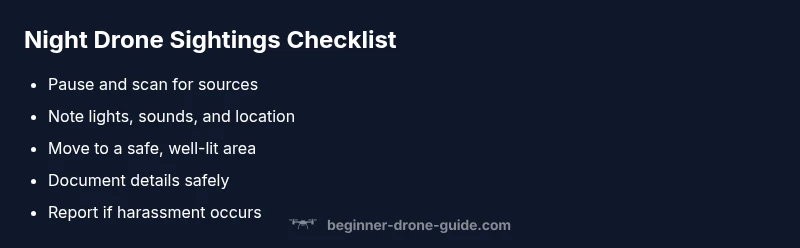
- Stop and look around slowly to identify any obvious drone sources nearby.
- Listen for faint propeller noise and scan for flashing LEDs from different angles.
- Note time, location, and weather; take photos if it’s safe to do so from a distance.
- Confirm you’re in a legal, open area with no restricted airspace or crowd restrictions.
- If there’s uncertainty, err on the side of caution and move to a safer, more populated area.
These checks reduce confusion and keep you in control while you assess the risk.
Safe actions to take if you feel unsafe
When you feel unsafe, prioritize personal safety over engagement. Do not chase or approach a drone. Move to well-lit, populated spaces and maintain line-of-sight with any aircraft. If you believe you’re being targeted, contact local authorities and aviation authorities with your observations, including time and location. Keep your devices ready to capture evidence such as videos or photos from a safe distance. If you’re in a flight area, follow the standard privacy and safety protocols and document any patterns that seem unusual.
Legal rights and reporting options
Drone privacy and airspace rules vary by country and region. In many places, operators must follow minimum distance rules and privacy protections. If a night-following incident feels invasive or persistent, report it to local law enforcement and, where applicable, aviation authorities. Provide the make/model details you can observe, approximate flight times, and the exact location. The report helps authorities distinguish casual flights from potential harassment or illegal activity. Remember that knowledge of your rights empowers you to act within the law.
Documenting sightings and preventing future incidents
Documentation is your best defense against ambiguity. Use a timestamped video or photo of the drone’s lights, note distinctive color schemes, and record the route if you can safely do so. Check local regs on reporting procedures and consider enrolling in a basic anti-harassment or privacy awareness course for drones. Practically, keep your own flight boundaries clear, fly in well-populated areas when possible, and avoid dusk hours where visibility is reduced. Over time, consistent behavior and careful documentation reduce fear and improve your confidence as a new pilot.
Steps
Estimated time: 15-30 minutes
- 1
Pause and scan surroundings
Stop moving, look around slowly, and listen for drone sounds. Identify lights from any aircraft and check for multiple sources.
Tip: Keep your feet planted; sudden moves can escalate risk. - 2
Identify the light pattern
Note the drone's LEDs, color scheme, and any color blinking patterns. Compare with standard drone light configurations to rule out misperception.
Tip: Take a quick photo from a safe distance if possible. - 3
Check your location and airspace
Ensure you’re not in a restricted zone or near crowd gatherings. Review local rules about dusk/dawn flights and privacy.
Tip: If you’re unsure, relocate to a busier, well-lit area. - 4
Document what you observe
Record time, location, weather, and any identifiable features. Save video or screenshots safely without approaching the drone.
Tip: Avoid sharing personal details in public posts about the sighting. - 5
Assess risk and decide next steps
If the situation feels unsafe or persistent, contact authorities. Do not engage or attempt to intercept the drone.
Tip: Trust your instincts; safety comes first. - 6
Review and learn for future flights
Note patterns, preferred flight times, and locations to avoid. Consider a basic privacy and safety course for drones to prevent recurrence.
Tip: Practice safe-fly practices to reduce anxiety.
Diagnosis: Person reports a drone appears to follow them at night
Possible Causes
- highNearby operator intentionally tracking or filming
- highMisperception due to lights, reflections, or glare
- mediumUnrelated drone in the area creating a false sense of following
- lowElectrical interference or misread sensors causing visual artifacts
Fixes
- easyStop, scan for other drones, and verify the source of lights/noise
- easyMove to a safe, open area and re-evaluate the situation from a distance
- easyDocument sightings with time, location, and any identifying features
- easyIf threatened or harassed, contact local law enforcement or aviation authorities
Frequently Asked Questions
Can a drone follow me at night legally, and what rights do I have?
Drone operations at night are governed by local airspace rules. In many areas, following you in a way that feels invasive can violate privacy or harassment laws. Check your jurisdiction for specific rights and remedies, and contact authorities if you feel threatened.
In many places, night following can breach privacy or harassment laws. Check local rules and contact authorities if you feel unsafe.
What should I do immediately if I feel unsafe around a night drone?
Prioritize your safety: move to a well-lit area, avoid approaching the drone, and contact local authorities with time, location, and observations.
Move to a safe, lit area and call for help if you feel unsafe. Have your sighting details ready when you report it.
Are my privacy rights protected from drone surveillance at night?
Privacy protections vary by country. Some regions require respect for reasonable expectation of privacy and prohibit harassment. Review local laws and consider reporting patterns to authorities if surveillance seems targeted.
Privacy rules vary by location. If you feel targeted, report it and review local laws.
How can I distinguish a legitimate drone operation from harassment?
Legitimate operations follow clear flight plans, posted notices, and operate away from crowds. Repeated, directed following, threats, or privacy violations are red flags and warrant reporting.
Look for flight plans and posted notices; repeated following is a red flag and should be reported.
What documentation should I collect after a sighting?
Record time, date, location, weather, and any drone identifiers or patterns. Save video or photos from a safe distance and share them with authorities if requested.
Keep a log with date, time, location, and screenshots or video when possible.
Watch Video
Quick Summary
- Pause, assess, and stay calm when a drone follows at night
- Document sightings and verify legal flight areas
- Do not engage or confront the drone
- Know your local laws and reporting options
- Report persistent or threatening behavior to authorities