How to Stop a Drone From Following You: A Practical Guide
Learn practical, legal steps to deter a drone that follows you. Create distance, document details, and report incidents to authorities with confidence.


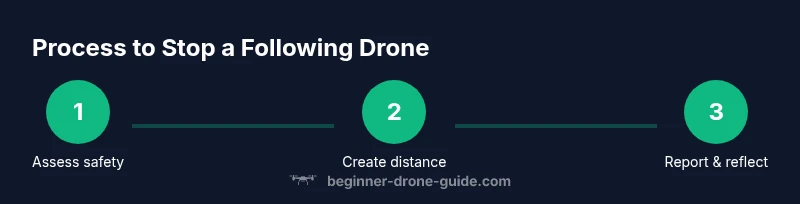
If a drone starts following you, prioritize safety and legality: calmly create distance, move to a public or populated area, and seek shelter indoors if feasible. Note identifying details (color, markings, altitude) and report the incident to local authorities or the property owner when appropriate. Do not attempt to jam, confront, or shoot the drone.
What it means when a drone follows you
According to Beginner Drone Guide, this behavior often signals a privacy concern, potential data collection, or a safety risk. Laws vary by jurisdiction, but many places prohibit following a person without consent or approaching too close. A following drone can create anxiety, disrupt outdoor activities, and raise questions about who is collecting information and why. In practice, you might encounter follows from marketing enthusiasts, local hobbyists, or private security teams who lack clear privacy controls. The most important takeaway is that you should prioritize personal safety and legal compliance while handling the situation. By understanding your rights and the drone's potential objectives, you can respond calmly and avoid escalating the problem.
Immediate actions you can take
- Stay calm and avoid sudden moves that could escalate the situation. Quick, erratic motions can make the drone's operator think you are resisting or trying to hide.
- Create distance by slowly stepping away in a direction that keeps you visible and away from crowds, roads, or other hazards.
- If you are near a safe place, move toward it—indoors, a vehicle, or a populated area where others can help.
- Do not attempt to touch, grab, or damaging the drone; this can be dangerous and may violate laws.
- If you can, take photos or notes of the drone and its markings for later reporting.
How to safely create distance without escalating risk
Distance reduces the operator's ability to capture useful images and lowers privacy concerns. Walk with your head up, maintain a steady pace, and avoid running. If the drone follows you indoors, close doors behind you and stay in a room with clear sightlines or cameras when available. Maintain awareness of your surroundings to avoid tripping or stepping into traffic. If you notice the drone is closing in, adjust your route toward open spaces with witnesses while keeping a non-threatening posture.
What to avoid: illegal or dangerous responses
Never attempt to jam or disable a drone with improvised devices. Interfering with a drone or threatening the operator can be illegal and dangerous. Do not engage in a confrontation; prioritize your safety and collect evidence through non-intrusive means, such as video or photos from a distance. Avoid following the drone into restricted airspace or attempting to physically stop it, which could put you at risk of legal penalties.
How to document and report the incident
Record details such as time, location, drone appearance, flight pattern, and any signage or operator hints. If safe, capture video from a distance; take multiple stills from different angles. Note weather conditions, as wind can affect drone maneuvering. Save any audio cues or requests you heard from the operator. Use your notes later when reporting to authorities, property owners, or a drone regulator. Documentation helps create a clear case and can support enforcement actions.
Privacy rights and legal options
Privacy laws differ by country, state, and local municipality. In many places, following someone without consent or filming in private spaces is restricted or illegal. If the drone is near your home or workplace, document incidents and consult local guidance on drone regulations. You can usually file complaints with aviation authorities, local police, or consumer protection agencies, and you may have civil remedies depending on jurisdiction. Always keep records of dates, times, and descriptions when pursuing legal options.
Preventive steps for future flights
Before you head out, know your rights and local rules about drones in your area. Consider wearing non-reflective clothing to avoid attracting glare, and choose routes that keep you away from potential conflict zones. If you own property, post privacy notices and use signage to deter unwanted surveillance. Practice with your own drone in safe, legal environments to understand how flight patterns work and how to respond calmly if you are approached by another operator.
Real-world scenarios and checklists
Scenario A: You notice a drone following you in a park. Action: Move toward a populated area, observe, and document details. Scenario B: A drone hovers near your home. Action: Seek shelter indoors if necessary, collect evidence, and report to authorities. Checklist: carry a charged phone, a small notebook, and a plan to reach safety quickly; note the drone's color, marks, altitude, and any audible prompts.
Security-minded mindset for pilots and bystanders
Develop a safety routine that includes airspace awareness, respect for others' privacy, and proper reporting channels. By staying calm and following legal procedures, both pilots and bystanders contribute to safer skies. Remember that most operators act responsibly; when you spot unsafe behavior, provide information to authorities and avoid escalating conflicts. The best outcomes come from measured, lawful actions.
Tools & Materials
- Smartphone with camera(Record evidence and contact authorities; keep timestamps and location.)
- Notepad or notes app(Document time, location, drone description, and behaviors.)
- Emergency contacts (local authorities, property owner)(Have numbers ready and accessible for quick reporting.)
- Water and comfortable clothing(Stay hydrated and comfortable during the incident.)
Steps
Estimated time: 15-25 minutes
- 1
Pause and assess safety
Take a deep breath and quickly assess the scene. Prioritize your safety and avoid any actions that could escalate the encounter. Determine whether you can safely distance yourself without entering a conflict zone.
Tip: Remain non-threatening and keep your hands visible to reduce misinterpretation. - 2
Create distance calmly
Slowly change direction to increase space between you and the drone. Do so in a straight, predictable path to avoid alarming the operator. Do not run or perform sudden movements that could be misread as aggression.
Tip: Keep the drone in your peripheral vision to anticipate moves without staring directly at it. - 3
Seek a safe area
If possible, head toward a populated area, a vehicle, or indoors. Shelter reduces exposure and can deter the drone from approaching further. Avoid entering restricted zones or crossing fences that create new hazards.
Tip: Time your move to maximize visibility; avoiding blind corners helps others notice the situation. - 4
Document without touching
Record key details from a safe distance: color, size, markings, altitude, and flight pattern. Capture short video clips and several photos from different angles. Note weather conditions as wind can influence drone behavior.
Tip: Hold your device steady and zoom only modestly to maintain image quality. - 5
Avoid confrontation
Do not threaten or physically challenge the operator. Do not attempt to grab or disable the drone; this can cause injury and escalate legal risk. Your goal is to de-escalate and exit safely.
Tip: If you can, position yourself between the drone and others to reduce risktakes. - 6
Report the incident
Share your evidence with the appropriate authorities or property owner. Include date, time, location, drone identifiers, and flight patterns. Follow up if you don’t receive a response.
Tip: Submit evidence to multiple channels if available (police, aviation authority, and local regulator). - 7
Learn and adapt
Review local drone regulations and your privacy rights after the incident. Use lessons learned to plan safer routes in the future and consider privacy signage for your property.
Tip: Keep a personal incident log to help with future reports and follow-ups.
Frequently Asked Questions
Is it illegal for a drone to follow me?
In many places, yes. Laws vary, but following someone without consent or filming private spaces can be illegal. Always check local regulations and document incidents for reporting.
Laws vary, but following someone without consent can be illegal. Check local rules and document the incident if it happens.
Can I legally stop a drone from following me on private property?
Interrupting or attempting to physically stop a drone is generally unsafe and may be illegal. Seek shelter and report the incident to authorities or property owners when appropriate.
Avoid physical interference; instead seek safety and report to authorities or the property owner.
What details should I collect if a drone follows me?
Note time, location, drone color and markings, altitude, flight pattern, and any audio cues. Photograph or video from a safe distance if possible.
Capture time, location, appearance, and behavior; keep it safe and distant.
Should I confront the drone operator?
No. Confrontation can escalate risk and may be illegal. Prioritize personal safety and rely on reporting channels.
No confrontation—stay safe and report the incident.
When should I contact authorities?
If you feel unsafe, the drone is violating your rights, or it’s repeat harassment, contact local police or aviation authorities and provide your documentation.
Call authorities if you feel unsafe or rights are violated.
How can I protect my privacy during future flights?
Understand local drone rules, avoid flying in restricted zones, and set clear boundaries for your property. Consider privacy signage and maintain open lines of reporting with authorities.
Know the rules, set boundaries, and report any issues promptly.
Watch Video
Quick Summary
- Create distance safely and avoid confrontation.
- Document details for reporting.
- Know your local drone laws and reporting channels.
- Do not attempt to jam or disable the drone.