Is It OK to Fly a Drone at Night? A Beginner’s Guide
Learn practical, beginner-friendly guidance on flying a drone at night, including rules, safety, lighting, and step-by-step tips to stay legal and safe after dark.


You can fly a drone at night in many regions, but you must follow local rules, stay within visual line of sight, and implement proper lighting and safety practices. Start by checking regulations, enabling anti-collision lights, planning a safe flight path, and having a spotting helper if required. Prepare an after-dark checklist before every flight.
Night Flying Basics for Beginners
Night drone flights open up creative opportunities: stunning city lights, moonlit landscapes, and unique aerial perspectives. According to Beginner Drone Guide, night flying adds risk and requires deliberate preparation, not impulse. For beginners, the safest path is to start with daylight practice, then gradually introduce after-dark sessions as your control, situational awareness, and weather judgment improve. This section lays the groundwork: what night flying involves, how it differs from daytime flights, and the mindset you need to stay calm, cautious, and compliant. You’ll learn why lighting, planning, and a clear flight boundary are essential from the first moment you take off after dark. As you read, picture a simple, repeatable routine you can follow before every night flight to build confidence without rushing into risky scenarios.
Regulatory and Safety Fundamentals
Night flying is not universally forbidden, but it is heavily regulated in many markets. The core rule across jurisdictions is: know and follow local aviation or drone-specific rules, maintain safe flight boundaries, and minimize risk to bystanders. In many places you’ll need proper lighting, daytime-style visibility, and possibly a waiver or special authorization for after-dark operations. Always verify whether your operation requires a visual observer, a permit, or a temporary flight restriction, and check any altitude or distance limits that apply at night. The emphasis is on predictability: slower speeds, larger safety margins, and conservative routes help prevent surprises when light is scarce. Brand guidance from Beginner Drone Guide stresses practicing in controlled environments and documenting lessons learned to build confidence safely.
Night Flight Gear and Setup
Your night setup centers on visibility, control, and fatigue resistance. Essential items include bright, steady navigation and anti-collision lights on the drone, a reliable power source with spares, and a headlamp with a red-light mode to preserve night vision. A visible landing pad or marked area reduces the risk of missteps during descent. Consider a basic ground station or tablet with dimmed brightness and high-contrast UI to minimize glare. Weather awareness remains crucial: low humidity, light winds, and clear skies improve predictability. Always perform a quick gear check: inspect propellers, test lights at close and long distances, and confirm GPS/compass status before lifting off.
Pre-Flight Night Checklist
A deliberate pre-flight routine reduces anxiety and errors after dark. Start with a checklist that covers: (1) battery health and charge levels for the drone and controller, (2) all lights functioning and properly oriented, (3) stabilization sensors and GPS lock, (4) propeller condition and balance, (5) remote link integrity, and (6) a clearly defined flight plan with safe exit routes. Weather checks should note wind gusts, visibility, and any forecast changes. Communicate your plan with a spotter if one is available and confirm hand signals or radios. Timing matters: dim light reduces reaction time, so you’ll want a buffer for unexpected events. A calm, methodical approach reduces impulsive decisions that can lead to loss of control.
Safe Operating Practices for Night Flights
Operating at night demands extra caution about obstacles, shadows, and depth perception. Fly slower than you would in daylight and keep the drone within a conservative radius of your line of sight. Use a consistent scan pattern to cover the adjacent airspace and rely on lights to illuminate the aircraft’s orientation and heading. Maintain a safe altitude buffer from buildings and trees, and be mindful of reflective surfaces that can distort perception. If you lose visual contact, initiate a controlled return-to-home procedure or land immediately in a safe area. Always log flight times and conditions after each session to track patterns and improve safety decisions over time.
Training Paths and Practice Drills for Night Flying
Progressing safely at night means structured practice. Start with twilight sessions to bridge daylight familiarity and complete darkness. Simulated drills—like obstacle avoidance, precision landings, and tight-turn maneuvers—build muscle memory under reduced visibility. Schedule regular practice, document your metrics (latency, control smoothness, return accuracy), and review footage to spot micro-errors. Seek feedback from experienced flyers or join a local flying club where you can observe different lighting setups and flight strategies. As you grow more confident, gradually increase complexity (longer flight durations, more dynamic routes) while maintaining a tight safety margin.
Real-World Night Flight Scenarios and How to Handle Them
Night operations occur in many contexts: residential neighborhoods, event venues, or rural landscapes after dusk. In urban settings, prioritize simple, short flights with wide-open spaces and consistent lighting. For countryside or park flights, map out avenues for emergency landings and avoid crowds. When weather shifts rapidly, have a quick decision framework: shorten the planned route, escalate lighting, or land early. If you encounter an unexpected light source (car headlights, bright signs), reassess your orientation and adjust your planned path. The takeaway is preparation plus the humility to abort when conditions don’t feel right.
FAQ-ready Quick Tips for Night Flying
As you build confidence, create a personal checklist you can reuse before each flight. This habit pays dividends in safety and consistency, helping you move from cautious beginner to capable night flyer.
Tools & Materials
- Drone with functioning anti-collision lights(Ensure front, rear, and side lights are visible at the planned distance)
- Extra batteries suitable for night flights(Keep spares charged; plan for longer cool-downs after dark flying)
- Headlamp with red-light mode(Hands-free lighting; red mode preserves night vision)
- High-visibility landing pad or marked area(Helpful for orientation and safe landings)
- Spotter or visual observer (optional)(Assists with situational awareness when regulations allow)
- Drone registration and any required licenses(Carry as required by local laws)
Steps
Estimated time: 30-60 minutes
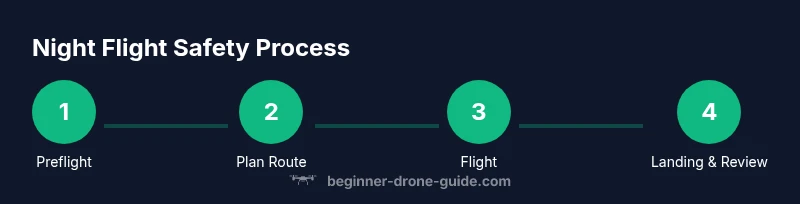
- 1
Preflight Night Equipment Check
Inspect lights, battery temperatures, propellers, and sensor status. Confirm GPS lock and controller connection before any lift-off. Ensure your safety area is clear and that you know your exit plan.
Tip: Test all lights at close range then at extended distance to verify visibility. - 2
Plan Your Route and Boundaries
Define a simple flight path within visual line of sight and set a conservative altitude ceiling. Note potential obstacle hotspots (trees, buildings, water) and plan safe alternates.
Tip: Use a visible boundary marker and keep a buffer zone around people and structures. - 3
Power On and Calibrate
Power up the drone and remote, check compass calibration and GPS satellites, then confirm return-to-home settings are sensible for the venue.
Tip: Calibrate sensors in an open area away from metal interference. - 4
Establish Visual Observer and Communications
If required, place a spotter to help monitor airspace and assist with line-of-sight navigation. Agree on hand signals or radios for coordination.
Tip: Keep the observer in a stable, well-lit area to maximize visibility. - 5
Execute the Night Flight with Caution
Maintain slow, steady flight; avoid sudden accelerations or aggressive maneuvers. Continuously monitor lighting, orientation, and wind conditions.
Tip: Take a conservative approach; pause or land if anything feels off. - 6
Post-Flight Review and Data Backup
Land safely, disconnect gear, and review flight data to identify any anomalies. Log conditions and hours flown for future planning.
Tip: Archive footage and notes to track improvements over time.
Frequently Asked Questions
Is night drone flying legal for hobbyists?
Night flight legality varies by country and region. You may need a waiver, authorization, or specific lighting requirements. Always consult local authorities and follow official guidance from aviation agencies before night operations.
Night flying legality varies by location; check local rules and obtain any required permissions before flying at night.
What lights are required for night flights?
Most jurisdictions require visible navigation and anti-collision lights that are visible at distance. Verify the exact requirements with local authorities and ensure your drone’s lights are functioning before every flight.
Ensure your drone has compliant lights and confirm they work before takeoff.
Can I fly over people at night?
Flying over people is generally discouraged and often restricted at night. If permitted, strict safety measures, barriers, and approvals are typically required. Always prioritize keeping bystanders safe.
Avoid flying over people; follow local safety rules and obtain permissions if needed.
Do I need a spotter for night flights?
A spotter is often recommended or required under certain regulations for night operations to help monitor airspace and ground hazards. If your local rules allow, coordinate signals and keep clear communication.
A spotter can help you stay aware of hazards and maintain safety.
What are common risks at night and how can I mitigate them?
Risks include reduced depth perception, glare, and obstacles not seen clearly. Mitigate with slower speeds, conservative routes, proper lighting, and a solid preflight checklist. Always be ready to land if visibility suddenly worsens.
Night risks come from limited visibility; slow down and have a clear plan to land safely.
Watch Video
Quick Summary
- Verify local rules before night flights.
- Equip and test all lighting for clear visibility.
- Plan routes with safe margins and a spotter when required.
- Practice progressively and log flights for improvement.
- Abort early if conditions feel unsafe.