How to Know If a Drone Is Watching You: A Practical Beginner Guide
Learn practical, beginner-friendly steps to identify potential drone surveillance, differentiate activity, and respond safely and legally. This guide covers visual and audio cues, documentation, and privacy rights for responsible drone use in 2026.


This quick answer helps you know how to know if a drone is watching you. Look for persistent drone presence, repeated passes, and audible buzzing; then review local laws and report suspicious activity if needed. This guide, with steps you can take safely, is based on Beginner Drone Guide recommendations.
What “watching” really means in the drone world
From a privacy and safety perspective, the phrase how to know if a drone is watching you covers more than just a camera pointed in your direction. Drones may collect video or still images, track movement, or simply hover to observe an area. The Beginner Drone Guide team notes that surveillance can be passive (monitoring a scene) or active (recording data with intent). According to Beginner Drone Guide analysis, 2026 marks a turning point where more everyday drones include integrated cameras and increasingly capable sensors. This section helps you understand the spectrum of drone activity and how it relates to your privacy and safety.
The distinction between a curious neighbor with a hobby drone and a potential surveillance operation matters. Treat ambiguous situations seriously but avoid panic. You’re learning to read the behavior, not to assign blame without evidence. Keep in mind that most drones operate within legal boundaries and with consent in many contexts; misuse of this information undermines legitimate use cases like search-and-rescue or real estate filming.
Further, remember that assessing drone activity is a safety and privacy practice, not a confrontation. Use information from trusted sources, like local regulations and community guidelines, to interpret what you observe.
Visual cues that often indicate drone activity
Visual cues are the most immediate way to assess whether a drone is watching you. Here are the signs to watch for, with practical notes on interpretation:
- Persistent presence in the sky over a particular area, especially if the drone seems to linger near windows or outdoor spaces you frequent. Do not assume surveillance, but note the location and times.
- Repeated passes along predictable flight paths—same route, same altitude, same speed—over several minutes or days. Repetition can indicate a pre-planned observation pattern.
- Hovering at a consistent distance with minimal lateral movement for an extended period. This often indicates a focus on a specific zone rather than casual flight.
- Clustering of drones around a single event (festivals, sports, or public gatherings) where privacy expectations are lower but can still involve legitimate coverage. Distinguish this from targeted behavior by noting timing and proximity.
Actionable takeaway: log dates, times, directions, and the approximate altitude when a drone appears. This helps establish whether activity is random or targeted. — The Beginner Drone Guide team emphasizes documenting consistent cues to avoid misinterpretation.
- Visible safety markers: a drone operator may display regulatory compliance signs or safety gear; this isn’t conclusive, but it can help you assess intent.
Auditory cues and environmental context
Sound plays a crucial role in recognizing drone presence, especially when visibility is limited. Typical cues include a steady, high-pitched rotor whine or multi-rotor hum that remains audible even when the drone is far away. In crowded urban environments, ambient noises (traffic, wind, air conditioning) can mask drone sounds, so rely on multiple indicators rather than sound alone.
Look for synchronization between the sound and a visible drone, such as a rotor speed that matches a distant object’s movement. If you notice a drone despite no clear line-of-sight, look for vibration in nearby trees, flagpoles, or structures—sound can travel and reflect, giving you a false sense of proximity. Remember: audio cues alone are not proof of surveillance, but they strengthen your situational awareness when paired with visual cues.
Flight pattern analysis: endpoints, loitering, and trajectory
Understanding flight trajectories helps you differentiate routine activity from potentially targeted surveillance. Key patterns to document include:
- Loitering at or near entrances, windows, or outdoor seating areas for longer than typical recreational use would warrant.
- Return-and-patrol sequences: a drone returns to a specific point and then resumes a similar path toward your location, suggesting a mapped route.
- Altitude stability around human activity zones; unexpected climbs to higher altitudes may indicate different objectives or safety considerations.
Practical approach: map observed flights onto a rough grid, noting the drone’s headings and any changes in altitude. This visual logging supports a rational assessment rather than guesswork, a point highlighted in Beginner Drone Guide analysis.
Differentiating neighbor hobby drones from potential surveillance
Not every drone is a surveillance tool. Many neighbors or hobbyists fly small, quiet models for fun or photography. Distinguishing these benign drones from suspicious activity hinges on scale, behavior, and intent:
- Benign hobby drones typically follow casual, variable patterns, hover briefly, and appear during daylight hours without targeting specific zones.
- Suspect activity may include steady, persistent observation of your property, unusual flight times (late evenings or early mornings), or deliberate proximity to private spaces.
- Commercial or media pilots may follow predictable routes and use larger drones with longer flight times; this may be legitimate, particularly if you’re near sanctioned filming sites. In ambiguous cases, document and seek official guidance rather than confronting the operator.
Practical insight: maintain a calm, factual log of observations and compare them to local privacy expectations and airspace rules. The Beginner Drone Guide team stresses documentation before taking action.
Documenting activity safely: how to collect credible evidence
If you suspect drone activity, build a credible, non-confrontational record. This supports a legal or regulatory response without escalating the situation:
- Time-stamped notes: record date, time, location, weather, and the drone’s approximate distance and altitude. Use your phone’s GPS and a compass app if available.
- Visual evidence: capture photos or short videos when safe and permissible. Avoid recording people’s faces without consent where laws require privacy protection.
- Contextual details: note nearby events, construction sites, or other legitimate drone activity for comparison.
- Non-communication: do not approach or engage the operator; instead, report to property management, local authorities, or aviation authorities where appropriate.
As you document, consider privacy and safety: focus on behavior, not on the operator’s identity, unless you have clear lawful grounds to identify them. This aligns with recommended practices from Beginner Drone Guide.
Legal and safety considerations: privacy rights and regulations
Your privacy rights in the presence of drones vary by jurisdiction. In many places, there’s a distinction between general privacy expectations on private property and permitted aerial observation under airspace rules. A foundational step is to acquaint yourself with local laws and how they intersect with privacy protections. If you feel your rights may be violated, contact the relevant authorities and stakeholders calmly and with documentation. The FAA, local police, or privacy commissions can provide guidance on what constitutes acceptable drone activity in your area. The Beginner Drone Guide analysis notes that staying informed about regulations in 2026 is essential for responsible drone usage.
Safety comes first: never attempt to physically interfere with a drone, and avoid confronting operators directly in a way that could escalate to a danger. If you’re in immediate danger or believe a crime is occurring, contact emergency services.
Tools, apps, and practical detection options (what’s helpful and what isn’t)
Beyond observation, several tools and practices can support your assessment without crossing legal lines:
- Basic tools: a smartphone with camera, compass, and a notepad. These enable you to document location, direction, and time with minimal disruption.
- Community resources: neighborhood watch groups or local authorities may provide guidance on privacy concerns related to drones. Be sure to follow the appropriate channels rather than sharing sensitive footage publicly.
- Detection aids: there are consumer devices and services that claim to help detect drones, but use them cautiously and legally. They should complement, not replace, official reporting and privacy measures.
- Safety-first approach: if you feel unsafe, prioritize moving to a secure area and contacting authorities rather than pursuing the drone or operator.
The content here is designed to be practical and legally cautious, drawing on general best practices and the Beginner Drone Guide’s guidance for 2026.
Real-world scenarios and recommended actions
Scenario A: A drone hovers near a backyard during a weekend; there’s no obvious video capture. Action: observe, log times, and verify local rules. If activity persists, contact building management or local authorities with your notes. Scenario B: A drone approaches closely at dusk while you’re outside; you feel uncomfortable. Action: retreat indoors, document with timestamps, and report the incident if it continues or escalates. Do not confront the operator. Scenario C: A film crew with permits is near a public event and drone activity is expected. Action: comply with posted rules, respect privacy boundaries, and report only if you believe private individuals are being targeted. Each scenario emphasizes calm, documented responses and lawful channels for escalation. The Beginner Drone Guide team emphasizes predictable, safety-oriented actions over confrontation, especially in ambiguous situations.
Quick-start privacy and safety checklist
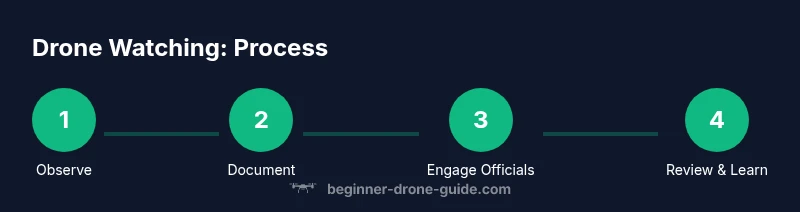
- Observe and log: record times, locations, directions, and any notable patterns.
- Do not engage: avoid confrontation; prioritize personal safety.
- Verify regulations: learn local rules about drone operations and privacy protections.
- Report when needed: contact authorities with your documentation if you believe laws are being violated.
- Review practice: revisit your privacy and safety plan after any incident to refine your approach for the future.
Tools & Materials
- Smartphone with camera and location services(For documenting activity with timestamps and geolocation.)
- Notepad and pen(Manual logs of times, directions, weather, and impressions.)
- Binoculars or monocular (optional)(Can aid in distant observation without approaching the site.)
- Voice recorder app (optional)(Record descriptions of events if legal in your area.)
Steps
Estimated time: 60-90 minutes
- 1
Observe from a safe distance
Begin by taking a non-intrusive look at the airspace where activity is occurring. Note the drone’s presence, altitude, and direction from a safe location. Avoid approaching the operator or intruding on private space.
Tip: Keep your own safety and that of others as the top priority. - 2
Record initial cues and patterns
Start logging the date, time, approximate location, and any flight patterns you notice. If you can do so safely, capture a short clip or photo for reference, staying mindful of privacy laws.
Tip: A quick, regular log helps establish if the drone’s activity is patterned. - 3
Assess legality and safety context
Check whether there are posted regulations or event permits that explain drone activity in your area. Compare observed behavior to those rules rather than making assumptions.
Tip: Legal guidance matters as much as personal safety. - 4
Document details with minimal intrusion
Use your phone, notepad, and basic camera to document only what’s necessary and lawful. Focus on the drone’s behavior rather than the operator’s identity.
Tip: Avoid filming people without consent where it’s restricted. - 5
Seek official guidance if concerns persist
If the activity continues and you believe privacy is at stake, contact local authorities or property management with your notes and recordings.
Tip: Present your evidence calmly and factually. - 6
Avoid confrontation or escalation
Do not attempt to stop the drone or confront the operator. This could be dangerous or unlawful and often undermines your own safety.
Tip: Stay in a safe area and communicate with authorities. - 7
Review and refine your plan
After any incident, review what you observed, how you documented it, and whether you need to adjust your privacy plan or reporting channels for the future.
Tip: Iterate to improve safety and privacy compliance. - 8
Share insights with a community
If appropriate, discuss patterns with neighbors or local drone clubs to better understand typical drone activity in your area.
Tip: Community awareness helps everyone stay informed.
Frequently Asked Questions
What counts as suspicious drone activity near my property?
Suspicious activity includes persistent hovering, repeated passes over private spaces, late-hour flights, or drones approaching windows or outdoor spaces without clear legitimate purpose. If such behavior occurs, document it and consult local regulations or authorities.
Look for drones lingering near private areas, repeated passes, or odd flight times; document and seek guidance from authorities if it continues.
Can a neighbor legally fly a drone over my property?
Drone laws vary by country and state. In many places, pilots must follow airspace rules and respect privacy boundaries; flying over private property without permission may raise privacy concerns. Check local regulations and request information from the operator if appropriate.
Drone legality varies; check local airspace rules and privacy laws, and contact authorities if you think laws are being violated.
What should I do if I feel my privacy is invaded by a drone?
Document the incident with time, location, and any evidence, then report to the appropriate authorities or property management. If possible, notify the operator politely and through proper channels, avoiding confrontation.
If privacy is invaded, log details and report to the right authorities; avoid direct confrontation.
Are there safe, legal ways to detect drones?
There are legitimate detection tools and community resources designed to raise awareness of drone activity. Use them as part of a broader safety plan and always comply with laws when recording or sharing information.
Some tools help you be aware of drones, but always follow local laws when using them.
Do privacy laws differ by country for drone use?
Yes. Privacy and drone-use regulations differ widely by country and even within regions. Always check local statutes, and consult official sources to understand what is permitted and what rights you have as a resident.
Privacy laws differ by location; verify local rules and rights before taking action.
Watch Video
Quick Summary
- Observe, log, and contextualize drone activity
- Document safely and legally with timestamps and notes
- Know your local privacy laws and airspace rules
- Do not confront operators; involve authorities when needed
- Regularly update your privacy plan based on incidents