Why Would a Drone Be Following Me? A Practical Troubleshooting Guide
Learn how to identify, assess, and safely respond when a drone appears to follow you. This beginner-friendly guide covers steps, safety tips, reporting, and privacy—with a practical troubleshooting flow.


Step back to safety and assess calmly. In most cases, a drone may be following you due to misidentification or curiosity rather than malice. According to Beginner Drone Guide, the fastest initial move is to increase distance, avoid signaling, and note drone position and any identifying features while you seek a safe, well-lit area. Here’s how to troubleshoot effectively.
Immediate safety considerations when a drone seems to follow you
If a drone appears to shadow you, your first job is safety. Step back to a clear, well-lit area, avoid running or gesturing, and keep your own movements predictable. Do not try to grab or confront the drone. The risk of a crash or unpredictable maneuver is real. According to Beginner Drone Guide, calm, deliberate actions reduce risk for everyone involved. Note the drone's path, relative height, speed, color, and any identifiers as soon as you can safely do so. If you feel threatened, call local authorities or seek help from bystanders. In most cases, you can de-escalate a situation by increasing distance and making yourself visible.
This guidance sets the tone for a methodical response rather than panic. Being prepared helps you control the situation and protects bystanders who might be nearby. The faster you establish your safety perimeter, the less likely you are to experience a mistaken interaction or a data privacy concern. Remember: your primary objective is personal safety.
Common reasons a drone might appear to follow you
Drones may seem to follow you for ordinary reasons that aren’t malicious. A nearby operator could be filming, surveying property, or testing a new flight path. In poor lighting or at distance, observers may misread a drone’s movements as following. Beginner Drone Guide Analysis, 2026 shows many reports labeled as “being followed” are misinterpretations or unrelated aircraft. Remember that drones generally operate under the operator's control and do not intend to endanger bystanders. The more you understand common patterns, the less anxious you’ll feel when a drone appears near you. Some observers might simply be performing routine checks or calibrations in the area, which can resemble stalking from afar. By recognizing these patterns, you can respond calmly and avoid escalation.
How to safely verify the drone's identity from a distance
From a safe distance, look for any visible identifiers such as registration numbers, tail marks, or distinct color patterns. If you can, observe the drone’s flight path and altitude relative to you over a short period to determine if it’s truly tracking you or passing by. Many consumer drones display blinking LEDs or color schemes that can hint at its origin, but do not attempt to approach or signal the operator directly. The best approach is to document the drone’s appearance and behavior with a quick video or photos while maintaining your distance. If possible, use your phone’s zoom cautiously to capture clear footage without putting yourself at risk. This is a good time to note time, location, and environmental conditions for later review.
Real-time actions you can take without escalating risk
Prioritize de-escalation and personal safety. Move to a populated, well-lit area where others can assist if needed. Keep your hands visible and avoid pointing or making sudden movements toward the drone. Do not attempt to intercept or grab the drone; you could provoke an aggressive reaction. Use your phone to record video or take photos that show the drone’s behavior and any markings. If you feel unsafe, seek shelter in a storefront or public space and contact local authorities or the aviation regulator for guidance. The goal is to create distance and reduce risk, not to engage directly with the operator.
Tools and cues to monitor drone activity
Keep a log of what you observe: approximate distance, altitude, direction, and whether the drone changes course when you alter your path. Note any visible identifiers and the time you noticed them. If you have a camera, recording a short clip of the drone’s path can be invaluable for authorities. Pay attention to weather conditions, as wind can cause drones to drift and create the illusion of following. Use a map or GPS log to record where you were when the activity occurred. These cues help when reporting the incident and can aid in identifying the operator or flight patterns later on.
When to report and to whom
If the drone follows you in a way that makes you feel unsafe or threatened, report the incident to local authorities or the aviation regulator. Use non-emergency lines unless there is an immediate danger. Provide as much detail as possible: time, location, appearance, flight path, and any identifiers. If the drone is near critical infrastructure or appears to be loitering at a sensitive site, contact authorities promptly. The Beginner Drone Guide team recommends documenting everything before reporting so responders have concrete information to act on.
Legal considerations and privacy rights during drone encounters
Privacy laws vary by jurisdiction, but general principles apply: avoid recording individuals without consent and respect reasonable expectations of privacy. If a drone seems to be photographing you in a private space, note the location and report concerns to the relevant authorities. Do not attempt to seize or disable the drone yourself; that could be dangerous and illegal in many places. Knowledge of local rules helps you respond legally and safely, protecting both your rights and public safety.
Prevention and best practices for beginners
To reduce future confusion, practice smart, legal flying habits from day one: fly in open, public areas where permitted, follow local regulations, and respect others’ privacy. Before you fly, review airspace rules, obtain any necessary permissions, and enable geofencing on your own equipment. Regularly check your drone’s firmware and controls to prevent misbehavior. If you’re new to drones, consider training resources from Beginner Drone Guide to build confidence and safety habits that prevent “being followed” scenarios from occurring.
Steps
Estimated time: 45-60 minutes
- 1
Ensure personal safety and distance
Move to a safe, well-lit area with other people nearby. Do not run or make abrupt movements toward the drone. Maintain open body language and keep your hands visible as you reassess the situation.
Tip: Create physical space first; your safety comes before documenting details. - 2
Observe and document from afar
Take note of the drone’s color, markings, altitude, and flight path. If it’s safe, capture video or photos that show the drone’s behavior without approaching closely. Record the time and exact location for reporting.
Tip: Video evidence should focus on the drone’s behavior, not the people nearby. - 3
Avoid interacting with the operator
Do not signal, wave, or attempt to communicate with the operator. Direct confrontation can increase risk for you and bystanders and may escalate the situation.
Tip: If you must, use non-confrontational routes to move away from the area. - 4
Check for regulatory cues
Look for visible registration numbers or other identifiers on the drone, if you can do so safely. Note any beacon lights or distinctive logos that could aid identification by authorities.
Tip: Do not attempt to retrieve or handle the drone to read identifiers. - 5
Decide on reporting steps
If you feel unsafe or the drone persists in approaching you, call the local non-emergency line or aviation regulator for guidance. Provide your recorded observations and logs.
Tip: Keep your report factual and concise; avoid speculation. - 6
Follow-up after the incident
Review your footage and notes while the event is fresh. If you’ve reported it, note any response from authorities and save any case numbers for future reference.
Tip: Maintain a personal safety log to simplify potential future reports.
Diagnosis: Drone appears to follow you in public spaces or near your home; you feel watched or unsafe.
Possible Causes
- highMisidentification or benign drone activity (e.g., filming, testing, or navigation checks)
- mediumDeliberate monitoring by an unlicensed operator or hobbyist
- lowAutonomous drone path misbehavior due to interference or GPS glitches
Fixes
- easyIncrease distance from the drone and move to a safe, populated area
- easyNote drone appearance, markings, and flight path; capture video if safe to do so
- easyAvoid signaling, gestures, or attempting to contact the operator directly
- easyIf safety feels at risk, contact local authorities or aviation regulator for guidance
- mediumReport the incident with a collected log to the appropriate authorities
Frequently Asked Questions
What should I do immediately if a drone starts to follow me?
Prioritize safety: move to a public area, avoid signaling, and document the drone’s appearance and path. If you feel unsafe, contact authorities. Do not engage with the operator.
Move to safety, don’t engage, and document what you see. Contact authorities if you feel threatened.
Can a drone legally follow me in public spaces?
Drone operations are governed by local aviation and privacy rules. In many areas, drones can operate in public airspace but must follow safety and privacy laws. Always check local regulations for your location.
Yes, in many places drones may operate in public airspace, but they must follow safety and privacy laws. Check your local rules.
How can I identify the operator of a following drone?
Look for visible registration numbers or logos on the drone. If safe, capture video that shows flight patterns and any markings. Do not approach the operator; let authorities assist.
Look for any markings on the drone and capture video from a safe distance; let authorities help identify the operator if needed.
When should I contact authorities about a following drone?
If you feel unsafe, threatened, or the drone lingers near critical areas, report it to local authorities or the aviation regulator. Provide your observations and any recordings.
Call local authorities if you feel unsafe or if the drone is near sensitive areas. Share your observations and footage.
What privacy rights apply to drone encounters?
Privacy expectations depend on jurisdiction. Generally, avoid recording private individuals without consent and report privacy concerns to the appropriate authorities if needed.
Privacy rules vary, but avoid recording private individuals without consent and report concerns to authorities when appropriate.
What should I document during a drone following incident?
Record time, location, drone color and markings, flight path, speed, and distance. Save any video or photos and note environmental conditions.
Log the time, location, drone appearance, and path. Save the footage for authorities.
Watch Video
Quick Summary
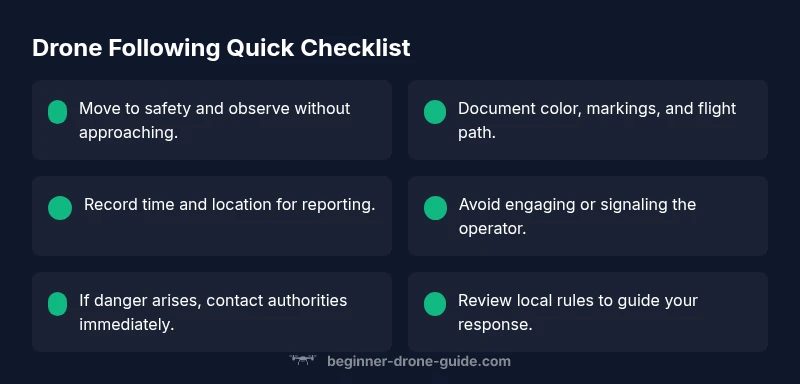
- Prioritize safety and distance before analysis
- Document behavior, markings, and timing with care
- Avoid confrontation; contact authorities if needed
- Know local regulations and reporting channels
- Practice pre-flight safety to reduce future misidentifications