What to Do If a Drone Follows You: Practical Guide
Learn practical steps to stay safe when a drone follows you. This beginner-friendly guide covers immediate actions, documentation, reporting, and privacy tips.


If a drone is following you, stay calm, avoid confrontation, and move to a safe, public area. Do not try to touch or interfere with the drone. Note its location, identify the operator from the drone’s display or witness accounts if possible, and report the incident to local authorities or aviation authorities as soon as you’re safe.
What counts as a drone following you and why it matters
When a drone seems to keep turning toward you or shadow your movements, it’s often a sign of potential risk or privacy concern. According to Beginner Drone Guide, staying calm and following a clear plan reduces risk and helps authorities understand what happened. This isn’t just about losing sight of a device; it’s about ensuring your safety and protecting your personal space in both public and semi-private environments. A drone that tracks you may be seeking to capture footage, collect data, or simply test flight patterns. By recognizing patterns—consistent proximity, repeated approach, or sudden turns toward your path—you can decide whether to disengage, seek shelter, or report the incident. Remember, your safety comes first, and escalation is safer when done with witnesses and documentation. Begin with a steady mindset, observe without staring, and avoid provoking the operator in any way.
In this section we’ll distinguish between casual proximity (drone passes by) and intentional following (drone maintains pace or shadows you). The line matters because accidental close passes may result from benign factors like a skilled pilot practicing in the same area, while deliberate following can pose privacy and safety risks. The Beginner Drone Guide team emphasizes that you should treat any following behavior as a potential threat and act conservatively—not aggressively. The goal is to create distance and get help if needed while preserving your own safety and rights.
Immediate safety steps to take the moment you notice a following drone
The moment you notice a drone is following you, initiate your safety plan. First, slow down and avoid running, which can provoke erratic drone behavior if the operator is trying to keep pace. Then, choose a public, well-lit route or move toward indoor spaces such as a store, lobby, or transit hub. Keep your hands visible and avoid sudden gestures that could be misinterpreted as a threat. If the drone’s path brings it close enough to feel uncomfortable, disengage by changing direction smoothly and increasing the distance, not by shielding or blocking the drone. If you can do so safely, locate the drone’s operator visually without staring, using natural movement to confirm you are not being targeted by a third party. Always consider weather conditions; wet or windy days may increase pilot control challenges, making it harder for the drone to keep a close, consistent shadow.
From a safety perspective, your objective is to remove yourself from the drone’s line of sight and entry into open crowds when possible. This reduces the chance of accidental contact or misperception by the operator. The core idea is to create a predictable path to a safe location while preserving witnesses and opportunities to report. If you are with children or someone who may have mobility issues, prioritize their safety and lead them to a safer area first. Finally, if you feel unsafe or frightened, call your local emergency number or seek immediate help from nearby staff or bystanders.
How to observe and document safely without escalating risk
Documentation helps later reporting but should never put you in harm’s way. Use your phone to quietly capture non-invasive details like the drone’s color, markings, and approximate height, as well as the time and location. If you can do so without drawing attention to yourself, note the drone’s flight path and any signaling lights. Avoid chasing the drone or approaching it; this can escalate risk and may be illegal in some jurisdictions. It’s often better to switch to a different route and let others witness the situation as you move toward safety. If you have a reasonable opportunity to log a short video or take stills, do so while keeping a safe distance and avoiding actions that would put you at risk.
Recordings should be stored securely and shared only with authorities or trusted witnesses. Do not publish footage publicly in a way that could jeopardize ongoing investigations or invade someone else’s privacy. In some cases, you may be required to preserve evidence; make sure your device has space and apply a reasonable retention period for the incident. Remember, your priority is safety, not sensational documentation. The more you can document without increasing risk, the more useful your report will be later.
How to communicate with bystanders and authorities
Communication matters when you’re dealing with a drone following you. If you’re in a public area, calmly explain to nearby people that you’re assessing a potential safety issue and that professionals may be involved. If someone nearby offers help, accept it briefly and direct them to keep a watchful eye and to avoid approaching the drone. When reporting, provide clear, precise information: the time, location, drone color and markings, approximate distance, and any observed behavior. If you can safely approach a staffed location (security desk, police station, or park rangers), share your notes and video evidence. For authorities, emphasize that you felt unsafe, that you were followed, and that you want guidance on privacy rights and aviation rules in the area. This structured approach helps responders understand the risk and respond more quickly while minimizing public alarm. The aim is to document facts without embellishment and to seek professional guidance when needed.
After the incident: reporting, privacy, and legal considerations
After you’re safe, reporting is the next critical step. Contact your local aviation authority and, if the situation involved potential stalking or privacy violations, law enforcement. Provide a concise timeline, your observations, and any captured footage. Privacy concerns may require you to request that any footage of you be handled in accordance with local privacy laws or data protection guidelines. Consider following up with a written report that summarizes the event and includes your contact information for investigators. Even if no formal charges result, a documented incident helps establish a pattern and informs future safety measures. Finally, review your own privacy practices around drone activities—limit sensitive areas where footage could be captured and consider flying limits in populated spaces to reduce risk for everyone involved. The Beginner Drone Guide team recommends staying vigilant about privacy and safety in all drone interactions.
Prevention: reducing risk and staying safe in future flights
Proactive planning reduces the chance of future incidents. If you are a frequent pedestrian or cyclist in areas where drones operate, choose routes with more light, visibility, and public presence. Encourage communities to publish drone operation guidelines and to establish accessible reporting channels for concerns. For individuals, use privacy shields on devices, be mindful of your own surroundings, and know where you have the right to request drone operators to adjust flight paths away from people. If you’re a frequent flyer or live near flight corridors, consider carrying a personal safety plan: a short list of steps to take when followed, emergency contact numbers, and a plan to reach shelter quickly. Finally, practice calm, non-confrontational communication with pilots or bystanders; a composed approach often de-escalates tense situations and facilitates safe resolution. According to Beginner Drone Guide, consistent safety habits reduce risk and improve outcomes for everyone involved.
Case scenarios: different environments and what to do
Urban streets present crowds, varied lighting, and many potential observers. If a drone follows you here, seek indoor spaces with CCTV coverage if possible, or move toward a staffed building with security personnel. In parks or rural trails, avoid isolated paths and head for well-populated, lit areas with other people present. In commercial zones, identify security staff and request assistance as you move to a safer area. In all cases, keep your movements predictable and slow, avoid sudden gestures, and rely on witnesses and authorities rather than trying to outpace the drone. The goal is to reach a safe location while preserving evidence and reducing risk to yourself and others.
Tools & Materials
- Smartphone or camera with video capability(Capture time, location, and drone features without approaching the drone.)
- Notebook and pen(Record times, locations, and behaviors discreetly.)
- Emergency contact list(Include local authorities and park staff numbers.)
- Flashlight or reflective clothing(Useful for visibility in low light.)
- Water and basic safety gear(Stay hydrated and comfortable while moving to safety.)
- Masks or privacy clips for crowded areas(Helps reduce visibility of faces in recordings when sharing publicly.)
Steps
Estimated time: 15-25 minutes
- 1
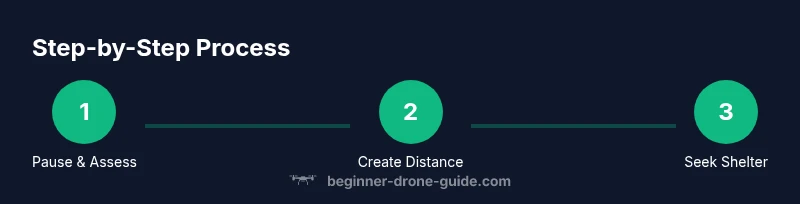
Pause and assess
Stop walking in a straight line and take a moment to scan for safe exit routes. Note the drone’s relative position, speed, and any signaling lights. Do not run or gesture aggressively, which can provoke erratic drone behavior.
Tip: Keep your hands open and visible to avoid misinterpretation by the operator. - 2
Create distance safely
Slowly diversify your path to a clearly public area or indoor space. Avoid chasing the drone; instead, move laterally away from its path while maintaining calm, steady motion.
Tip: Choosing a route with people around increases your safety and deterrence. - 3
Seek shelter or witnesses
Aim for a bus stop, store, or building with staff. If you’re with others, direct them to stay together and approach staff for assistance. Don’t block the drone; create space and keep observers aware.
Tip: Public presence helps deter prolonged pursuit and supports any later report. - 4
Document without escalating
Use your phone to capture non-intrusive details or short video from a safe distance. Avoid approaching the drone or antagonizing the operator. Preserve evidence for authorities.
Tip: Time-stamped footage and precise location details speed up investigations. - 5
Report promptly
Contact local authorities or aviation regulators as soon as you’re safe. Share the timeline, location, drone appearance, and any witnesses. Provide copies of any video or notes you collected.
Tip: Ask about privacy expectations and whether footage will be kept private. - 6
Review and protect privacy
Assess how your privacy could be affected and adjust your routines or settings accordingly. Consider reporting patterns to the community or local authorities to improve future safety.
Tip: Avoid posting identifying details publicly; use secure channels when sharing evidence. - 7
Repeat safety habits
In future drone-heavy environments, maintain a planned route, carry a basic safety kit, and rehearse your reporting steps so you respond quickly next time.
Tip: Practice builds confidence and reduces panic if you’re followed again. - 8
Follow up
If you’ve filed a report, follow up with authorities to confirm they have the information needed. Update your notes if you remember new details and store any evidence securely.
Tip: Keeping a personal log helps you monitor patterns and stay prepared.
Frequently Asked Questions
Is it legal for someone to follow me with a drone?
Drone laws vary by location, and following someone can raise privacy and safety concerns. Check local regulations and report risks to authorities if you feel unsafe.
Drone laws vary by location; if you’re followed, contact authorities for guidance.
What should I do immediately if I feel threatened by a drone?
Move to a safe, populated area, avoid confrontation, and log details. Call emergency services if you feel in immediate danger.
Move to safety and report the incident to authorities.
Can I jam or shoot down a drone that’s following me?
No. Do not attempt to jam or damage the drone. It’s illegal in many places and can put you at risk. Contact authorities instead.
Don’t try to disable it—call for help.
How can I protect my privacy from drones in the future?
Be mindful of where you are recorded, use privacy controls where available, and fly in compliance with local rules to minimize exposure.
Be proactive about privacy and follow local rules.
What information should I gather for reporting?
Note the time, location, drone color/markings, distance, and any observer notes. If safe, save short video or photos.
Write down what you see and save any footage if safe.
Who should I contact after an incident on private property?
Contact local authorities and, if applicable, the property owner and park staff. Provide a summary and any evidence you collected.
Tell local authorities and the property owner what happened.
Watch Video
Quick Summary
- Stay calm and move toward safety.
- Document details safely and report promptly.
- Avoid confrontation or interference with the drone.
- Know local privacy and aviation rules for guidance.