What to Do If You See a Drone Over Your House: A Practical Guide
Learn what to do if you see a drone over your house. This beginner-friendly guide covers immediate safety steps, documenting evidence, reporting channels, and basic legal considerations to stay safe and compliant.


If you see a drone over your house, prioritize safety and legality. Stay indoors, keep children away, and avoid confronting the drone or its operator. Note the time, direction, altitude, and observable behavior, then document with photos or video. Report the sighting to local authorities or the aviation agency and follow official guidance.
Immediate Safety First
Immediate safety is the top priority when a drone appears over your home. The Beginner Drone Guide team emphasizes non-confrontational, lawful responses. If you’re indoors, ensure everyone stays calm and away from windows; avoid yelling or waving at the operator. Do not approach the drone, chase it, or attempt to disengage its power. Document what you observe without interfering: note altitude, speed, direction, weather, time of day, and any signage, lights, or patterns. Use your phone to capture stills or short video from a safe vantage point. If you’re outside and feel unsafe, move indoors and keep doors closed. If there is an immediate threat, contact emergency services. By handling the moment calmly, you reduce risk and preserve evidence for authorities. According to Beginner Drone Guide, calm, safe behavior under pressure is the best first step.
Understanding Why Drones Fly Over Residential Areas
Drones over homes typically originate from hobbyists, real-estate photographers, or researchers. While most pilots aren’t aiming to harm, privacy and safety concerns can arise quickly. The Beginner Drone Guide analysis, 2026, highlights that many sightings involve regulatory ignorance rather than malicious intent, though some operators may violate privacy or airspace rules. The ideal response is controlled reporting, not confrontation. Public understanding of airspace rules helps reduce friction, and the FAA defines controlled airspace near airports. The goal is to de-escalate and inform authorities, not punish operators on the spot. Remember, staying calm and collecting accurate observations strengthens your case if a formal report is needed.
How to Document the Sighting
Documentation is your strongest tool for accountability. Start by noting the exact time and location, taking clear photos or short videos from a safe angle, and recording altitude, speed, color, markings, and any distinguishable features. If possible, capture multiple frames as the drone moves. Maintain a neutral, factual record: avoid speculation about motives. Save files with timestamps and a brief description. A simple log sheet—date, time, direction, distance, and weather—helps keep details consistent. For privacy and safety, use your device’s built-in tools rather than social media shares. This evidence will be useful when you contact authorities or file a report.
Who to Notify and Reporting Pathways
Begin by contacting local law enforcement or your country’s airspace authority if you believe safety is at risk. In many regions, you can also report to the FAA or the equivalent civil aviation authority. Provide the evidence you collected: time, location, flight path, and any identifiers. If the drone is violating local rules or appears to threaten privacy, document the incident and file a formal report. In calmer situations without immediate danger, you may opt for non-emergency channels such as a general complaint line or aviation safety portal. Always follow local guidelines; officials may ask for your logs or additional photos. The key is to inform the proper authorities so they can assess risk and coordinate a response.
What Authorities May Do
When authorities receive a drone sighting report, they may investigate to determine if airspace rules were violated. Depending on the jurisdiction, responses can range from contact with the operator to temporary restrictions or enforcement actions. Agencies prioritize safety and privacy, not punishment. In some cases, pilots are required to provide proof of registration, operator credentials, or flight plans, especially near sensitive areas. If the drone was over a residence, authorities may also provide guidance on reporting suspicious activity and what to document in future sightings. Remember that you’re part of a safety ecosystem, and your documentation helps them act precisely.
Legal Considerations You Should Know
Drone laws vary by country and state, but most regions prohibit flying over people or private property without consent, and they regulate altitude and proximity to airspace. Privacy protections may limit recording in certain contexts, even if a drone is allowed to fly nearby. The FAA and other aviation authorities publish clear rules about what is permitted and what isn’t, including penalties for unsafe or illegal operations. It’s essential to differentiate personal safety concerns from legal questions; when in doubt, prioritize reporting and compliance. For homeowners, knowing where drones may legally fly and what constitutes invasion of privacy helps you respond correctly and minimize risk.
Preventive Measures for Homeowners
Prevention starts with awareness and visibility. Ensure your property has clear sightlines of the sky, especially near boundary lines and outdoor living spaces. Consider privacy screens or shrubs that reduce the ability to identify personal details from above. If you frequently host gatherings, briefly educate family members about staying indoors during near-airspace activity. Install a weatherproof, camera-free notification method to alert you to approaching drone activity without recording private spaces. Finally, stay updated on local regulations and how to report sightings accurately so rare events don’t escalate into conflicts.
Do Not Intercept or Engage
Never attempt to disable, intercept, or physically confront a drone. This can be dangerous and illegal, potentially putting you and others at risk. Do not shoot at or chase the drone, as it may respond unpredictably and cause harm. If you can, use safe observation and distance, keep your distance, and focus on documentation and reporting. Engaging the operator can also escalate the situation and draw attention to you rather than the threat. Prioritize safety for everyone involved and let professionals handle enforcement.
Step-By-Step Quick Reference
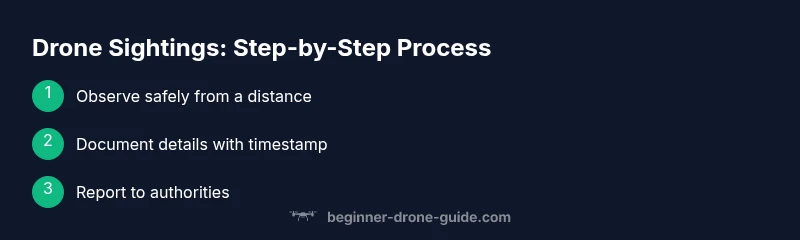
This quick reference complements the formal STEP-BY-STEP guide. It highlights the essential, non-harmful actions to take the moment you notice a drone: stay calm, observe safely, document key details, report through official channels, and follow up as necessary. Use this as a checklist to avoid missing critical steps when under stress. For a complete, structured process, see the STEP-BY-STEP section below.
Real-World Scenarios and Examples
In real life, drone sightings vary from casual hobbyist flights to potential privacy concerns. Consider scenario A where a drone flies along a property line for a minute before leaving; this is typically resolved with a documented report. Scenario B involves a drone hovering near a window; consider immediate safety steps and notifying authorities. Scenario C sees multiple sightings over several days, which may indicate a pattern warranting further investigation. Each case requires consistent documentation and adherence to reporting channels.
Authority Sources
Reliance on official guidance helps you respond consistently. In the United States, refer to the FAA's UAS resources, and explore related guidelines from national safety bodies. You may also consult university extension programs for practical, localized advice. See the linked sources in the Authorities section for detailed regulatory information and best practices.
Verdict: A Practical Path to Safety and Compliance
The Beginner Drone Guide team recommends staying calm, documenting every detail, and reporting through appropriate channels. By following a legal, methodical process, you protect your privacy and contribute to public safety. The emphasis is on responsible action and informed engagement with authorities, not confrontation or punishment.
Common Pitfalls and How to Avoid Them
Common mistakes include attempting to chase the drone, recording private spaces, or sharing footage publicly before reporting. Another pitfall is delaying the report while gathering unverified assumptions. Avoid these by sticking to documented evidence, using official reporting channels, and keeping conversations with others focused on safety.
The Takeaway: Safer Skies for Your Home
Stay calm, observe safely, document precisely, and report promptly. Understanding local rules reduces confusion, helps authorities act effectively, and protects your privacy. Regular updates on regulations and best practices ensure you’re prepared for future sightings.
Tools & Materials
- Smartphone with camera(for photos/videos and calling authorities)
- Notebook and pen(to record times, directions, altitude, and any identifiers)
- Sighting log template(download or print to organize details)
- Address map or property sketch(helps indicate location for reports)
Steps
Estimated time: 20-30 minutes
- 1
Assess the Situation
Take a moment to observe from a safe indoor position. Note altitude, speed, color, and any markings. Do not approach the drone or its operator.
Tip: Keep your distance and avoid any actions that could escalate the situation. - 2
Ensure Personal and Family Safety
If outdoors, move indoors and keep windows closed. Remove children and pets from the area and avoid pointing devices at the drone.
Tip: Prioritize immediate safety before attempting documentation. - 3
Document What You See
Capture photos or short videos from a safe vantage point. Record time, direction, duration, and notable behaviors.
Tip: Use timestamps and filename conventions for easy retrieval. - 4
Check for Clear Identifiers
Look for any manufacturer logos, registration numbers, or distinguishable shape features.
Tip: Do not zoom to the point of compromising your own safety. - 5
Report to the Appropriate Channel
Contact local law enforcement or the aviation authority if safety is at risk, or use official reporting portals when appropriate.
Tip: Provide the evidence you collected and keep responses organized. - 6
Follow Up and Monitor
If sightings continue, keep a log and notify authorities again. Note any changes in flight pattern.
Tip: A persistent pattern may require additional action. - 7
Review Local Regulations
After the incident, review applicable airspace and privacy rules to stay prepared for future sightings.
Tip: If unsure, consult official aviation resources or a licensed attorney.
Frequently Asked Questions
Is it illegal to fly a drone over my house?
Drone legality varies by jurisdiction. In many places, flying over private property without consent can breach privacy laws or airspace rules. Always report suspicious activity and consult official guidelines for your area.
Drone legality varies; check local rules and report concerns to authorities if needed.
What should I do if the drone enters my property?
Do not engage with the drone. Move people away from the area, document what you observe, and contact local authorities or the aviation regulator for guidance.
Do not intercept; document and contact authorities.
Can I shoot down a drone that’s over my house?
No. Intercepting or shooting at a drone can be dangerous and illegal. Focus on safety, documentation, and reporting to authorities.
No, do not shoot. Prioritize safety and report it.
Who should I contact first if I’m worried about safety?
If there’s an immediate threat, call emergency services. For non-emergency incidents, contact local police or the aviation authority through official channels.
Call emergency services if there’s an immediate threat; otherwise use official reporting channels.
Will authorities remove the drone?
Authorities assess situations and may intervene if rules are violated or there is danger. Your reported details help determine the appropriate response.
They may intervene if rules are violated or there’s danger; your report helps.
Are there privacy laws I should know?
Privacy protections vary by region. Know that recording inside private spaces or without consent can raise concerns; follow official guidance on what to record and share.
Privacy laws differ by area; follow official guidance on recording.
Watch Video
Quick Summary
- Act calmly and safely
- Document key details for reports
- Report through official channels promptly
- Do not engage or intervene physically