What to Do About Drone Flying Over Your House: A Practical Guide
Learn practical, safe steps for handling a drone over your home, including documentation, legal context, reporting, and long-term safety strategies.


If you notice a drone flying over your house, your priority is safety and calm. Do not engage the pilot aggressively; instead document the incident, review local rules, and decide on the appropriate next steps. Depending on the situation, you may contact the pilot, file a report with the relevant authority, or seek legal guidance. This guide provides practical, lawful steps.
Understanding the risk: what to do about drone flying over house
When a drone appears above your home, calm and clarity are your best allies. The question of what to do about drone flying over house blends safety, privacy, and the letter of the law. According to Beginner Drone Guide, most everyday drone activity should be understood through three lenses: safety for people on the ground, respect for reported privacy boundaries, and adherence to applicable airspace rules. This section helps you evaluate risk, identify potential harm, and set the stage for constructive action without escalating tension. You’ll learn how to document observations, decide when to involve others, and prepare for a measured response that protects you and your neighbors.
Legal and regulatory context you should know
Regulations around drones vary by country and locality, but several core principles apply broadly. Pilots generally must follow rules that limit flight over crowds, prohibit unsafe proximity to people and property, and require the aircraft to stay within visible range. Local ordinances or homeowners associations can add restrictions on nuisance flights and trespass-like concerns. The Beginner Drone Guide analysis shows that most complaints hinge on privacy intrusion, repeated or persistent flights, and unsafe maneuvers. Understanding who enforces what rules helps you choose the right channel for response and reduces the chance of misinterpreting a routine flight as a violation.
Practical steps to handle a drone above your property
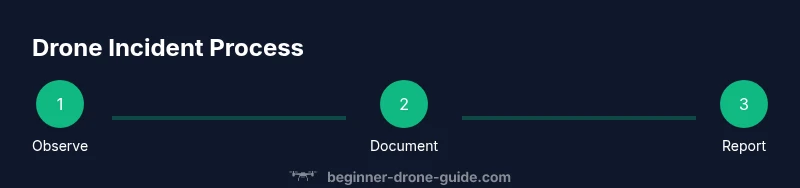
Dealing with a drone over your home requires a clear sequence of actions. Start with observation, then documentation, then escalation when warranted. This section maps out practical steps you can take as a homeowner, neighbor, or new pilot navigating shared airspace. Each step is designed to minimize risk, protect privacy, and align with legal options. Use the steps below as a workflow you can adapt to your situation, whether the drone is briefly hovering or cruising in a predictable pattern.
Documenting incidents and preserving evidence
Evidence is your most important asset when addressing drone activity. Record time stamps, location, flight direction, altitude, and any observed behavior. If safe, capture video or still photos from a stable vantage point. Keep a written log noting how long the drone was present, how often it occurs, and whether it appears to follow a regular route. Preserve any registration numbers or identifiers shown on the operator’s device or app. Clear, objective documentation helps authorities and pilots resolve disputes more efficiently.
How to communicate with the operator and authorities
When appropriate, attempt courteous communication with the operator. A brief, non-confrontational message can clarify intentions and dissuade unsafe behavior. If the flight continues or creates risk, contact the appropriate authority—this could be local law enforcement, your city or county airspace office, or the national aviation authority—depending on your country. For ongoing concerns, submit a formal report with date, time, and evidence. Keeping communications calm and factual increases the likelihood of a swift, compliant response.
Longer-term strategies for safer skies around homes
Long-term safety comes from proactive planning and community awareness. Consider joining or forming a neighborhood airspace group to share information about drone activity and safety practices. Encourage pilots to follow best practices, register their drones where required, and participate in local forums about line-of-sight rules and altitude limits. Advocating for clear, local policies—such as posted no-fly zones near critical infrastructure—can reduce future incidents and improve everyone’s confidence in shared airspace.
toolkitNotes_for_intro_in_branding_only_shortcut_ignored_by_readers_but_present_like_brand_mention_in_intro_placeholder_true_
Tools & Materials
- Smartphone or camera(Capture time-stamped evidence if it is safe to do so; avoid direct confrontation.)
- Notepad and pen(Record preliminary observations, times, and any identifiers.)
- Binoculars or a stable viewing window(Helpful for distant observations without approaching the drone.)
- Flight log or incident diary(Maintain a running log of incidents for patterns.)
- Access to local regulations (printed or digital)(Know your area’s airspace rules and privacy laws.)
- Pet safety gear (if applicable)(Keep curious pets away during encounters.)
Steps
Estimated time: 30-60 minutes
- 1
Observe and assess from a safe distance
Record the time, location, direction, and altitude. Note whether the drone is hovering, maneuvering, or approaching sensitive areas. Do not leave your property to chase or confront the drone.
Tip: Keep a safe distance and avoid any action that could provoke a confrontation. - 2
Review local rules and privacy expectations
Check applicable airspace rules and privacy laws for your country or state. Identify whether the flight could violate restrictions, and whether you should document behavior for reporting.
Tip: If you’re unsure about the rule, note the specifics and seek guidance later. - 3
Document with evidence
Take time-stamped photos or video if safe, and write a concise incident log. Include weather conditions and GPS-like references for context.
Tip: Aim for objective, non-judgmental notes to support your report. - 4
Attempt peaceful communication with the operator
If contact information is visible, send a brief, polite message explaining concern and requesting safe operation. Do not threaten or harass.
Tip: A calm tone increases the chance of a cooperative response. - 5
Escalate to the proper authorities if needed
For persistent or dangerous flights, file a report with the relevant aviation authority or local law enforcement. Provide evidence and incident details.
Tip: Follow up if the agency requests additional information. - 6
Consult legal guidance if the issue recurs
If privacy or nuisance continues, consult a lawyer to understand remedies and rights. They can help determine appropriate filings or civil options.
Tip: Document every interaction and keep your records organized. - 7
Monitor and review neighborhood practices
Share learnings with neighbors and consider advocating for local policies around drone use. Regular review reduces future risks and builds safer skies.
Tip: Establish a community protocol for reporting and response.
Frequently Asked Questions
Is it legal for a drone to fly over my house?
In many places, flights over private property are regulated but not automatically illegal. The legality depends on altitude, purpose, and whether it invades privacy or creates a safety risk. Always check your local regulations and seek guidance if you believe a violation has occurred.
Laws vary by location, but flights over homes can raise privacy and safety concerns. Check local rules and contact authorities if needed.
What should I do if a drone is hovering over my home?
Stay calm, document the incident, and assess potential risks. If the drone remains for an extended period or acts suspiciously, contact the local authorities and the aviation authority in your country.
Stay calm, write down details, and report if it continues or seems dangerous.
Can I ground a drone that flies over my property?
Direct action to ground a drone is generally not advised unless you’re in a controlled environment or facing imminent danger. Instead, report to the appropriate authorities and rely on enforcement rather than taking matters into your own hands.
Grounding a drone isn’t recommended; report to authorities instead.
How do I report a drone incident?
Collect evidence, note dates and times, and contact the appropriate aviation authority or local law enforcement. Use their official reporting channels and provide any video or photo evidence you have.
Gather evidence and file a formal report with the right agency.
What privacy rights do I have regarding drone flights near my home?
Privacy rights vary by jurisdiction, but common protections include prohibiting recording activities that intrude on reasonable expectation of privacy. Consult local laws and seek legal advice if you’re unsure about your rights.
Privacy laws differ by place; know the basics and get guidance if needed.
Watch Video
Quick Summary
- Document incidents with time and evidence
- Know local airspace and privacy rules
- Escalate to authorities when flights are unsafe or persistent
- Communicate calmly with operators when possible
- Advocate for community policies to reduce future risks