How to Stop a Drone Over Your Property: A Beginner’s Guide
Learn practical, lawful ways to handle drones over your property—from documenting incidents to reporting them. A beginner-friendly guide to privacy, safety, and rights.


If a drone flies over your property, your goal is to stop the intrusion safely and legally. Start by identifying the operator and recording the incident, then request the pilot to alter their flight path or land. If the drone persists, report it to local authorities or the FAA and pursue privacy remedies through civil channels. This guide explains safe, legal steps.
Legal framework and why it matters
When a drone sails over your property, the first task is to understand what rights you have and what rules apply. The phrase how to stop a drone over your property often appears in privacy and safety conversations, but the solution is not to take matters into your own hands. Instead, follow lawful channels. According to Beginner Drone Guide, privacy rights and flight rules vary by jurisdiction, but the core principles are universal: do not trespass, respect reasonable expectations of privacy, and work within airspace regulations. In many places a drone flight over your yard may be legal so long as the operator stays in controlled airspace and does not harass or vandalize property. The takeaway is to respond calmly, document what happened, and pursue appropriate remedies through recognized channels. By understanding the legal framework, you can protect your privacy while avoiding actions that could put you at risk or expose you to liability.
Assessing the situation: privacy, safety, and potential threats
Drones over private property can raise several concerns—privacy invasions, nuisance noise, or even safety hazards if the aircraft is malfunctioning or flying near people or pets. When evaluating an incident, distinguish between intentional surveillance and a harmless stray flight. How to stop a drone over your property effectively starts with clear criteria: Is the drone within visible range, is it hovering, is there a pattern (daily near the same window), and is anyone endangered? Document the color, shape, and any markings, but avoid confrontation that could escalate risk. If you’re protecting children or sensitive areas (e.g., a pool or garden), elevate your response by setting privacy boundaries clearly, combining respectful dialogue with record-keeping. According to Beginner Drone Guide, keeping a level-headed approach is essential to avoid legal trouble and to maximize your chances of a positive outcome.
Immediate actions you can take on the ground
When a drone looms over your property, safety and civility matter more than irritation. First, ensure everyone stays clear of the drone’s flight path and avoid attempting to intercept it. Next, calmly note the time and location, and if possible, capture non-intrusive footage from a safe distance. If the operator is identifiable, politely request a change in flight path or a landing. If the drone persists or returns, prepare to escalate by reporting the incident to the appropriate authorities. Finally, review your privacy settings at home and document any subsequent encounters. The goal is to minimize risk while building a factual record you can share with officials. This balanced approach aligns with legal expectations and reduces the chance of misinterpretation.
How to document the incident and gather evidence effectively
Effective documentation is the backbone of any response to a drone over your property. Start by recording the date, time, and exact location of each encounter. Collect clear video or still photos that show the drone, its flight path and proximity to people, and any audible warnings from the operator if present. Maintain a log of attempts to contact the operator and the responses you receive. Save any communications, including messages from neighbors or witnesses who observed the drone. Note surrounding conditions (weather, visibility, and lighting) that could affect flight behavior. Avoid altering the scene or encouraging the drone; instead, preserve context for authorities. Evidence should be organized by incident date and compiled into a concise report to accompany official filings. This careful record boosts credibility and strengthens your privacy case.
How to engage with the drone operator (safely and respectfully)
If you can identify the drone operator, a respectful, non-confrontational approach often yields the best results. Start with a brief, calm note or message stating your privacy concerns and requesting that they land or alter their flight path to avoid your property. If you choose to speak in person, ensure you maintain a safe distance and do not block the drone’s path. Keep the conversation focused on safety and privacy rather than blame. If the operator denies your request, document the denial and move to official channels. In some cases, operators may be part of a larger organization or hobby group; you can ask for a point of contact to discuss future flights. The goal is to set boundaries without escalating risk. The Beginner Drone Guide team emphasizes courteous communication as a practical first step.
Reporting channels: FAA, local law enforcement, and privacy regulators
When a drone continues to violate your privacy or safety, reporting is essential. File a report with the Federal Aviation Administration (FAA) if you believe the flight violates airspace rules or could threaten safety. For privacy or nuisance concerns that don’t involve immediate danger, contact your local law enforcement non-emergency line and provide evidence collected earlier. Some jurisdictions also have privacy regulators or consumer protection offices that handle drone-related complaints about surveillance or data collection. Keep copies of your evidence and any responses from authorities. Depending on the severity and frequency, more formal action, such as a civil complaint, may be appropriate. According to Beginner Drone Guide analysis, most resolved cases involve a combination of official reporting and privacy-friendly remedies rather than punitive measures against operators. This multi-channel approach helps ensure accountability while reducing personal risk.
Preventive measures for future incidents
Prevention is easier than remediation. Consider practical steps to reduce the chance of a drone over your property in the future. Install privacy measures such as outdoor blinds, tall trees, or privacy screens to block sightlines into private spaces. Use signage indicating privacy boundaries, which can deter curious pilots. If you frequently use outdoor spaces, plan activities during times when flights are less likely, or designate a safe retreat area away from flight corridors. Some homeowners install camera-based privacy lighting that improves visibility while remaining non-confrontational. Remember, the aim is to minimize intrusion without provoking the operator. Regularly review local rules to stay compliant and aligned with best practices. With thoughtful preparation, you can reduce the likelihood of future incidents and maintain peaceful enjoyment of your property.
When to consult a lawyer or pursue civil remedies
If a drone over your property becomes a recurring problem or causes tangible harm, consult a lawyer who specializes in privacy or property law. A lawyer can help you assess whether civil remedies, such as injunctions or damages, are appropriate in your jurisdiction. They can also advise on the limits of any complaints and the best way to present evidence. Avoid taking matters into your own hands; a legal professional can guide you toward safe, lawful options. For some people, a formal complaint with a regulator or the filing of a civil claim offers a reliable resolution path. The exact remedies vary by state or country, so obtaining jurisdiction-specific guidance is critical. The goal is to protect your privacy while staying within the law.
Real-world examples and case outcomes
Across different regions, there are documented cases where property owners obtained restraining orders or injunctions against persistent drone operators, or where privacy-focused litigation clarified surveillance boundaries. In several situations, authorities advised pilots to alter flight patterns or avoid property during certain hours. While outcomes depend on local laws and the specifics of each incident, the common thread is the importance of solid documentation, lawful reporting, and clear boundary setting. By studying these cases, beginners can glean practical steps for a successful, compliant response and avoid escalating conflicts. The takeaway is simple: follow proper channels, collect evidence, and seek remedies through legal avenues rather than confrontation.
Final considerations: staying compliant and respectful
Dealing with a drone over your property can be frustrating, but staying compliant with laws and maintaining a respectful stance protects you and others. Remember how to stop a drone over your property is not about punishment but about safeguarding privacy and safety through legitimate means. Continuously update yourself on local airspace rules and privacy laws; expectations evolve with new regulations and enforcement practices. The Beginner Drone Guide team recommends adopting a calm, evidence-based approach and using the official channels outlined here to address incidents. By keeping interactions courteous, informed, and well-documented, you can resolve issues effectively while preserving your rights and community harmony. The Beginner Drone Guide’s verdict is that consistent, lawful action, not confrontation, builds lasting privacy protections.
Tools & Materials
- Incident logging notebook or digital app(Record date/time, location, flight path, and operator details.)
- Smartphone or camera to document(Capture video or photos from a safe distance; note positions.)
- Non-emergency contact numbers for authorities(Have FAA and local police numbers ready; avoid emergency lines for non-immediate danger.)
- Privacy-protective measures (optional)(Outdoor blinds, privacy screens, or signage to deter surveillance.)
- Basic safety plan(Know your exit routes and keep others clear of the flight path when documenting.)
Steps
Estimated time: 60-90 minutes
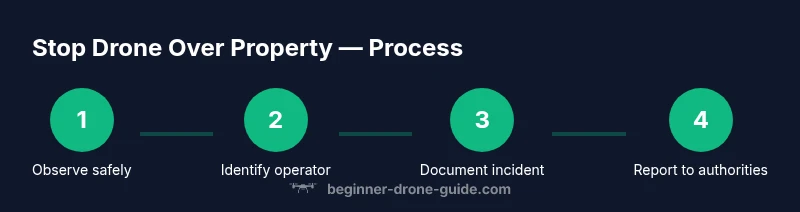
- 1
Observe from a safe distance
Identify the drone’s location and behavior without approaching it. Keep people away and avoid chasing or trying to intercept the drone.
Tip: Document initial observations with time stamps and notes. - 2
Identify operator and flight path
If safe to do so, look for markings or other identifiers on the drone. Map the flight path and note any repeated patterns.
Tip: Do not approach the drone or engage the operator directly while it’s in flight. - 3
Document incident and collect evidence
Capture video/photos from a safe distance and log the incident details in your notebook or app.
Tip: Include date, time, location, drone type, and observed behavior. - 4
Request a change in flight path if identifiable
If you can safely contact the operator, politely ask for a landing or a different path to respect privacy.
Tip: Keep the interaction brief and non-confrontational. - 5
Report to authorities if needed
Escalate to local authorities or the FAA if the flight violates rules or privacy boundaries.
Tip: Provide your organized evidence and a concise incident summary. - 6
Review laws and consider remedies
Consult local drone regulations and privacy laws to determine next steps, including potential civil remedies.
Tip: Don’t delay filing if the behavior is ongoing or dangerous. - 7
Enhance privacy for future flights
Install privacy solutions and plan outdoor activities to minimize exposure to drones.
Tip: Label boundaries clearly and keep records of improvements.
Frequently Asked Questions
Is it legal to shoot down a drone that flies over my property?
No. It is illegal in many places and dangerous to attempt; instead, use reporting and privacy remedies.
No, you should not shoot the drone; report to authorities instead.
What should I do if a drone invades my privacy repeatedly?
Document incidents, report to authorities, and discuss privacy improvements with the operator if known.
Keep records and report it.
Can I contact the drone operator directly to stop flights?
If you can safely identify the operator, you can request them to land or change course; keep it polite and non-threatening.
Yes, if it’s safe to do so.
What evidence is most persuasive to authorities?
Time-stamped videos, photos, GPS coordinates of flight paths, and witness statements help authorities assess violations.
Clear, time-stamped evidence helps a lot.
Where can I report drone incidents?
File reports with the FAA or your local law enforcement, and consider privacy regulators if applicable.
Report to authorities with your evidence.
Are there privacy rights if a drone flies over my backyard?
Privacy laws vary; most focus on reasonable expectations and unlawful surveillance; consult local rules.
Privacy depends on local laws.
Watch Video
Quick Summary
- Document every incident clearly and promptly.
- Never attempt to physically stop or intercept a drone.
- Pursue legal channels and official reporting first.
- Protect your privacy with practical, non-confrontational measures.