How to Stop Drones Over Your Property: Legal, Safe Steps
Learn safe, legal ways to handle drones over your property without attempting to disable them. This guide covers privacy rights, documentation, reporting, and practical prevention strategies.


This guide helps you address drones over your property with legal, non-destructive methods and practical steps. You’ll learn your privacy rights, how to document incidents, how to request flight adjustments from operators, and how to report concerns to authorities.
Understanding drones over property and your privacy rights
If you’re asking how to disable a drone from flying over property, this guide explains why that approach is unsafe and often illegal, and instead focuses on legal, non-destructive ways to address the issue. Drones frequently occupy airspace above private land, but the law distinguishes between airspace rights and personal privacy. In practice, a drone can legally fly over your property if it remains in navigable airspace and does not trespass into restricted zones. However, repeated flights near residences raise legitimate privacy concerns, and many operators are willing to adjust their routes when asked politely and backed by clear guidelines.
Beginner Drone Guide emphasizes that attempting to physically block, jam, or damage a drone can create serious safety hazards and could expose you to civil or criminal liability. The best path is to pursue lawful remedies and responsible communication. By understanding both your privacy expectations and the rights of drone operators, you can address issues without escalating conflict or danger. This article will walk you through concrete, legal steps you can take today, with templates and resources to help you safeguard your home while staying within the law.
The legal framework: what you can and can't do
The moment a drone crosses into airspace over private property, you are dealing with a blend of aviation rules and privacy considerations. In the United States, the Federal Aviation Administration governs drone flights and airspace usage, while state and local laws may add privacy protections or nuisance restrictions. In many cases, flights over your yard are permitted so long as operators stay within legal airspace and do not harass people or invade protected spaces. This means attempting to disable, jam, or damage a drone is rarely legal and can create dangerous situations, including property damage or legal liability. Foreign readers should consult their local aviation authority, as rules vary widely by country.
Beginner Drone Guide analysis shows that most people resolve overflight concerns by following a documented, non-confrontational approach: identify the issue, communicate with the operator, and file official reports when necessary. Knowing what is and isn’t allowed helps you choose the right steps rather than resorting to drastic measures. Safety, privacy, and due process should guide every action, not frustration or retaliation.
Practical, legal steps to reduce overflight
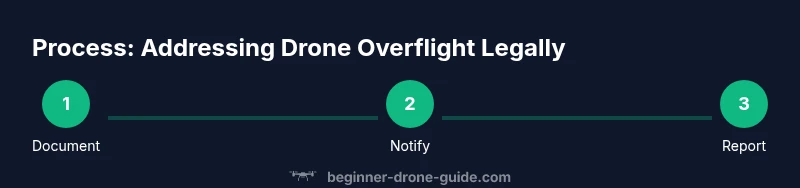
Acting within the law starts with clear, documented intentions. Here are practical steps you can take to address drone overflight without risking safety or legality:
- Document the incident: record date, time, approximate altitude, location, and any identifying marks on the drone.
- Reach out politely: contact the operator if possible and request they adjust flight paths away from private properties.
- File a report if needed: use official channels to register concerns with aviation authorities or local law enforcement.
- Notify neighbors or HOA: inform them of ongoing issues and coordinate a community approach if relevant.
- Consider non-intrusive privacy measures: use blinds, vegetation, or privacy screens to minimize exposure without blocking airspace.
- Escalate when necessary: if flights persist, pursue formal complaints through authorities or the operator’s company policy.
Why this order? Documentation creates a foundation for credible complaints, while polite outreach increases the chance of cooperation. Maintaining calm, factual communication reduces the risk of misunderstandings and helps protect your property and your rights. For further guidance, see the Beginner Drone Guide's analysis on best practices for reducing nuisances in residential areas.
How to document incidents effectively
Consistency matters. Create an incident log that captures key details in a neutral tone. Include:
- Date and time of overflight
- Location relative to your home (street address or safe landmark)
- Drone description (color, size, visible markings)
- Flight behavior (circling, hovering, speed)
- Any interactions or attempted contact with the operator
Use screenshots or photos when possible, but avoid approaching the drone or the operator. If you cannot safely obtain visuals, jot down descriptive notes and any Audible cues. Store copies of reports you file, and keep a running timeline. A well-documented history makes it easier to build a case if authorities or the operator need to respond. Throughout, maintain privacy and avoid sharing sensitive details online.
How to communicate with drone operators
Clear, respectful communication improves outcomes. Use a concise message that states your concern, references the date, and requests a reasonable adjustment to flight paths. Example script:
- Hello, I’m a resident at [address]. I’ve noticed drones flying over my property on several occasions, which makes me uncomfortable. Please avoid flying over private residences and keep a safe distance from houses.
Tips:
- Include your preferred contact method and timeframe for a response.
- Do not threaten or escalate in tone; your goal is cooperation.
If you cannot reach the operator directly, include the flight times and location in your message and forward it to the operator’s company or the platform through which the flight occurred.
Context ensures the operator understands the issue and is better positioned to adjust routes.
Report options: FAA, law enforcement, and civil channels
Many countries supervise drone flights through a national aviation authority. In the United States, you can report persistent nuisance or safety concerns to the FAA through their incident reporting channels or to local law enforcement if you believe there is an immediate risk. Civil channels may include the operator’s corporate policy or a platform's safety desk. In other countries, contact the local civil aviation authority for similar processes. While you report, keep your documentation organized and use neutral language to avoid misunderstandings.
Privacy-focused property protections that work legally
Beyond complaints, you can implement privacy-friendly measures that do not interfere with airspace. Consider:
- Strategic fencing or hedges to create natural privacy buffers.
- Exterior blinds or window films on ground-level windows to limit visibility.
- Signage indicating privacy expectations for aerial activity.
- Landscaping adjustments that encourage natural screening without blocking the sightlines.
- Camera placement and lighting that deter curious overflights, while respecting privacy rights.
Always verify that measures comply with local zoning, homeowner association rules, and privacy laws. The goal is to reduce exposure, not to obstruct lawful flights or engage in dangerous activity.
When to seek professional help
If a drone continues to harass or repeatedly infringes on your privacy, consult a lawyer who specializes in drone or privacy law. A professional can interpret local regulations, draft formal requests, and represent you in negotiations or formal complaints. Community mediation services can also help resolve disputes without litigation. The Beginner Drone Guide team recommends seeking professional guidance when overflights become persistent or escalate beyond casual nuisance.
Tools & Materials
- Notebook or digital note-taking device(Record date, time, location, drone description, and behavior.)
- Pen or stylus(For quick, accurate note-taking during incidents.)
- Phone or camera for evidence (optional)(Capture non-identifying visuals from public view only; do not approach the drone.)
- List of contact channels (FAA/CAA, local authorities)(Have ready for reporting and escalation.)
- Incident reporting templates(Use official forms if available to standardize submissions.)
- Privacy signage or screening materials(Non-intrusive measures to improve privacy without impacting airspace rules.)
Steps
Estimated time: Estimated total time: 20-60 minutes
- 1
Identify the incident details
Note date, time, location, altitude (if observable), color/ markings of the drone, and flight pattern. The more precise your initial notes, the easier it is to reference later.
Tip: Record from a safe distance and avoid any confrontation with the operator. - 2
Create a neutral incident log
Enter a concise, factual description of what happened and any immediate effects on you or property. Keep the log organized with timestamps for quick retrieval.
Tip: Use a consistent format (date, time, location, description) for all incidents. - 3
Attempt polite outreach to the operator
If you can identify the operator, send a calm message requesting flight path adjustments away from private property. Include the date/time and a preferred contact method.
Tip: Avoid threats or emotional language; constructive feedback improves cooperation. - 4
Report persistent overflight through official channels
If flights continue, file a report with the appropriate aviation authority or local law enforcement. Attach your incident log and any evidence you collected.
Tip: Follow up if you do not receive a response within a reasonable timeframe. - 5
Review privacy measures and HOA rules
Assess non-intrusive privacy enhancements (blinds, hedges, signage) that comply with laws and HOA agreements while reducing exposure.
Tip: Ensure changes conform to local regulations and community guidelines. - 6
Seek professional guidance if needed
For recurrent issues, consult a lawyer or drone-safety professional to explore enforceable remedies and formal dispute resolution.
Tip: Professional help can clarify rights and options beyond self-help approaches.
Frequently Asked Questions
Is it legal to shoot down or jam a drone over my property?
No. Interfering with a drone—by shooting, jamming, or striking it—can be dangerous and is illegal in many jurisdictions. It may expose you to criminal charges, civil liability, and safety risk for bystanders. Instead, use documented, lawful channels to address concerns.
It's not legal or safe to shoot or jam a drone over your property; instead, file a report with authorities and contact the operator.
What should I do first when a drone flies over my home?
Document the encounter with date, time, and location, then attempt a calm, direct message to the operator requesting a flight path adjustment. If the behavior continues, escalate through official channels.
First, document what happened and reach out to the operator if possible, then consider reporting if it continues.
Can my HOA regulate drone flights in my neighborhood?
HOAs can establish rules for community safety and privacy, but they must align with local laws and airspace rules. They cannot authorize actions that violate aviation regulations; coordinate with residents and the operator as needed.
HOAs can set rules that protect privacy, as long as they fit local laws and airspace rules.
How do I report persistent drone overflight to authorities?
Collect incident details and evidence, then file a report with the appropriate aviation authority or local law enforcement. Provide neutral, factual information and copies of your incident log.
If the problem persists, file a formal report with the aviation authority or police, with your incident log handy.
Will privacy screens or window films stop drones from seeing inside my home?
Window treatments can reduce visibility from the exterior, but they do not prevent overflight. Use them as part of a broader privacy plan that includes proper signage and legal approaches.
Window films can help with privacy, but they won’t stop a drone from flying over; you should combine with other lawful steps.
Do I need to inform my neighbors about drone privacy concerns?
Informing neighbors can help coordinate a community response and discourage nuisance flights. Keep the communication factual and focus on shared privacy goals and legal options.
Let neighbors know about the issue so you can work together on a lawful plan.
Watch Video
Quick Summary
- Document incidents thoroughly and neutrally.
- Avoid confrontation or illegal interference.
- Use official channels to report repeat overflight.
- Implement privacy measures that comply with law.