What to Do When a Drone Lands on Your Property
Safe, practical steps to handle a drone landing on your property, protect privacy, and understand your rights with this beginner-friendly guide.


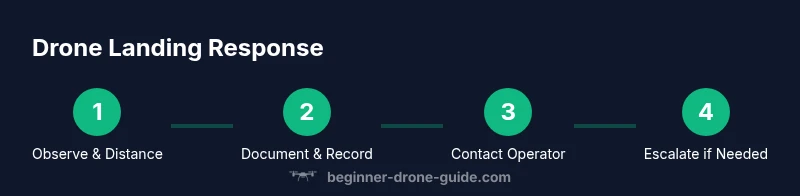
If a drone lands on your property, stay calm, avoid touching the drone, and keep your distance. Note the location and any markings, then check if the operator is present or leaving contact info. If safety concerns exist or illegal activity is suspected, call local authorities. Document the incident with photos and time stamps for records.
What happens when a drone lands on your property
According to Beginner Drone Guide, a drone landing on private property can feel unsettling, but it is rarely a sign of immediate danger. In most cases, the incident involves an unsolicited flight, a navigation error, or a miscommunication between the operator and bystanders. The Beginner Drone Guide team found that most landings are resolved through calm conversation, clear documentation, and knowledge of basic rights. The first priority is safety: maintain distance, avoid touching the aircraft, and keep children and pets away. This section guides you through what you should do in the minutes after landing, what information to collect, and how to decide whether to involve authorities.
Immediate safety and distance
Your first actions set the tone for a calm resolution. Move to a safe distance away from the drone, ideally at least 15–20 feet (5–6 meters) or more depending on wind and rotor exposure. Do not approach from the front where propellers can cause injury. Put a barrier, like a shrub, between you and the drone if possible, and ask others to step back. The goal is to reduce risk while you assess the situation. If you have kids or pets nearby, guide them away and keep doors and windows closed to prevent curious interference. A calm, controlled environment helps both you and the operator manage the moment more effectively.
Collecting information without invading privacy
Documenting key details without infringing on others’ privacy is essential. Note the drone’s approximate size, color, any visible markings, and whether a person is piloting or if the aircraft operates autonomously. Use your phone to capture photos or a short video from a safe distance, including the time and location. If a witness is present and willing, collect general contact information (not personal data) to support a potential review or insurance claim. Avoid taking sensitive images of neighbors’ windows or yards. Gentle, non-confrontational documentation helps prevent misunderstandings.
Handling contact with the pilot and owner
If the operator identifies themselves or leaves contact information, respond politely and offer a brief description of the incident. Explain that you are recording basic details for safety and privacy, and confirm whether they intend to take off safely or land again for a quick check-in. If the operator is approachable, give them a chance to share their flight purpose and potentially address your concerns. Keep the conversation constructive; a respectful dialogue can often resolve issues quickly and prevent escalation.
Privacy, property rights, and relevant laws
Property rights and privacy considerations are central to drone landings. You have rights to safety, quiet, and allowed access to your property, but you generally do not have the right to seize or destroy a drone. Laws vary by country and region, with many places emphasizing safe operation and privacy rather than blanket bans. In the United States, FAA guidelines govern airspace use, while local ordinances may address nuisance or privacy. If you’re unsure about the legal context, consult official resources such as FAA guidance and local government pages.
What to do if there is damage or risk
If the drone causes damage to property, or if a rotor strike presents a safety hazard, document the incident immediately and gather evidence. Take clear photos of any damage, note the time, and preserve the scene as much as possible for insurance or law enforcement review. Do not attempt to repair or move the drone yourself if it could cause further harm. Contact your insurer if you have a relevant policy, and report the incident to local authorities if there is any potential danger or illegal activity involved. Early documentation helps with claims and investigations.
Documentation and evidence
Creating a thorough, objective record is crucial for post-incident review. Record the time, weather conditions, and the exact location of the landing. Photograph or video the drone’s appearance, any visible numbers, and the surrounding area. Save any messages or contact details provided by the operator. If you have security cameras or doorbell cams, review footage for any additional context. Organize your notes and media in a simple file system (date, location, brief summary) to assist any insurer or legal inquiry later.
When to escalate to authorities
Escalate to authorities if you observe aggressive behavior, a drone operating near people or critical infrastructure, or if you suspect the flight is illegal or hazardous. Do not let a potentially dangerous situation escalate due to hesitation. If you feel threatened or the drone’s operator refuses to cooperate, call the non-emergency line or emergency services as appropriate in your jurisdiction. Clear, calm communication with responders helps ensure a swift and safe resolution.
Real-world scenarios and quick tips
Consider common scenarios, such as an impatient hobbyist who lands briefly to check their route, or a commercial operator following a preflight plan that went awry. In many cases, a courteous exchange, followed by written notes or a brief report, resolves concerns without further action. Quick tips include keeping records updated after the incident, sharing only necessary information with the operator, and avoiding sensational online sharing that could violate privacy rules. Remember that most landings are accidents rather than intentional intrusions, and a measured response reduces risk for everyone involved.
Tools & Materials
- Smartphone or camera capable of photo/video(Record time, location, drone markings)
- Notepad and pen(Jot down details and witness information)
- Optional flashlight(Useful for night or low-light observations)
- Evidence kit (batteries/memory cards)(Spare power and storage for longer documentation)
Steps
Estimated time: 10-20 minutes
- 1
Move to a safe distance
Step away to a safe distance from the drone, avoiding direct line of rotor wash and potential injury. This reduces risk if the drone shifts or motors start unexpectedly.
Tip: Keep a clear path for a quick retreat if the drone moves toward you. - 2
Assess for hazards
Scan the area for power lines, pets, children, or fragile objects that could be damaged by rotor wash or a sudden landing.
Tip: If you see hazards, move behind a solid barrier or out of the flight path. - 3
Observe and identify the operator
From a safe distance, look for any visible markings, numbers, or a person in the vicinity that could indicate who is operating the drone.
Tip: Do not approach the drone to inspect markings; use distant observation. - 4
Document the scene
Capture photos or a short video of the drone, location, and any distinguishing features, along with time and weather conditions.
Tip: Include a wide shot to show context and a close-up of markings if safe to do so. - 5
Request contact information if possible
If the operator or responsible party is present, politely ask for contact information or flight details to clarify the situation.
Tip: Use a calm, non-accusatory tone to facilitate cooperation. - 6
Avoid touching or moving the drone
Do not attempt to grab, detain, or disassemble the aircraft; it can cause injury or damage and may complicate investigations.
Tip: If the drone is near a hazard, wait for the operator to resolve the situation. - 7
Decide on escalation
If safety or privacy concerns persist, determine whether to contact local authorities or report the incident.
Tip: When in doubt, err on the side of safety and report. - 8
Follow up with documentation
After the incident, compile your notes, photos, and any communications for reference or insurance claims.
Tip: Store files with clear dates and brief descriptions. - 9
Review local rules and lessons learned
Read up on relevant drone regulations and privacy guidelines to inform future interactions.
Tip: Share learnings with neighbors to prevent recurrence.
Frequently Asked Questions
What should I do first if a drone lands on my property?
Stay safe, observe from a distance, document details, and avoid touching the drone. If safety or privacy is at risk, contact local authorities.
First, stay safe, observe from a distance, and document what you can. If safety is at risk, call authorities.
Is it legal for someone to fly a drone over my property?
Drone operations are governed by national aviation rules and local privacy laws. In many places, owners must fly safely and respect privacy, with enforcement varying by jurisdiction.
Drone rules vary by location, but generally you should expect safe operation and respect for privacy.
Can I confiscate or seize the drone if it lands on my property?
No. Do not touch or seize the aircraft. It can be unsafe and may complicate any investigations or claims.
No, you should not touch or seize the drone. It's unsafe and could complicate matters.
What should I do if the operator is uncooperative?
Document the interaction, note contact details, and report to authorities if safety or privacy concerns persist.
If the operator won't cooperate, document everything and contact authorities if needed.
What if the drone causes damage to my property?
Document the damage with photos, report to your insurer, and consider filing a report with local authorities if required.
If there's damage, take pictures, contact your insurer, and report to authorities if necessary.
Do I need to report every drone landing to law enforcement?
Not every landing requires a formal report. Do so if safety, privacy, or unlawful behavior is involved.
Only report if safety, privacy, or illegal activity is involved.
Watch Video
Quick Summary
- Stay calm and maintain distance from the drone.
- Document details and time for records and potential claims.
- Respect privacy and property rights; avoid disclosing sensitive images.
- Know when to involve authorities if safety or legality is in question.
- Review local rules and how they apply to drone landings in your area.