What to Do If a Drone Crashes on Your Property: A Practical Guide for Beginners
Learn practical steps to handle a drone crash on your property, including safety, reporting, insurance, and preserving evidence. This beginner-friendly guide explains rights and responsibilities for property owners, plus how to work with drone operators and authorities.


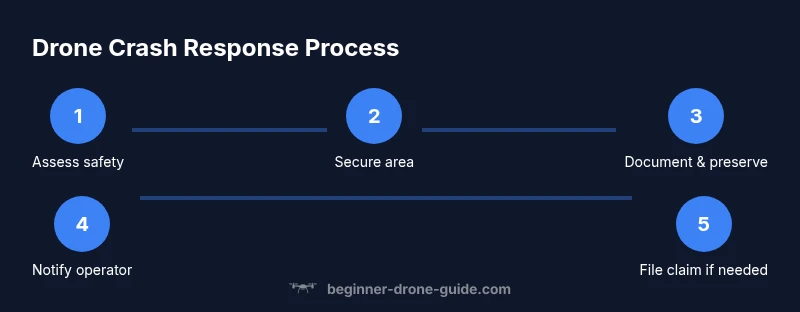
If you’re wondering what if a drone crashes on your property, here’s the quick path: first, ensure safety and keep people away from debris. Next, document the scene with photos and notes, identify the operator if possible, and report the incident to the drone’s operator and, if needed, local authorities. Preserve evidence for insurance claims.
Immediate safety and securing the scene
In a moment like this, safety matters above all else. What you do in the first minutes can affect people’s well-being, the value of your property, and the integrity of any future investigations. According to Beginner Drone Guide, the top priority is to protect everyone nearby from sharp debris, fuel spills, or unreleased batteries. If there is any risk of fire or exposed wires, call emergency services immediately. Do not approach the drone or its payload until you are sure it is safe to do so. Establish a clear perimeter with visible markers (cones, tape) and keep bystanders at a safe distance. If you can, switch off any nearby power sources and avoid touching damaged components. Document the time you observed the incident and note any unusual weather or visibility factors. A calm, methodical approach reduces confusion and protects you, your neighbors, and your property. The Beginner Drone Guide team found that staying organized in the first hour makes later reporting smoother and can influence the outcome of any insurance claim.
Liability, rights, and what property owners should know
Liability after a drone crash depends on local laws, operator responsibility, and the specifics of the incident. The operator is typically accountable for safe flight and for damages caused during the flight, but property owners can share responsibility if negligence contributed to the crash. The Beginner Drone Guide analysis highlights that many disputes revolve around proof of fault and whether the operator violated flight rules. Understanding your rights helps you navigate calls with the operator, insurers, and authorities. Avoid making accusations on site; collect facts and document conversations for the record. Being informed reduces anxiety and helps you pursue a fair resolution.
Documenting the crash: evidence and privacy considerations
Documenting the crash is essential for safety reviews, insurance, and potential investigations. Take clear, time-stamped photos of the crash site from multiple angles, including any damaged structures, vehicle proximity, and downed battery packs. Note the drone model if visible and any identifiers on the equipment. Record weather conditions, visibility, and wind at the time of the incident. Collect contact information from the operator if possible, but respect privacy laws and avoid recording conversations without consent where required. Preserve the scene as found (do not move debris unless there is an urgent safety risk). The more precise your notes, the easier it is to determine fault and process a claim.
Who to contact and what to report
Start by contacting the drone operator to confirm who was piloting the craft and to gather flight details. If there is property damage, injury, or a risk to people, notify local authorities as required by your jurisdiction. You may also need to report the incident to your homeowner's or renter's insurance, and to the drone operator's insurance if applicable. Keep a written log of all contacts, dates, and outcomes. If the incident involves a public safety risk, do not delay in reporting to the proper agencies. Quick, accurate reporting helps protect your rights and streamlines the claims process.
Insurance considerations and claims
Insurance interactions can be complex; contact your insurer early to understand what is covered. If you have drone insurance or a standard homeowner's policy with liability coverage, provide the incident details, photos, witness statements, and police or fire reports if available. Understand which party is responsible for damages (operator vs. property owner) and what limits apply. Your insurer may request copies of communications with the drone operator and the evidence you gathered. Be prepared for follow-up requests and potential assessment visits. Clear documentation reduces delays and increases the likelihood of a fair claim settlement.
Prevention: safer flying practices for the future
Prevention is better than cure. After a crash, review your own safety practices and consider additional training for your pilots or users. Ensure you know the current regulations for your area, update any geofencing or flight restrictions, and verify that your property is suitable for takeoff and landing. If you are a property owner who rents space for drone operations, set clear ground rules, require pilots to carry proof of insurance, and insist on pre-flight checklists. Regular maintenance, battery management, and keeping the drone within visible line of sight reduce risk. By implementing a safety-focused routine, you can minimize repeat incidents and protect your property and neighbors.
Tools & Materials
- Smartphone or camera with timestamped photo capability(Capture clear, time-stamped images of the crash site from multiple angles)
- Notebook and pen(Log times, locations, and conversations with the operator or responders)
- Disposable gloves(Use to handle debris only if necessary and safe)
- Evidence bags or sealable containers(For storing small drone parts or battery fragments when allowed)
- Measuring device (ruler or tape)(Estimate damage size and distances for records)
- A flashlight(Inspect debris in low-light conditions)
Steps
Estimated time: 1-2 hours
- 1
Ensure safety and secure the area
Evaluate immediate hazards (fire, fuel leaks, sharp debris). Establish a clear perimeter and keep bystanders away. Do not approach or touch the drone if there are risks, and call emergency services if needed.
Tip: Set up visible boundaries with cones or tape to prevent accidental contact. - 2
Check for injuries and call for help
If anyone is hurt, call emergency services right away. Do not move injured people unless there is an imminent danger. Your priority is medical help and keeping others safe.
Tip: Note the time of the call and the responders' names for your records. - 3
Power down safely and avoid moving debris
If safe, power down any exposed equipment and avoid moving parts or battery fragments. Do not attempt to recover the drone from dangerous locations (e.g., near power lines or water).
Tip: Document the drone’s orientation and any visible identifiers before touching anything. - 4
Document the scene thoroughly
Take multiple photos from different angles, capture surrounding structures, and note weather conditions. Record the drone’s model and any serial numbers visible on the debris.
Tip: Date-stamp every image and keep a running log of observations. - 5
Identify the operator or owner
Ask witnesses or nearby property users if they saw who was piloting. Obtain contact details for follow-up and resolution.
Tip: Respect privacy; do not confront aggressively—keep interactions calm and factual. - 6
Notify the appropriate authorities
If there is significant property damage, injury, or potential rule violations, report to local authorities or aviation authorities as required by your jurisdiction.
Tip: Keep notes of when and to whom you reported, including case numbers or reference IDs. - 7
Contact insurance and start a claim
Contact your homeowners or renter’s insurer and, if applicable, the drone operator’s insurer. Share photos, the incident log, and any official reports to support your claim.
Tip: Ask about required documentation and expected timelines for review. - 8
Review safety and plan for future flights
After the incident, review what happened and identify steps to reduce risk (flight restrictions, training, maintenance, or better flight planning).
Tip: Create a written safety checklist for future drone flights to prevent repeat events.
Frequently Asked Questions
Do I have a legal obligation to report a drone crash?
Obligations vary by location, but reporting to authorities is common if there are injuries or significant property damage. Check local rules and aviation regulations.
Reporting depends on local rules, but report injuries or major damage to authorities.
Who is financially responsible if the drone injures someone?
Typically the operator bears responsibility unless fault lies with the property owner. Insurance may cover damages, depending on policy terms.
The operator usually bears liability, but insurance and local laws can affect who pays.
Should I contact the drone operator right away?
Yes. Get their identity and contact information to coordinate next steps and preserve evidence. Do not threaten or accuse—keep records.
Yes—get their info to work toward resolution.
Can I keep the debris on my property?
Do not remove or discard debris unless there is immediate danger. Preserve evidence and follow guidance from authorities or insurers.
Keep debris secure unless told otherwise by authorities.
Will this affect my home insurance or premiums?
Possible, depending on policy terms and whether a claim is filed. Contact your insurer early to understand coverage and steps.
It could affect your policy; talk to your insurer early.
What should I document after a drone crash?
Document timestamps, locations, photos, witness information, and any communications with the operator. Keep all records organized.
Record times, photos, and contact details for safety and claims.
Watch Video
Quick Summary
- Act quickly to ensure safety and secure evidence
- Document the scene thoroughly with timestamps
- Coordinate with the operator, authorities, and insurer
- Review safety practices to prevent future crashes