Drones over property: a practical guide for beginners
Learn how to safely and legally handle drones over your property with practical steps, privacy tips, and incident documentation. A beginner-friendly guide from Beginner Drone Guide.


To deal with drones over your property, start by understanding local laws and FAA rules. Document every incident with dates, times, and photos. Politely identify the drone operator and request they avoid over your home in writing. If the drone continues or invades privacy, file a complaint with the FAA for safety concerns and with local authorities for harassment. Consider privacy-enhancing options only after reviewing safety and legal options.
Understanding the legal landscape when a drone flies over your property
According to Beginner Drone Guide, the legal landscape around drones over private land blends federal guidance, state privacy law, and local ordinances. The core idea for homeowners is safety, privacy, and the right to quiet enjoyment. In practice, drones must follow FAA rules and operators should respect boundaries. Use a calm, informed approach when communicating with operators to protect your rights while staying within the law. This foundation helps you assess incidents without rushing to conclusions and ensures you act within your jurisdiction.
As laws evolve, it helps to maintain a simple log of each overflight: date/time, approximate distance, drone color/markings, and a short description of behavior. Keeping records strengthens any later conversations with authorities or operators. Beginner Drone Guide emphasizes that a measured start reduces misunderstandings and yields clearer paths to resolution.
Privacy and property rights: what you can and cannot do
Drones over property raise privacy questions, but you cannot assume you can ban any aerial activity. The law typically protects people from privacy invasions in their homes but does not guarantee absolute airspace privacy. Practical steps include documenting incidents, avoiding confrontation, and knowing local nuisance statutes. If a drone captures your private moments, you can request deletion of footage and, in some cases, seek civil remedies. Remember: privacy protections often depend on where you live and the drone operator's behavior. Beginner Drone Guide recommends focusing on safe, respectful communication first, then escalate if privacy is still violated.
How to document and respond when a drone lingers overhead
Keep a neutral log: time, location, drone color, any markings, distance, and observed behavior. Take photos or videos if safe, ensuring you comply with local laws. Prepare a short, non-threatening message for the operator if you can identify them, and report any safety concerns to the authorities. If you cannot identify the operator, rely on official channels (FAA and local authorities) to pursue the matter. Documentation is crucial for determining whether a complaint is warranted and helps prevent escalation.
Beginner Drone Guide notes that well-documented incidents streamline any subsequent enforcement or civil actions and protect you from misinterpretation during conversations with the drone operator.
Step-by-step: scripts and templates you can use
This section provides ready-to-use language for written requests or phone messages. Start with a brief, factual statement of concern, cite relevant rules, and request that the operator avoid over your property. Examples include a polite door-knock note or a text template. Always end with appreciation and a record of your contact details. By using prepared scripts, you minimize miscommunication and demonstrate that you are serious about safety and privacy. The templates can be adapted if you identify the operator or if you need to escalate, but keep the tone calm and professional.
For privacy-focused conversations, reserve direct accusations for documented incidents and official channels. This approach helps you maintain credibility and increases the chance of a cooperative resolution.
Authorities, resources, and escalation options
Authorities and resources can guide you through privacy concerns and potential safety issues. Primary sources to review include FAA safety guidelines and state or local nuisance laws. The Beginner Drone Guide analysis shows that many homeowners resolve issues through polite communication and formal complaints rather than confrontation. Key resources include national regulatory bodies and reputable legal references for step-by-step actions and rights. In parallel, maintain evidence and safety-first practices to support your case if escalation becomes necessary.
Long-term prevention and community norms
Long-term prevention combines practical steps with community standards. Encourage neighbors to discuss drone etiquette and support clear boundaries. If you live in an HOA or community, consider adding simple policy language about overflight, privacy, and minimum distances. Regularly review updates to FAA rules and local ordinances, and share easy-to-understand summaries with others. By normalizing respectful drone use, you’ll reduce repeated incidents and foster a safer outdoor environment for everyone.
Tools & Materials
- Smartphone or camera(Capture incident photos/videos and note times/dates.)
- Notebook and pen(Log observations, distances, and operator details.)
- Access to official regulations(Bookmark FAA rules and local ordinances for quick reference.)
- Calm communication templates(Pre-approved scripts reduce miscommunication and aid escalation if needed.)
Steps
Estimated time: 60-90 minutes
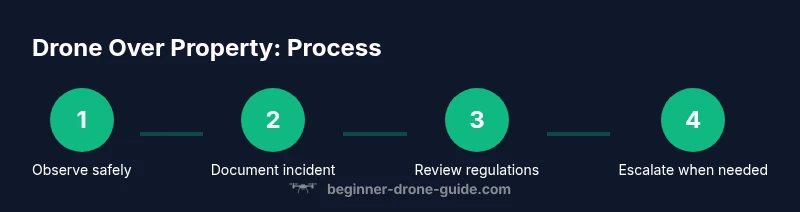
- 1
Observe safely
From a safe distance, note essential details such as time, location, drone color/markings, and flight behavior. Do not follow or confront the drone. Documenting initial observations provides a factual baseline for later actions.
Tip: Keep a safe distance and avoid shouting or swerving toward the drone. - 2
Document the incident
Record date, time, and approximate altitude. Take photos or short videos if possible without violating safety or privacy laws. Save footage securely for potential future use.
Tip: Back up evidence to a separate device or cloud storage. - 3
Check applicable laws
Review FAA regulations and your state/local codes to understand what is permitted and what constitutes a nuisance or privacy invasion. This informs your next steps and ensures you act within the law.
Tip: Keep a printed or saved copy of relevant sections for reference. - 4
Communicate with the operator
If you can identify the operator, send a brief, factual message requesting they avoid over your property. Be polite, cite relevant rules, and offer to share contact info for future correspondence.
Tip: Use a written channel when possible to create a record of the request. - 5
Escalate if needed
If privacy or safety is at risk, contact local law enforcement or the FAA with your documentation. Provide the incident log and any footage you captured to support your report.
Tip: Do not threaten or take matters into your own hands. - 6
Review and follow up
Monitor for ongoing activity and follow up with authorities if the behavior continues. Update the incident log with any new observations and outcomes from authorities.
Tip: Share outcomes with neighbors to encourage consistent practice.
Frequently Asked Questions
What should I do first if a drone starts hovering over my home?
Stay calm, observe, and document details (time, location, operator) before taking any action. If safety is at risk, contact local authorities.
Stay calm, observe, and document details. If there's danger, contact authorities.
Are drones allowed to fly over private property?
Drones may legally fly over private property in many jurisdictions, but operators must follow safety rules and respect privacy. Check FAA guidelines and state/local laws.
Drones can fly over private property in many areas, but operators must follow rules and respect privacy. Check FAA guidelines.
Can I legally shoot down or disable a drone?
No. Do not damage or shoot drones; it may be illegal and dangerous. Report concerns to authorities and the operator.
No, you should not shoot or disable a drone. Report concerns to authorities.
When should I contact authorities about a drone?
If the drone enters your home, harasses you, or appears to risk safety, contact local law enforcement or aviation authorities.
If there's risk or intrusion, contact local authorities or the FAA.
Will a drone incident affect my insurance?
Possible, depending on your policy and the incident. Consult your insurer for guidance and document the event.
Ask your insurer about coverage and keep documentation handy.
Watch Video
Quick Summary
- Know the laws before acting
- Document incidents thoroughly
- Escalate when privacy or safety is at risk
- Use calm, clear communication