What to Do If Drone Crashes: A Practical Guide for Beginners
Learn step-by-step how to respond safely to a drone crash, document evidence, report as required, and recover efficiently. This beginner-friendly guide from Beginner Drone Guide covers safety, insurance, and prevention.


Goal: learn what to do if drone crashes and how to respond safely. This quick guide outlines immediate safety actions, documentation steps, reporting requirements, and recovery tasks to minimize damage and stay compliant. By following these steps, you’ll protect people, protect evidence, and set yourself up for a smooth repair or claim process. What to do if drone crashes is covered in clear, practical terms.
Immediate safety and scene awareness
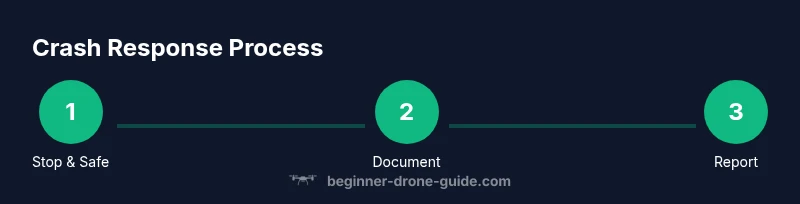
When a drone crash occurs, safety comes first. If you’re wondering what to do if drone crashes, your initial focus must be on people and bystanders, avoiding further risk, and securing the area. Check for any injuries and look for hazards such as leaking batteries, sharp propellers, or fire. If there is an ongoing risk, move yourself and others to a safe distance and call emergency services if needed. Even a seemingly minor incident can escalate quickly, so treat every crash as potentially dangerous until proven otherwise. Keep the drone and the immediate area calm, minimize bystander interaction, and establish a clear perimeter. Remember that mental calm and a methodical approach reduce chaos and prevent mistakes at the scene.
According to Beginner Drone Guide, a calm, documented response helps you act quickly and protect people while preserving evidence for later reporting.
Documenting the incident: evidence collection
Documentation is critical after a crash. You should capture photos and, where possible, video of the crash site from multiple angles, close-ups of damage, and the surrounding environment. Record the drone model, serial number, firmware version, battery status, and recent flight data if available. Note weather conditions, visibility, and any remote controller issues. Save flight logs from the app or controller and back up footage to a secure device. Clear, timestamped evidence speeds up insurance claims and helps you reconstruct the flight for analysis. Ensure your documentation is organized so you can reference it quickly in reports or interviews.
Beginner Drone Guide analysis shows that well-documented incidents reduce delays in claim processing and support accurate investigations.
Safety-first: protect people and property
Put people first. If someone is injured, provide basic first aid and call emergency services if needed. Do not move an injured person unless there is an immediate danger, and avoid touching the aircraft if it is hot or smoking. Establish a safe staging area away from traffic, buildings, and crowds. If the drone landed near water, power lines, or hazardous materials, keep a safe distance and wait for professionals to handle containment. Remember that even a small crash may cause debris to scatter; wear eye protection if you’ll handle fragments. Your goal is to minimize harm while preserving evidence for subsequent steps.
The focus on safety helps you comply with legal and ethical standards and protects your reputation as a responsible pilot.
Reporting requirements and regulatory context
Most jurisdictions require you to report certain types of incidents, especially those involving injury, property damage, or controlled airspace conflicts. Check local aviation authority guidelines for your country and region; in many places you must report to civil aviation authorities or a regional drone office within a specific time frame. If your incident falls under insurance requirements, you will likely need a formal crash report with the documented evidence. Keeping organized records of the event, flight data, and communications will simplify reporting.
Beginner Drone Guide notes that understanding local rules reduces confusion during stressful moments and ensures you stay compliant with licensing and registration obligations.
Insurance and cost considerations after a crash
After a crash, assess your insurance options. If you carry drone liability or hull coverage, promptly contact your insurer and initiate a claim with the documented evidence. Be prepared to provide a crash narrative, damage photos, flight logs, and any witness statements. Understand the policy’s deductibles, limits, and any exclusions that may apply to crashes caused by user error, weather, or hardware failure. If you don’t have insurance, you’ll need to estimate repair costs or the replacement value and discuss repair options with a reputable service center. Document every expense and keep receipts for reimbursement.
Based on Beginner Drone Guide research, proactive communication with insurers typically shortens claims and clarifies coverage boundaries.
Drone inspection and repair planning
Once the scene is secure, plan a careful inspection of the drone. Start with a visual check for frame damage, loose wiring, motor wear, and propeller integrity. Do not power on a suspect unit; instead, perform a thorough pre-flight inspection checklist and consider professional repair assessment if you suspect internal damage. If you own spare parts, compare them against the damaged components, noting part numbers, and record all findings. Decide whether to repair, replace, or retire the drone, and create a budget and timeline for the chosen path. Document any recommended service steps and safe disposal practices for damaged batteries.
A methodical repair plan reduces downtime and helps you resume flying with confidence.
Data and flight logs: how to recover information
Flight data is a critical piece of evidence after a crash. Retrieve flight logs, GPS data, battery health, and controller telemetry if available. If you’re using a separate app, export the last dozen flights and save them with the crash date. Ensure data integrity by keeping original copies and creating secure backups. If the drone is recovered by a third party, request access to the onboard memory card or SD card and photograph its contents. This data matters to insurers, researchers, and authorities when establishing the cause of the crash and your piloting actions.
In most cases, well-preserved data helps you avoid disputes over fault and accelerates resolution.
Prevention steps: training, SOPs, and practice
Crashes are learning opportunities. Review your pre-flight checklists, flight planning, and weather assessments. Create standard operating procedures (SOPs) for different flight scenarios, including takeoff and landing zones, emergency procedures, and maintenance logs. Schedule regular practice flights in controlled spaces to build muscle memory and reduce reaction time in real-world conditions. Consider enrolling in a basic piloting course or simulator sessions to sharpen decision-making under pressure. Document improvements and update SOPs as you gain experience.
The more you practice and document changes, the safer every mission becomes.
Real-world scenarios and quick takeaways
Scenario A: Light wind and a straightforward takeoff lead to a minor tip-over. Documentation reveals no structural damage, and a swift post-flight inspection confirms airworthiness after a battery and propeller check. Scenario B: A GPS glitch triggers an emergency landing near a road. Insurance covers some costs, but authorities require a formal crash report. Both scenarios emphasize planning, evidence, and safety as core habits.
These examples illustrate how the crash-response framework adapts to circumstances while maintaining core safety and reporting principles.
Crash-response for bystanders and privacy considerations
When bystanders are present, maintain a professional, calm demeanor. Avoid sharing sensitive footage publicly without consent, and respect privacy laws regarding recording people without consent. If a bystander’s property is affected, handle communications promptly and ethically. Document consent and any waivers you obtain, and store them with your crash records. Clear communication can prevent misunderstandings and protect you from liability.
Handling bystander interactions responsibly reinforces trust and demonstrates responsible drone ownership.
Quick-start crash-response checklist (condensed)
- Stop and secure the scene; ensure safety for everyone.
- Document the scene with photos/videos; record flight data if possible.
- Power down the drone safely and preserve the memory card.
- Notify authorities or insurers as required; file reports.
- Inspect the drone later and plan repair or replacement.
- Review training and update SOPs to prevent recurrence.
mainTopicQuery
drone crash
Tools & Materials
- First-aid kit(Basic supplies to assist injured person in field)
- Smartphone or camera(Capture photos and video of the scene from multiple angles)
- Flight logbook or app export(Export recent flight data if available)
- Crash report form or paper/notebook(Document the incident and actions taken)
- Marker tape or cones(Mark safe perimeter or hazard zones as needed)
- SD card and spare batteries(Preserve memory and have power sources ready for field work)
Steps
Estimated time: 60-90 minutes
- 1
Stop and secure the scene
Immediately stop flying and bring the drone to a controlled halt if safe. Establish a safety perimeter, check for injuries, and move people away from any hazards. Do not touch hot batteries or broken components until the situation is safe to handle.
Tip: Use a central, clearly visible boundary and assign a clear role for bystanders to keep them at a safe distance. - 2
Check for injuries and hazards
Assess whether anyone is hurt and if there are hazards like gasoline, fire, or sharp debris. If there is a risk of fire, call emergency services. Do not attempt risky rescues or handle damaged batteries with bare hands.
Tip: If a battery is swollen or smoking, keep distance and use non-flammable containment (e.g., metal tray). - 3
Power down and preserve the drone
Gently power down the drone if safe, and avoid handling moving parts. If possible, remove the battery with care only if it’s safe to do so. Place the drone on a stable surface away from bystanders to prevent further damage.
Tip: Do not plug it into a charger or power source until after a proper inspection. - 4
Document the incident and preserve evidence
Take clear photos and short videos of the crash site, the drone, battery, props, and surrounding area. Record the drone’s model, serial number, firmware, battery status, and environmental conditions.
Tip: Back up media to a second device as soon as possible. - 5
Notify the required parties and file reports
Contact your insurer if you have coverage and report to the appropriate aviation authority or local authorities as required by law. File any crash reports with the details you captured.
Tip: Keep copies of all correspondence and receipts for future reference. - 6
Inspect and decide on repair or replacement
Perform a preliminary assessment of structural damage, motor wear, and electronics. Decide whether to repair, replace, or retire the drone, and plan costs and timelines.
Tip: Consult a professional if you’re unsure about internal damage. - 7
Review, revise, and practice
After the incident, review your SOPs and training. Record lessons learned and update checklists to reduce the chance of recurrence. Schedule practice flights in safe environments to regain confidence.
Tip: Document improvements and share best practices with peers.
Frequently Asked Questions
What counts as a drone crash?
A drone crash includes any uncontrolled landing or impact that causes damage or poses risk to people or property. It can be minor or severe and may not involve a crash in flight if the drone damages itself on impact.
A crash means any uncontrolled landing or impact that damages the drone or endangers people, big or small.
Should I move the drone after a crash?
Only if it’s safe and necessary to prevent further harm. If there’s risk of fire or obstruction, relocate the drone cautiously and keep it in a secure area.
Move it only if it’s safe; otherwise, secure the area and call for help if needed.
Do I need to report the incident to authorities?
Regulations vary by country. In many regions, incidents with injuries or significant property damage must be reported to the aviation authority or local authorities. Check your local rules.
Check your local rules; in many places you must report if there are injuries or damage.
What information should I collect after a crash?
Collect time, location, weather, drone model, serial number, firmware, battery status, flight logs, and witness contacts. Photograph the scene and preserve the memory card if safe.
Record the when, where, what happened, drone details, and take photos and logs.
Can I fly again after a crash?
Yes, but only after a thorough inspection and any necessary repairs. If you’re unsure about internal damage, consult a professional before taking off again.
You can fly again after checking the drone and repairing any damage, but don’t fly until you’re sure it’s safe.
How long should I keep crash-related evidence?
Keep flight logs, photos, videos, and invoices for as long as your insurance claim or regulatory inquiry lasts. Archive them securely.
Keep all evidence for as long as the claim or investigation lasts.
Watch Video
Quick Summary
- Prioritize safety first at every crash scene
- Document systematically to support claims
- Know the reporting requirements for your area
- Preserve evidence for insurers and authorities
- Review and improve safety practices after an incident