How to Stop a Drone from Spying on You: Practical Privacy Tips for Beginners
Learn legal, practical steps to reduce drone surveillance at home—from privacy-friendly setups to reporting incidents and working with authorities.


To stop a drone from spying on you, start with legal privacy measures: close your blinds, use privacy screens, and post no-fly or privacy signage on your property. Report suspicious activity to local authorities and the drone operator if possible. Avoid using jammers or dangerous interventions; stay within the law and document incidents.
What counts as privacy invasion by drones
Drones can collect visual data, audio, and telemetry, and what counts as an invasion depends on local laws and your reasonable expectations of privacy. For many homeowners, the most immediate concern is cameras peering into windows, backyards, or private outdoor spaces. You may wonder how to stop a drone from spying on you. The best approach is legal, practical privacy measures that reduce visibility and deter intrusive behavior without risking harm or violating regulations. According to Beginner Drone Guide, privacy-conscious homes should start by assessing sightlines: which windows, patios, or yards are most vulnerable to drone footage? If a drone hovers near your property, the issue becomes less about the drone model and more about the adjacency of vantage points and the operator's intent. Building a privacy plan helps you act quickly and confidently when a drone appears.
Legal framework you should know
Privacy expectations are shaped by national, state, and local laws. In many places, there are no blanket drone privacy laws, but there are rules about nuisance, trespass, and recording people without consent. You should not assume you can disable or destroy a drone; such action could create safety hazards and legal liability. Instead, document incidents with time, date, location, and any identifying details. If you believe a drone is invading your space, contact local law enforcement or a government agency that handles airspace or privacy concerns. The Beginner Drone Guide team notes that clear evidence and timely reporting improve outcomes and help authorities take appropriate action. Stay within the law while protecting your personal space.
Practical privacy measures you can implement at home
Implementing privacy-first design reduces drone visibility and signals to operators that you expect respectful behavior. Start with the basics: close curtains or blinds on windows facing public airspace and use privacy window films where appropriate. Add outdoor lighting with motion sensors to reduce dark, inviting shadows at night. Consider planting dense hedges or using privacy screens to block sightlines from the air. If you rent, discuss privacy options with the landlord and use portable screens for temporary solutions. Finally, post clear signage about privacy and no-fly zones to deter casual incursions. These steps protect you without violating laws or inviting confrontations.
By focusing on physical barriers and visible boundaries, you reduce the likelihood of unwanted footage and create a safer environment for your home. This approach aligns with the guidance Beginner Drone Guide emphasizes for responsible drone use and personal privacy.
How to respond to a suspected drone incident
If you notice a drone behaving intrusively, stay calm and avoid any confrontation. Note the time, location, drone appearance, and any markings you can see. If possible, capture non-invasive evidence (photos or videos from a safe distance) to support a report. Contact local law enforcement or aviation authorities to file a complaint and provide your collected details. Do not attempt to disable or physically interfere with the drone, as this can be unsafe and illegal. Following up with the operator, if identifiable, can sometimes resolve the issue without escalation..pdf The key is to document consistently and act within the bounds of the law.
Non-intrusive tools and strategies for privacy
Non-intrusive tools can help you assert privacy without engaging the drone. Use window coverings and privacy films to prevent interior visibility. Position outdoor furniture and plants to obstruct sightlines to vulnerable windows. Enhance boundary signaling with tasteful no-drone signs or banners for simple deterrence. Improve home security with smart lighting and cameras in areas not visible to the public, while ensuring cameras themselves respect privacy norms. These measures create a holistic privacy layer that reduces the benefits of spying while keeping you compliant with local rules.
When to involve authorities and how to document incidents
Involve authorities if you experience repeated or aggressive drone activity. Start by documenting every incident with date, time, location, and a description of drone behavior. Preserve any video or photo evidence, and note weather and lighting conditions that could affect visibility. Submit a formal report to local police or the aviation authority describing the pattern of activity. If your jurisdiction offers a privacy or nuisance hotline, use it. Keeping a detailed log makes it easier for authorities to respond and for you to seek remedies, including possible civil actions or enforcement measures. Remember: acting lawfully protects you and helps maintain safe skies for everyone.
Authority sources
- Federal Aviation Administration (FAA): https://www.faa.gov/uas
- National Telecommunications and Information Administration (NTIA): https://www.ntia.gov
- Cornell Legal Information Institute (LII) privacy overview: https://www.law.cornell.edu/wex/privacy
Real-world scenarios and examples
Consider a few common cases: a drone hovering near a patio during a private event; a drone filming a backyard while sun glare makes angles unclear; or multiple drones over a neighborhood during a local festival. In each case, use the privacy measures described above, document the activity, and report to the appropriate authorities. You don’t have to accept intrusive behavior—practice proactive privacy planning, and educate neighbors so the community understands boundaries and encourages responsible drone use.
Tools & Materials
- Privacy curtains or blinds(Block views into windows facing public airspace; consider remote-control options for convenience)
- Privacy window films(Static cling or adhesive films to reduce visibility without permanent alterations)
- No-drone signage or property notices(Visible reminders to deter casual incursions)
- Outdoor lighting with motion sensors(Increase nighttime visibility around vulnerable zones)
- Landscaping for sightline reduction(Dense hedges or screens to block direct aerial lines of sight)
- Documentation kit (notebook + camera or phone for evidence)(Record incidents with time, location, and description; preserve screenshots or video if safe)
Steps
Estimated time: 60-120 minutes
- 1
Assess visibility and exposure
Walk your property and identify windows or outdoor spaces that are most likely to be seen from the air. Map sightlines and note any angles where a drone might capture footage. This baseline helps you target privacy upgrades where they matter most.
Tip: Take photos of vulnerable angles before installing coverings so you can plan the most effective placements. - 2
Install privacy barriers
Hang curtains or blinds on sensitive windows. Apply privacy films if you want a semi-permanent solution. Ensure coverings allow you to see outside when desired while blocking inward visibility.
Tip: Choose layered solutions (film plus curtains) for flexible privacy in varying light conditions. - 3
Mark no-drone zones and improve lighting
Place clear signage on property boundaries and illuminate vulnerable areas with motion-triggered lights. These signals deter casual operators and improve nighttime surveillance reliability for you.
Tip: Position lights to minimize glare into the interior without creating harsh shadows. - 4
Document suspected activity
If you suspect spying, log date/time, drone type (if visible), altitude, and behavior. Collect non-invasive evidence like photos or videos from a safe distance and save copies.
Tip: Keep a shared log with neighbors if they also notice activity to identify patterns. - 5
Report and follow up
Report the incident to local law enforcement or aviation authorities with your evidence. If the operator is identifiable, you can also contact them respectfully to request civil boundaries be respected.
Tip: Follow up on your report to ensure action and to add any new incidents to the record. - 6
Educate your community
Talk with neighbors about privacy-friendly drone etiquette and share the steps you’ve taken. A community approach reduces repeated privacy intrusions.
Tip: Organize a neighborhood meeting or digital group to track and report drone concerns.
Frequently Asked Questions
What counts as privacy invasion by a drone?
Privacy invasion occurs when a drone captures or transmits footage of your private space without consent. The specifics depend on local law, but intrusive filming of windows, balconies, or backyards is commonly considered a privacy concern. Always document incidents and seek lawful remedies.
Privacy invasion means a drone captures footage of your private space without consent. Laws vary, but intruding on windows or backyards is typically treated seriously. Document incidents and contact authorities when needed.
Are there legal ways to stop a drone from spying?
Yes. Use privacy-enhancing home improvements, friendly signage, and reporting procedures. Do not attempt to disable the drone or confront the operator. Legal remedies focus on deterrence, evidence, and enforcement actions by authorities.
There are legal steps you can take, like improving privacy at home and reporting incidents. Do not try to shoot or jam the drone; rely on authorities and documented evidence.
What should I do if a drone is repeatedly spying on me?
Document every incident, note details like time and location, and report to law enforcement or aviation authorities. Consider community alerts and signage to deter ongoing intrusions. Legal action may be pursued if a pattern emerges.
If it happens repeatedly, keep a log and report it to the authorities. Signage and privacy upgrades can help deter future incidents.
Can I legally photograph or video a drone over my property?
In many places, photographing a drone in public airspace from your property is allowed if you stay within local laws. Always avoid escalating situations and use documentation to support any reports to authorities.
Usually you can document what you see, but avoid confrontation. Use official channels if you need enforcement.
When should I involve authorities about a drone incident?
If a drone invades privacy repeatedly or appears dangerous, contact local police or aviation authorities with your evidence. They can advise on enforcement options and potential legal remedies.
If it keeps happening or feels unsafe, contact the authorities with your evidence to get proper help.
Watch Video
Quick Summary
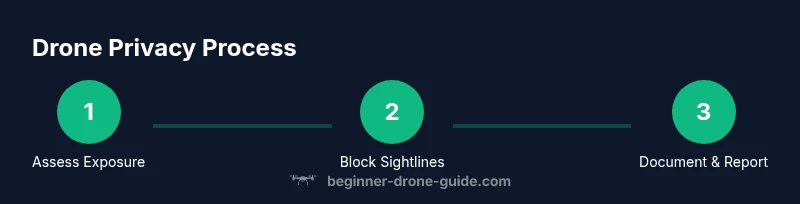
- Assess exposure and prioritize privacy upgrades
- Use legal, non-invasive measures to block sightlines
- Document incidents and report to authorities when needed
- Stay within the law while protecting your space