How to Know When Drone Battery Is Fully Charged
Learn practical steps to verify a drone battery is fully charged, including per-cell voltage targets, charger indicators, safety tips, and maintenance for LiPo packs.


Fully charged means every cell reaches its safe maximum, typically 4.2V per LiPo cell, with the pack voltage at the balance point (e.g., ~12.6V for a 3S, ~16.8V for a 4S). Use a smart, balance-capable charger and monitor indicators during charging. According to Beginner Drone Guide, following these per-cell and pack-voltage guidelines protects battery life and flight safety.
What does fully charged mean for drone batteries?
When people ask how to know when drone battery is fully charged, they are really asking about two voltage levels: per-cell voltage and pack voltage. For LiPo packs used in most consumer drones, each cell is considered full at about 4.2V when the cells are balanced. The total pack voltage depends on the number of cells: a 3S pack is around 12.6V, a 4S pack around 16.8V. Chargers that support balance charging ensure every cell reaches 4.2V; without balance charging, some cells can stay undercharged while others reach 4.2V, which reduces overall capacity and can stress cells. This understanding helps you avoid overcharging and undercharging, and it answers the key question of how to know when drone battery is fully charged. Remember, always rely on your charger’s indicators as the primary signal of a full charge, not only the time elapsed.
What does fully charged mean for drone batteries?
Fully charged means both per-cell voltage and pack voltage have reached safe maximums for the chemistry in use. For LiPo, aim for around 4.2V per cell when the pack is balanced. If you have a 3S pack, your charger should show roughly 12.6V; for a 4S pack, about 16.8V. A balanced charge ensures all cells reach 4.2V, while an unbalanced approach can leave some cells undercharged. This is why understanding the per-cell target is essential when you practice how to know when drone battery is fully charged.
How you’ll use this information in practice is the most important takeaway. When the charger shows full and the cells read close to 4.2V each, you’re nearing the balance point.
Tools & Materials
- Smart charger with balance charging(Supports LiPo/Li-ion and multi-cell packs (3S/4S common))
- Drone battery and spare battery(s)(Have the exact model used for your drone)
- AC power supply or wall adapter(Reliable power source with adequate current rating)
- LiPo safety bag or fireproof charging container(Containment in case of a fault)
- Digital multimeter or LiPo checker(Optional for per-cell voltage verification)
- Ventilated charging area(Away from flammable materials)
- Temperature sensor or infrared thermometer (optional)(Monitor battery temperature during charging)
Steps
Estimated time: 60-120 minutes
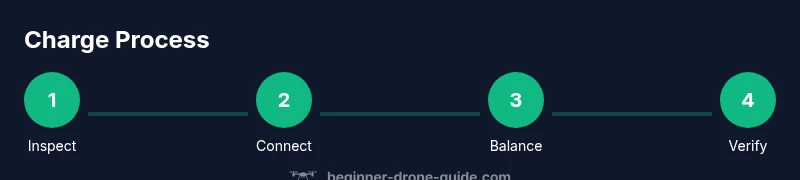
- 1
Inspect battery health
Check the battery and leads for swelling, punctures, or damage before charging. Damaged packs should be replaced and not charged.
Tip: Swollen cells are a fire risk—do not attempt to salvage. - 2
Prepare charging area
Place the battery and charger on a non-flammable surface in a well-ventilated area. Remove any loose items that could snag the leads.
Tip: Keep a LiPo-safe bag nearby in case of heat or puffing. - 3
Power the charger
Plug your charger into a reliable power source and verify the unit is functioning with a basic test.
Tip: Use a dedicated outlet to avoid overloading circuits. - 4
Connect battery to charger
Attach the battery connectors to the charger’s balance port and ensure polarity is correct. If your charger offers multiple modes, select Balance or Balance Charge for LiPo packs.
Tip: Double-check connectors before initiating charging to prevent shorts. - 5
Start charging in balance mode
Initiate the charging process in balance mode. This charges each cell to 4.2V and equalizes cell voltages across the pack.
Tip: Balance charging is essential for maintaining health in LiPo packs. - 6
Monitor indicators and temperature
Watch the charger display for a full charge; stop if the battery becomes noticeably warm or hot to the touch. Do not rely solely on timer estimates.
Tip: If the pack gets hot beyond 40°C, stop charging and inspect for shorts or damage. - 7
Terminate charging and cool down
When the charger shows full, disconnect the battery and allow it to cool in a safe area before storage or flight.
Tip: Never immediately cover or seal a hot LiPo pack. - 8
Verify voltage (optional)
If you have a multimeter or LiPo checker, verify each cell reads ~4.2V and total voltage equals cells × 4.2V.
Tip: Intermittent verification helps confirm the charger is accurate. - 9
Store or seat on the drone
Store the battery at a safe storage level (roughly 3.7–3.85V per cell) if not using it immediately, and recheck balance before next flight.
Tip: Plan storage cycles to preserve cell health.
Frequently Asked Questions
What does it mean for a drone battery to be fully charged?
Fully charged means each cell is at or near its maximum safe voltage, and the pack voltage reflects this balance. For LiPo, this is typically 4.2V per cell when balanced. Always rely on the charger indicators to determine full charge.
Fully charged means every cell is at its max safe voltage, typically 4.2 volts per cell, and the charger indicates full balance.
Can I overcharge a drone battery?
Overcharging LiPo packs can damage cells and increase fire risk. Use a smart charger with a balance mode and automatic cut-off to minimize this risk.
Yes, overcharging LiPo packs is dangerous; use a smart charger with auto cut-off.
Is it safe to charge outdoors?
Charging outdoors is possible if you have shade, proper containment, and supervision. Never charge in direct sunlight or on flammable surfaces and use a LiPo bag for extra safety.
Outdoor charging can be safe with proper safety, but always supervise and use a LiPo bag.
What should I do if a battery swells during charging?
If swelling occurs, stop charging immediately, move the battery to a safe location, and dispose of it according to local regulations. Do not puncture or apply pressure to swollen cells.
If you see swelling, stop charging and handle the battery safely.
How long does charging typically take?
Charge time varies by capacity and charger. Plan for 30–120 minutes for most consumer drones, depending on pack size and whether the charger performs a fast or balance charge.
Most drone batteries take about 30 to 120 minutes to charge, depending on size and charger.
What’s the difference between cell voltage and pack voltage?
Cell voltage is the voltage of an individual cell (typically 3.7V nominal, 4.2V full). Pack voltage is the sum of all cell voltages in the pack. Both matter for safe charging and flight performance.
Cell voltage is per cell, while pack voltage is the total; both guide safe charging.
Watch Video
Quick Summary
- Know per-cell and pack voltage targets before charging.
- Use balance charging to maintain cell health.
- Monitor indicators and temperature during charging.
- Store LiPo batteries at safe storage voltage when idle.
- Inspect batteries regularly for swelling or damage.