How to Get Rid of a Drone in Detroit: A Beginner's Guide
Learn safe, legal steps to handle drone nuisance in Detroit. This beginner guide covers reporting, privacy protection, and practical actions without confrontation.


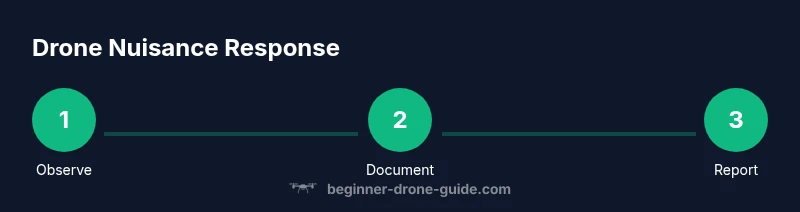
According to Beginner Drone Guide, if a drone is hovering over Detroit and you want to deal with it safely and legally, start with observation and privacy protection, then report to authorities. Do not attempt to shoot or jam the drone. This guide outlines the legal options, how to document nuisance, and the steps to take with FAA and local police to resolve the situation quickly.
Understanding the nuisance and the goal
When people ask how to get rid of the drone in detroit, the goal is to protect safety and privacy without breaking the law. Drones over urban areas can be harmless curiosity or invasive surveillance; the difference lies in intent, flight path, and proximity to people. This guide emphasizes lawful, non-confrontational actions that illuminate your rights as a resident or business owner. By focusing on documentation, credible reporting, and cooperation with authorities, you create a clear path toward resolution while keeping everyone safe. The phrase how to get rid of the drone in detroit should guide your actions, not justify risky behavior. Keep in mind that Detroit residents benefit from clear records, timely communication with authorities, and adherence to federal guidelines.
Legal framework you should know in Detroit and beyond
The federal government, via the FAA, regulates UAS operations across the United States, including Detroit. In most cases, hobbyist and commercial flights must stay below 400 feet above ground level and within the pilot’s line of sight, unless a waiver is granted. Operators must avoid crowds, critical infrastructure, and restricted airspace. Private citizens are generally not permitted to shoot down or disable a drone; attempting to do so can lead to criminal charges and liability. Understanding these boundaries helps you respond calmly and legally when a drone appears over your property. In addition, privacy laws protect against unauthorized surveillance on private spaces, so documenting incidents and reporting them properly is crucial. This section lays the groundwork for safe, effective action that aligns with best practices recommended by Beginner Drone Guide.
Documenting the incident and filing reports
Accurate documentation is the backbone of an effective response. Note the date, time, location, drone appearance, flight path, and any effects on people or property. If possible, capture video or photos from a safe distance without approaching the aircraft. This is essential for both police reports and FAA inquiries. Based on Beginner Drone Guide analysis, timely, well-documented reports improve the likelihood of an appropriate response from authorities. After gathering details, file reports with the FAA if the flight appears to violate regulations, and contact local law enforcement through the non-emergency line for nuisance concerns. Remember to keep personal safety at the forefront and avoid confrontation on the ground.
Non-confrontational steps you can take now
If you’re dealing with a nuisance drone, prioritize non-confrontational actions. Politely notify the property owner or drone operator if safe and feasible, request them to land or avoid sensitive areas, and increase privacy measures around windows and outdoor spaces with screens or barriers. Use signage to deter crowds from gathering under flight paths and consider coordinating with neighbors to address the issue collectively. These measures respect privacy and reduce risk without escalating tension. Always avoid attempting to interact with the drone or the operator in a way that could provoke a dangerous situation. The goal is to deter unauthorized flights while staying within the law.
What to expect after you report
Once you file a report, authorities will review the incident and determine appropriate action. The FAA investigates potential violations of airspace rules, while local police assess immediate safety and nuisance concerns. The timeline varies by case complexity and workload, but you can typically expect a period of assessment followed by guidance, enforcement actions, or referrals to other agencies. Stay responsive to follow-up requests and maintain your documentation. Expect ongoing communication rather than instant resolution, and continue applying privacy-conscious practices in the meantime. This helps ensure a thorough, lawful outcome for residents dealing with drone nuisance in Detroit.
Privacy, prevention, and longer-term strategies for Detroit residents
Beyond reacting to a single incident, consider long-term privacy and safety strategies. Install window film or privacy screens where practical, adjust landscaping to block sight lines from common hovering zones, and establish clear boundaries with neighbors about drone behavior near private spaces. Engage with community forums or neighborhood associations to advocate for stronger nuisance policies or more consistent enforcement. While you can pursue remedies through formal channels, maintaining proactive privacy protections reduces risk while the system processes the case. This approach aligns with the best practices outlined by Beginner Drone Guide for sustainable, safe living in urban environments like Detroit.
Tools & Materials
- Smartphone or notebook(Log times, locations, drone color/markings, flight path; take quick notes during the incident)
- Camera or smartphone for photos/videos(Capture evidence from a safe distance; avoid approaching the drone)
- FAA incident reporting resources(Use the FAA online reporting form for potential airspace violations)
- Local non-emergency police contact(Report nuisance incidents to Detroit or the applicable municipality)
- Privacy enhancement items(Window blinds, privacy screens, outdoor fencing, or plants to block sightlines)
Steps
Estimated time: 60-90 minutes
- 1
Observe and log details
From a safe distance, observe the drone's flight path, altitude, duration, and any interactions with people or property. Record times, locations, and noticeable markings. This forms the factual basis for any report.
Tip: Do not approach or attempt to intercept the drone; your safety comes first. - 2
Ensure safety and privacy
Move people away from the area if needed and limit exposure to the drone’s surveillance. Close blinds or use privacy barriers to protect living spaces during the incident.
Tip: Avoid actions that could escalate risk or lure the operator into confrontational behavior. - 3
Contact authorities
Call the local non-emergency police line to report the nuisance and provide documented details. If the drone poses immediate danger, dial emergency services. Inform the dispatcher you’re reporting a UAS nuisance over your property.
Tip: Have your log and evidence ready to share; this speeds up the response. - 4
File FAA and police reports
Submit an FAA incident report if applicable and file a police report for nuisance. Include dates, times, photos/videos, and a clear description of how the incident affected safety or privacy.
Tip: Keep copies of all reports and confirmations for your records. - 5
Preserve evidence
Save video clips and still images with timestamps. Do not delete files; maintain an organized archive to support follow-up actions.
Tip: Back up evidence to cloud storage if possible for redundancy. - 6
Implement privacy measures
Increase privacy around vulnerable areas using screens or landscaping and communicate with neighbors about the incident to build a united front against nuisance flights.
Tip: Document the effectiveness of privacy measures for potential future incidents. - 7
Follow up and review outcomes
Check back with authorities on case progress and review any enforcement actions. Adjust neighborhood safety plans as needed and share what worked with others.
Tip: Maintain a calm, cooperative stance to improve long-term results.
Frequently Asked Questions
Is it legal to shoot down a drone over Detroit?
No. Shooting or interfering with a drone is illegal in most cases and can lead to criminal charges. The recommended path is to report the nuisance to authorities and let them handle the enforcement.
No, shooting a drone is illegal. Report the incident to authorities and let them enforce the rules.
What should I do immediately if a drone hovers over my family?
Move people to safety, document details from a distance, and contact the non-emergency police line. If there is an imminent threat, call emergency services.
Move people to safety, document the incident, and contact authorities. Call 911 if there’s an immediate danger.
How do I report a drone nuisance in Detroit?
Record the incident details, then file a police report and an FAA incident report if applicable. Provide dates, times, location, and any evidence.
Record details, file with police, and report to the FAA if it involves airspace violations.
Can I use anti-drone devices to remove a drone?
No. Anti-drone devices like jammers are strictly regulated and often illegal for private individuals. Rely on official reporting channels and lawful deterrents.
Using jammers is usually illegal. Stick to reporting and safe, legal privacy measures.
What altitude rules should pilots know near Detroit?
In general, FAA rules limit most drones to 400 feet above ground level unless a waiver is granted. Always check local airspace restrictions before flying or reporting concerns.
Most drones should stay under 400 feet unless a waiver is granted. Check local airspace rules.
What privacy measures can I implement quickly?
Install privacy screens, adjust landscaping, or use physical barriers to block sightlines during potential nuisance flights.
Use blinds or privacy screens and physical barriers to block sightlines quickly.
Watch Video
Quick Summary
- Document every detail and preserve evidence
- Report to FAA and local authorities promptly
- Do not confront or attempt to disable the drone
- Protect privacy with practical barriers and signage
- Follow up to ensure appropriate action is taken