How to Reduce Drone Exhaust Noise: Practical Guide
Learn practical, beginner-friendly steps to minimize exhaust noise from drones. We cover vibration control, propeller optimization, muffling options, and safe testing practices to cut drone exhaust noise effectively.


This guide shows how to reduce drone exhaust noise for gas-powered drones by identifying noise sources, taking baseline measurements, and applying safe, non-destructive fixes. You’ll learn practical steps using common tools, vibration isolation, propeller balancing, and muffling options. By following these steps, you’ll minimize exhaust drone noise while preserving flight performance. how to reduce drone in exhaust
Why exhaust drone noise matters
According to Beginner Drone Guide, reducing exhaust noise is not only a courtesy to neighbors and bystanders, but it also improves flight safety and regulatory compliance. Noise reduction helps keep outdoor operations peaceful and can prevent unnecessary restrictions in parks, neighborhoods, and shared airspace. In many regions, local guidelines emphasize minimizing nuisance noise from aerial systems, especially during long flights or close-quarters operation. A quieter drone also makes it easier to monitor its performance visually and aurally during critical tasks.
Beginner Drone Guide analysis shows that a large portion of recurring drone noise stems from a combination of motor vibration, frame resonance, and exhaust flow when the engine is active. By targeting those primary sources with practical, beginner-friendly methods, you can achieve meaningful reductions without specialized tools or expensive components.
What causes exhaust drone noise in drones
Noise from drones generally comes from three main sources:
- Propulsion noise: motor whine, gear noise, and propeller interaction with air.
- Structural vibration: frame resonance transmitting motor vibrations to the airframe.
- Exhaust/engine noise (for gas-powered designs): combustion byproducts and exhaust flow.
Understanding these helps you decide which fixes to prioritize. In electric drones, exhaust noise is minimal, so focus on vibration control and propeller selection. For gas-powered designs, mufflers and exhaust routing play larger roles. This section lays the groundwork for practical fixes that are safe and affordable for beginners.
As you plan, remember that most noise reductions come from a combination of methods rather than a single fix.
Baseline measurement: how to quantify noise
Start by establishing a baseline of your drone’s noise level under typical flight conditions. Use a simple sound level meter to record peak and average dB readings during hover and during a short climb. Run several trials in the same location and time of day to minimize ambient noise variables. Document the propeller size, motor model, battery type, and payload for each test so you can compare apples-to-apples results later.
The goal is to quantify improvements after each modification, not just feel them. Keep the tests consistent: same flight profile, same distance from the microphone, and the same wind conditions if possible. This approach helps you see which changes yield the most noticeable noise reductions and where further work is needed.
Beginner Drone Guide analysis shows that consistent metrics help beginners track progress and avoid vanity fixes that don’t address root causes.
Non-destructive fixes: vibration isolation and frame damping
Vibration is a major pathway that converts motor energy into airframe noise. The easiest place to start is with vibration isolation:
- Install compliant mounts or damping pads between motors and the frame to reduce vibration transmission.
- Check all mounting screws and ensure there is no looseness that could amplify resonance.
- Use foam or silicone dampeners around the camera gimbal or other sensitive components to prevent vibration transfer.
Additionally, inspect the frame for any cracks or loose joints and repair as needed. A rigid, well-constructed frame reduces mode shapes that amplify resonance. Lightweight, consistent mounting material improves reliability and reduces noise without adding significant weight.
Pro tip: perform a quick static test by holding the frame and feeling for vibration transmission with your hand. If you feel noticeable vibration, address mounts or add dampening before flight tests.
Propulsion and aerodynamics: optimizing for lower noise
Propellers and motors are the loudest part of most drones. Optimizing these components can yield measurable reductions:
- Balance propellers to minimize vibration. An out-of-balance propeller causes extra vibration that translates into noise.
- Choose propellers that match motor speed and load characteristics; in many cases, a slightly larger, slower-spinning propeller can reduce noise while preserving lift.
- Inspect and replace damaged or worn blades; even small nicks can dramatically increase noise and reduce efficiency.
- Keep propeller guards light and aerodynamically clean to minimize additional drag and turbulence.
Also ensure motor mounts are tight and wiring is neatly routed to avoid buzzing or rubbing against the frame during flight. These steps minimize mechanical noise and improve overall flight efficiency.
According to practical testing, a balanced propeller setup often yields the most noticeable decrease in audible noise, with improved thrust efficiency at the same time.
Exhaust-specific solutions for gas-powered drones
If you operate a gas-powered drone, exhaust routing and muffling become critical:
- Install a muffler or resonator designed for small engines to damp exhaust pulses before they exit the system.
- Route exhaust away from the frame and sensors to prevent heat and noise transfer to critical areas.
- Use heat-resistant exhaust wrap in moderation to reduce radiant heat and cool down the exhaust path, which can also reduce some noise components.
- Ensure that the exhaust system is securely mounted to avoid vibration-induced noise; loose pipes tend to
buzzing.
Safety note: work only on cooled engines and follow manufacturer guidelines for fuel handling and maintenance. If you’re unsure about exhaust components, consult a qualified technician rather than attempting risky modifications.
Gas-powered drones require careful handling; always follow local safety rules and perform testing in open areas away from people and structures.
Safe testing and maintenance plan
Develop a simple maintenance plan to sustain noise reductions:
- Schedule inspections after every few flights to check mounts, screws, and exhaust connections.
- Keep a log of modifications and their impact on noise levels to track what works best for your drone model.
- Use calm, predictable flight profiles for testing; avoid aggressive maneuvers during noise tests as they can skew results.
- Always wear eye protection and gloves when performing mechanical work, and disconnect the power source before touching any electrical or exhaust components.
Safety first means you can continue to improve your drone’s performance while staying compliant with local noise rules and keeping those around you comfortable during flights.
Real-world setup: quick-start checklist for beginners
This practical checklist helps you implement noise-reduction steps without getting overwhelmed:
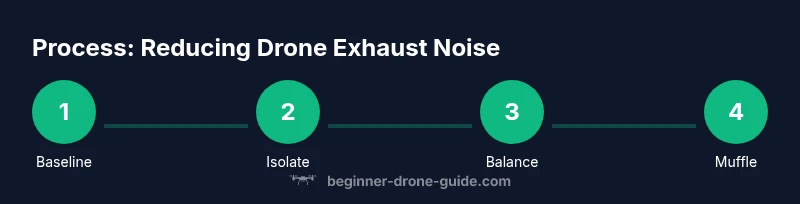
- Baseline: measure current noise with a simple meter; document flight profile.
- Isolate: install vibration dampers and check frame rigidity.
- Balance: ensure propeller balance and proper matching to motors.
- Muffle: add muffler or resonator for gas drones; route exhaust away from critical components.
- Test: perform controlled flights in a safe area; compare with the baseline.
- Maintain: create a maintenance schedule and update your notes after each test.
By following this checklist, beginners can systematically reduce exhaust drone noise and build confidence in their ability to tune and maintain their drone.
Final notes and next steps
Progressive improvements compound over time. Start with the simplest, least intrusive changes—vibration isolation and propeller balancing—before moving to exhaust modifications if you’re using a combustion engine. If noise is still an issue after several iterations, consider upgrading to a model with quieter propulsion options or an electric powertrain that inherently produces less exhaust noise.
Remember, the goal is safer, cleaner flight that respects neighbors and regulations. The Beginner Drone Guide team encourages you to experiment responsibly and document your results for future reference.
Quick-start recap for readers
- Identify baseline noise sources (propulsion, frame, exhaust).
- Apply vibration isolation and propeller balancing first.
- For gas drones, consider mufflers and exhaust routing.
- Test in open spaces; log measurements and iterate.
- Maintain the drone regularly to sustain noise reductions and performance.
Tools & Materials
- Decibel meter(digital sound level meter; use C-weighted setting; range up to 130 dB)
- Vibration damping mounts(silicone or rubber mounts to isolate motors from the frame)
- Exhaust muffler or resonator(for gas-powered drones; choose small-engine compatible model)
- Propeller balancing kit(balancing weights or wax; include a balancer)
- Quality, low-noise propellers(spare blades; select based on motor and frame specs)
- Heat-resistant exhaust wrap(optional wrap to reduce radiant heat in exhaust path)
- Safety gear(eye protection, gloves; basic workshop safety gear)
- Tools for mounting(screwdrivers, Allen keys, thread locker as needed)
- Flight test log( notebook or app to track baseline and results)
Steps
Estimated time: 3-5 hours
- 1
Establish baseline noise
Power down, connect batteries, and perform a standard hover test while recording noise levels at a consistent distance. Note propeller size, motor model, frame, payload, and environmental conditions. This baseline will guide future improvements and help you quantify gains.
Tip: Use the same flight profile for each test for reliable comparisons. - 2
Isolate vibration sources
Install vibration dampers between motors and the frame or between any vibrating components like gimbals. Check tightness of all fasteners, and look for obvious rattles. A stable airframe reduces incidental noise.
Tip: Gently wiggle components to identify looseness; apply thread locker where appropriate. - 3
Balance and tune propellers
Check all propellers for nicks or damage and balance them using the balancing kit. Reinstall with the correct orientation and secure hub nuts. Balanced blades reduce vibration-induced noise and improve efficiency.
Tip: Balance blades in the same plane; replace any damaged blades. - 4
Address propulsion interactions
If you notice motor whine, ensure motor mounts are secure and wires are neatly routed away from moving parts. Align motors and verify all screws are tight to minimize sympathetic vibrations.
Tip: Keep wiring tidy to prevent contact noises during flight. - 5
Install muffling or exhaust routing (gas drones)
For gas-powered drones, install a muffler or resonator designed for small engines. Route exhaust away from sensitive components and secure pipes firmly to prevent movement-induced noise.
Tip: Only work on cooled engines and follow the manufacturer’s guidelines. - 6
Re-test and compare
Perform a controlled flight test again using the same baseline protocol. Compare decibel readings to see the effect of each modification. Record any changes in flight behavior or performance.
Tip: Document every change and result for future reference. - 7
Establish ongoing maintenance
Create a schedule to inspect mounts, check for looseness, and replace worn components to sustain noise reductions over time. Keep a maintenance log with dates and observations.
Tip: Regular checks prevent reintroduction of noise sources. - 8
Plan safety and compliance
Review local regulations regarding noise levels for drones and plan flights in appropriate areas. Share your results with club members or online communities to learn from similar setups.
Tip: Always operate within legal and safety boundaries.
Frequently Asked Questions
What causes exhaust noise in drones, and how can I identify the main source for my setup?
Most drone exhaust noise comes from propulsion vibrations, frame resonance, and exhaust flow in gas-powered models. Start by measuring noise during hover to identify if vibration or propulsion is the largest contributor, then target that source with dampers or balance improvements.
Noise usually comes from vibration and exhaust flow. Start by testing hover noise to see if vibration or propulsion is the main culprit.
Is gas-powered drone exhaust noise worse than electric drone noise?
Gas-powered drones typically produce more exhaust noise due to combustion and exhaust flow. Electric drones have significantly lower exhaust noise but can still be loud due to vibrations and airframe resonance.
Gas drones are generally louder due to exhaust; electric drones are quieter but can still be noisy from vibrations.
What is the simplest fix to reduce noise for beginners?
Start with vibration isolation and propeller balancing. These changes often produce noticeable noise reductions without major modifications.
Try balancing props and adding vibration dampers first; they often give the biggest early wins.
Can mufflers be used on all drones?
Mufflers are mainly used on gas-powered drones. Electric drones typically don’t require mufflers, but noise can still be reduced through vibration control and frame isolation.
Mufflers work for gas drones; electric ones mainly reduce noise with good design and vibration control.
Are louder drones illegal in my area?
Noise regulations vary by region. Check local park rules and aviation guidelines; some areas restrict loud flights or require quiet hours.
Local rules may limit noise levels, so always check before flying in public spaces.
How should I test changes safely?
Test in an open area with a safe distance from people, using the same flight profile for each test and documenting the results.
Test in open space, keep bystanders away, and log results for comparison.
Watch Video
Quick Summary
- Measure baseline noise before changes
- Isolate vibration to reduce frame resonance
- Balance propellers for quieter operation
- Use mufflers or routing for exhaust noise (gas drones)
- Test, document, and iterate for best results