What Causes Drone in Exhaust? A Practical Troubleshooting Guide for Beginners
Discover what causes drone in exhaust, how to diagnose safely, and practical fixes for beginner drone pilots. Quick checks, diagnostics, and step-by-step guidance to resolve exhaust-related issues fast.


Most likely, an exhaust-related drone comes from a simple mechanical issue rather than a mysterious fault. The two most common causes are a loose mount or prop imbalance that creates vibration transmitted to the exhaust area, and debris or obstruction in the exhaust path that amplifies a drone-like sound. Quick fix: power down safely, inspect the exhaust outlet, check motor mounts and prop balance, remove any debris, tighten fasteners, and reseat components. If the drone noise persists, proceed with the diagnostic flow for a deeper check.
Understanding What Causes Drone in Exhaust The phrase what causes drone in exhaust often shows up in beginner drone guides when pilots notice a persistent, low-frequency hum that seems tied to exhaust paths or the airframe. In practical terms, this is usually a vibration or obstruction issue rather than a mysterious software fault. For beginners, the goal is to isolate whether the exhaust-like drone is caused by mechanical looseness, prop balance problems, or something stuck in the exhaust-like ducting on the drone’s body. By recognizing this pattern, you can triage quickly and avoid risky flight attempts while troubleshooting. The Beginner Drone Guide team emphasizes that addressing exhaust-related drone should start with safety checks and a simple inspection before moving to deeper diagnostics. What causes drone in exhaust often boils down to tangible, repeatable factors you can fix with basic tools and a careful eye.
Potential Interpretations: Two Roads to Diagnosis In many cases, what causes drone in exhaust on a drone comes down to interpretation. First interpretation: the drone’s vibration is transferring to the exhaust path, causing a drone-like resonance. Second interpretation: a physical obstruction or debris is physically occupying the exhaust outlet or frame cavity, producing an audible drone. Both interpretations share a common pattern: a relationship between vibration, airflow, and the exhaust area. By keeping an eye on motor performance, prop balance, and frame integrity, you can determine which interpretation applies and proceed with the appropriate fixes quickly.
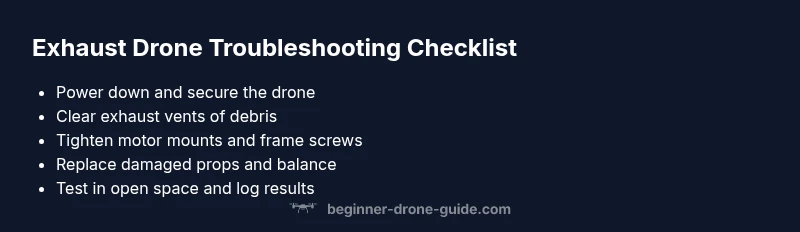
Quick, Safe Checks You Can Do Now If you suspect what causes drone in exhaust, start with these quick checks. - Power down and remove the battery to prevent accidental spins or injuries. - Inspect the exhaust outlet or rear vents for debris, leaves, or fabric fibers and clear them gently. - Check all quick-release latches, screws, and motor mounts for looseness; tighten as needed per the manufacturer’s torque specs. - Examine propellers for nicks or imbalance; replace damaged props. - Spin the motors on the bench to listen for unusual vibration without air impact. These checks address the most common causes of what causes drone in exhaust and can drastically reduce noise if a simple obstruction or looseness is found.
Diagnostic-Flow Overview: Symptom → Cause → Fixes This section maps typical symptoms to likely causes and practical fixes, so you can follow a logical, safe path. If you notice a muffled or resonant drone around the exhaust area during flight, the culprit is often mechanical rather than software. Likely causes include a loose frame screw or motor mount, which lets vibration travel into exhaust portals; a misbalanced prop that causes uneven thrust; or debris in exhaust vents that amplifies noise. Solutions range from tightening hardware to replacing props, or clearing blockages. If after these steps the problem persists, consult a professional for a thorough inspection of the frame, motors, and exhaust-like channels.
Step-by-Step Fixes Overview: Aligning Symptoms with Action This overview provides a practical, high-level plan you’ll implement in the dedicated STEP-BY-STEP block. 1) Confirm safety first: remove power and secure the craft. 2) Rule out obstruction: clean exhaust vents and ensure no loose debris remains. 3) Inspect hardware: confirm motor mounts and frame screws are tight. 4) Check propulsion: balance and condition of propellers; replace if damaged. 5) Reassemble and test in a safe, open area. 6) If noise persists, advance to a deeper diagnostic with vibration analysis. Remember what causes drone in exhaust often resolves with these straightforward checks, but if in doubt, seek professional help.
Safety Considerations and Common Mistakes When dealing with what causes drone in exhaust, never fly a drone with blocked vents or loose components. Always remove power before inspecting, and wear eye protection when handling spinning parts. Common mistakes include ignoring small looseness that grows into a bigger wobble, failing to balance props, and neglecting regular maintenance schedules. Keeping your gear clean, tightened, and properly balanced minimizes the risk of exhaust-related drone issues and preserves flight safety.
Steps
Estimated time: 45-60 minutes
- 1
Power down and secure the drone
Ensure the aircraft is fully powered off and the battery is disconnected. Remove the battery before touching moving parts to prevent accidental starts. This creates a safe baseline to inspect exhaust-related issues without risk.
Tip: Take a photo of screw placements before removing any components so reassembly is precise. - 2
Inspect the exhaust path for obstructions
Look for debris, leaves, or fabric caught in vents or ducts near the rear of the drone. Use a soft brush or compressed air to clear out any hindrance from the exhaust-like channels. A simple blockage can create a resonant drone.
Tip: Be gentle to avoid damaging delicate vent fins. - 3
Check motor mounts and frame integrity
Examine all screws and mounts around the rear section for looseness. Tighten as needed using the correct torque specs from the manufacturer. A loose mount often causes vibration to travel into the exhaust path.
Tip: Use a torque driver if available to maintain consistent tightness. - 4
Assess propellers for balance and damage
Inspect each propeller for chips, cracks, and curvature. A damaged or imbalanced prop can create uneven thrust and contribute to a drone-like exhaust sound. Replace any damaged props and balance the rest.
Tip: Balance props using a prop balancer to ensure even rotation. - 5
Reassemble and perform a bench test
Reattach all components securely and reconnect the battery. Power on in a controlled, open area and listen for the exhaust-related drone. Observe vibration levels on the frame; if abnormal, stop and re-check each step.
Tip: Start with a gentle throttle to avoid dynamic loads that could mask issues. - 6
Conduct a safe flight test
Take the drone to a large, safe area. Fly a short hover and monitor exhaust-like vibrations under light loads. If the noise returns, log the behavior and consider deeper diagnostics.
Tip: Have a spotter and a first-aid kit handy during test flights. - 7
Document and plan next steps
Record findings, such as the exact symptom and fixes applied. If the issue persists after these steps, schedule a professional inspection focusing on vibration analysis and exhaust channel integrity.
Tip: Keep a maintenance log to prevent future repeats.
Diagnosis: A drone exhibits a persistent exhaust-like drone or vibration near the rear exhaust outlets while on the ground or in flight.
Possible Causes
- highObstruction in exhaust outlet or rear vents causing flutter
- mediumLoosened motor mounts or frame screws transmitting vibration to exhaust area
- lowDamaged or unbalanced propellers causing thrust irregularities
Fixes
- easyPower down safely and inspect the exhaust outlet for debris; remove any obstruction
- easyTighten motor mounts, frame screws, and prop nuts to the manufacturer’s torque specs
- easyReplace damaged props and re-check balance; run a low-risk ground test
Frequently Asked Questions
What does the phrase 'what causes drone in exhaust' typically refer to in drone troubleshooting?
It usually points to a vibration or obstruction issue affecting the exhaust-like area of the drone. Start with simple checks like debris removal and tightening hardware before deeper diagnostics.
It usually means vibration or a blockage near the exhaust area. Start with quick checks like clearing debris and tightening screws.
Is a damaged propeller likely to cause exhaust-related drone symptoms?
Yes. A damaged or unbalanced prop can create uneven thrust and vibrations that amplify noise near exhaust outlets. Replace damaged props and balance the rest.
Yes, damaged props can cause vibration that sounds like exhaust drone.
When should I seek professional help for exhaust-related drone issues?
If you cannot identify or fix the obstruction, loose hardware, or vibration after following the troubleshooting steps, stop and consult a professional technician.
If the noise continues after following the steps, get professional help.
Can software updates fix exhaust-related drone noises?
Rarely. Exhaust-related noises are usually mechanical. Update firmware if you notice other flight issues, but mechanical inspection is the priority for exhaust problems.
Software updates rarely fix exhaust noises; focus on hardware checks first.
Are there safety precautions specific to exhaust-related issues?
Yes. Always power down completely, avoid flying near people or vehicles, and test in open spaces to minimize risk if exhaust issues recur.
Always power down and test in a safe area.
Watch Video
Quick Summary
- Inspect exhaust path for obstructions and clear debris
- Tighten all mounts and balance props to reduce vibration
- Use safe, step-by-step checks before advanced diagnostics
- Perform tests in open space and document results
- Seek professional help if symptoms persist after basic fixes