How to Get Rid of a Drone in Exhaust: A Practical Guide for Beginners
Learn a practical, safety-focused method to remove a drone stuck in an exhaust system, with step-by-step actions, essential tools, and prevention tips for beginners.


You can safely remove a drone from an exhaust by stopping the vehicle, allowing the exhaust to cool, and using non-destructive retrieval methods. Gather basic tools, inspect the area for hazards, and follow a careful, step-by-step plan. If you’re unsure at any point, pause and seek professional help. This guide emphasizes safety, patience, and proper containment of any debris.
Safety and planning before you start
The safest approach begins with a calm assessment. Ensure the engine is off and the exhaust is cool to the touch—hot metal can cause severe burns. According to Beginner Drone Guide, a deliberate, safety-first mindset reduces the risk of prop damage, burns, or driving with an obstruction. Check the surrounding area for loose debris that could drop into the engine bay, and plan your access route so you can retrieve the drone without tugging on the exhaust pipe in a way that could bend or crack it. This initial planning phase sets the stage for a controlled, predictable outcome, especially for first-time DIY rescues.
What you’ll need in advance and safety gear
Before touching anything, assemble the essentials and put on safety gear. You’ll want cut-resistant gloves and eye protection to guard against sharp edges and accidental debris. A flashlight or headlamp helps you visualize the drone’s orientation inside the pipe. Have a long, slender retrieval tool or flexible grabber, plus long needle-nose pliers, ready to reach and grip without forcing. A dust mask is optional but useful if any rust or dust is present. Keep a small container handy to collect any fragments once the drone is removed. Planning these details beforehand reduces the chance of rushed, damaging moves.
Step-by-step overview and safe access
Accessing a drone inside an exhaust requires a careful, measured approach. Use a flashlight to locate the drone’s position and assess clear angles for extraction. Avoid prying with metal tools directly against the exhaust to prevent dents or cracks. If the drone’s orientation is awkward, consider partial disassembly only if you’re confident you won’t introduce new damage. If you encounter resistance or metallic fatigue in the pipe, stop and reassess rather than forcing the artifact out. The goal is to remove the obstacle with minimal impact on the exhaust system.
Aftercare: inspect, document, and prevent future incidents
After successful removal, inspect the exhaust for dents, rust, or leaks. Listen for unusual sounds when idling and look for exhaust smoke or a sulfur smell that hints at internal damage. Take photos of the removed drone and the pipe area for reference. If any damage is detected or if you’re unsure about the integrity of the exhaust, consult a professional mechanic. To prevent future incidents, secure drones during flight, avoid low-flying or tight-space operations near vehicles, and use prop guards when flying in cluttered environments. This post-removal check is vital to ensure your vehicle remains safe and reliable.
Common mistakes to avoid and why
Common mistakes include yanking on the drone, using makeshift magnets that could attract metal debris into the engine, and attempting to drive with a partially blocked exhaust. These actions can worsen exhaust damage or cause a more serious blockage. Instead, proceed slowly, use proper retrieval tools, and if in doubt, pause and contact a professional. By avoiding hasty or improvisational methods, you protect both the vehicle and your personal safety.
Tools & Materials
- Safety gear: cut-resistant gloves(Protects hands from sharp edges and hot surfaces.)
- Safety glasses or goggles(Eye protection in case debris is released.)
- Flashlight or headlamp(Eases visibility inside the exhaust.)
- Long, slender retrieval tool (flexible grabber)(Gently reach for the drone without bending the pipe.)
- Long needle-nose pliers(Grip small drone parts without pulling forcefully.)
- Dust mask (optional)(Useful if rust or dust is present.)
Steps
Estimated time: 30-90 minutes
- 1
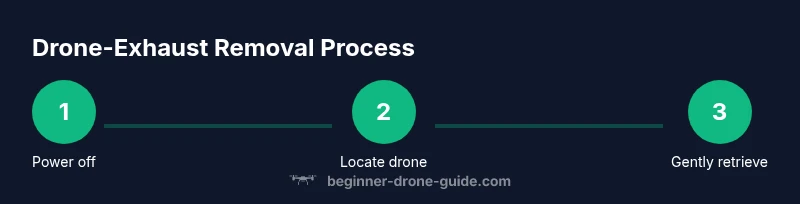
Power off and cool down
Ensure the vehicle is completely off and outside temperature is safe to touch. Wait 15-30 minutes for the exhaust to cool to avoid burns. This step prevents accidental injuries and reduces the risk of melting debris during removal.
Tip: Check that no heat indicators or warning lights are active before you begin. - 2
Inspect the drone’s position
Use a flashlight to visualize where the drone sits inside the tailpipe and determine the best angle for extraction. Confirm there’s a clear path to retrieve without forcing the drone through bends. If visibility is poor, pause and reassess rather than guessing.
Tip: Mark the location with a non-permanent marker so you can recheck orientation if needed. - 3
Prepare retrieval tools
Arrange the long grabber and needle-nose pliers within reach. Ensure the tools are clean and free of grit that could scratch the exhaust. Avoid clamps that might snag in the pipe.
Tip: Test tool reach in a safe area before attempting the pull. - 4
Gently engage the drone
Carefully slide the retrieval tool toward the drone, aiming for a stable grip without bending the pipe. If the drone’s orientation makes a grip difficult, adjust approach rather than forcing a grab. Maintain a steady, controlled pulling motion.
Tip: Do not twist or torque the drone—this can damage the exhaust or the drone housing. - 5
Retrieve and collect debris
Once secured, slowly withdraw the drone and any fragments into a collection container. Inspect the exit path to ensure no small parts fall into the ground. If the drone remains stuck, stop and reassess.
Tip: Keep hands clear of the exhaust opening to avoid pinch points. - 6
Inspect exhaust integrity
Look for dents, scratches, or signs of leaks after removal. Start the engine only if you are confident the pipe is intact and free of obstructions. If you see damage, schedule a professional inspection promptly.
Tip: A quick test drive to listen for abnormal sounds is not a substitute for a professional check if damage is suspected. - 7
Prevent future incidents
Secure drones during transport and fly away from vehicles or exhaust-prone zones. Consider using propeller guards and logging flight paths to avoid restricted areas. Regular maintenance checks on your drone and vehicle reduce recurrence.
Tip: Establish a pre-flight checklist that includes visibility of nearby vehicles and obstacles.
Frequently Asked Questions
Is it safe to remove a drone from the exhaust myself?
Yes, if the engine is off, the exhaust is cool, and you use proper tools with safety protections. If you feel unsure at any step, stop and seek a professional.
Yes, as long as the engine is off and the exhaust is cool, and you proceed carefully. If unsure, get professional help.
What should I do first if the drone is still inside after attempting removal?
Do not force it further. Reassess, check for easier access points, and consider professional extraction to avoid damaging the exhaust system.
If it’s still inside, don’t force it. Reassess and consider a pro if needed.
Will removing the drone damage the exhaust system?
The risk exists if you pry or twist too hard. Use proper tools and gentle movements; inspect for dents or leaks afterward.
There is a risk if you pry or twist aggressively. Use care and check for damage afterward.
How can I prevent this from happening again?
Fly away from vehicles and exhaust-prone areas, use protective guards, and secure the drone during transport. Adopt a pre-flight checklist emphasizing obstacle awareness.
Prevent by flying away from vehicles, using guards, and following a pre-flight checklist.
When should I take the car to a mechanic?
If you cannot safely remove the drone or if you notice exhaust damage or leaks, stop driving and tow the vehicle to a qualified mechanic for inspection.
If removal is unsafe or you see damage, tow the car for a professional check.
Watch Video
Quick Summary
- Always power off and cool the exhaust before touching it.
- Use long, secure tools and avoid forcing the drone out.
- Inspect for damage after removal and seek professional help if needed.
- Prevent future incidents with proper drone handling and flight planning.