How to Get a Drone Out of Exhaust: Safe Exhaust Retrieval
A practical, beginner-friendly guide to safely remove a drone stuck in an exhaust, with step-by-step actions, safety tips, and post-recovery checks. Learn to assess risks, use proper tools, and prevent future incidents from Beginner Drone Guide.


Goal: safely remove a drone stuck in an exhaust and prevent injury or further damage. You’ll learn how to assess the situation, shut down power, cool hot components, and perform a careful extraction with common tools. This steps-based guide also covers safety precautions, post-recovery checks, and what to do if the drone is damaged.
Why drones end up in exhaust and why safety matters
According to Beginner Drone Guide, drones can end up in exhaust in several scenarios: during flights near vehicles, when a drone collides with a vehicle and a portion of the quadcopter is drawn into an exhaust pipe, or when attempting aggressive retrievals without a clear path. An exhaust environment is hostile: extreme heat, moving mechanical parts, and restricted airflow can cause fire risk, material damage, and personal injury. Understanding the risk helps you approach the situation calmly and minimize harm. Before you touch anything, confirm the drone’s exact location with careful visualization, a flashlight, and a small mirror if needed. Never insert your hand into a live exhaust system. If you cannot see or access safely, call for professional help.
The moral here is to move deliberately, use protective gear, and avoid improvising with improvised tools that could worsen the situation. The Beginner Drone Guide team emphasizes safety-first as the cornerstone of any recovery operation. By knowing what you’re facing, you’ll choose the right tools and the right approach, which reduces chances of further damage to the exhaust system or the drone itself.
Immediate safety steps to take
The moment you realize a drone is stuck in exhaust, you must prioritize safety for yourself and others. First, shut the vehicle off if the drone is inside a car exhaust, and remove any power source from the immediate area if safe to do so. Do not attempt to dislodge the drone while the exhaust system is hot or still under operation; hot metal can cause burns and deform plastic, while moving parts may suddenly shift. Establish a clear perimeter to keep bystanders away and keep pets out of the work zone. If fuel vapors or fumes are present, avoid open flames and ensure adequate ventilation. Document the scene with photos for later reference, in case you need evidence for repairs or insurance. If the drone is entangled with moving parts or if there’s visible damage to the exhaust, pause and consult a professional.
Next, assess whether you can access the area without forcing the drone or compromising the exhaust. If there is any risk of personal injury, or if you are unsure about how to proceed, stop and seek professional assistance. This step-by-step plan is designed to reduce risk while you perform the extraction with the right tools and protective gear.
Tools and PPE you’ll need for safe retrieval
Before you begin, gather the following items and PPE to minimize risk:
- Protective gloves (heat-resistant) – to protect hands from sharp edges and hot surfaces.
- Safety glasses or goggles – to shield eyes from debris or exhaust vapors.
- Long-handled retrieval tool with a magnet or grabber – for reaching into tight spaces without finger exposure.
- Flashlight with a focused beam – to clearly visualize the drone’s location.
- Locking pliers or an adjustable wrench – to grip and maneuver the drone without slipping.
- A flexible inspection mirror – to see around bends in the exhaust.
- Rags or a heat-resistant blanket – to protect yourself and the vehicle surface during extraction.
- A phone or camera – to photograph the scene for records.
- Optional: a small heat-resistant mat – to place tools and protect the ground.
Note: Do not improvise with tools that could cause embrittlement, damage the exhaust, or create sparks near flammable vapors. If you’re unsure about any tool, don’t use it. Safety is the priority.
Step-by-step extraction plan (high-level overview)
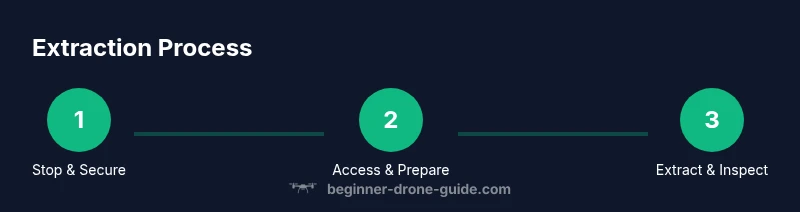
- Stop and secure the vehicle: Ensure the engine is off, the exhaust area is cool, and bystanders are kept at a safe distance. This prevents burns and accidental movement.
- Inspect the access point: Identify a safe entry point to reach the drone without displacing other components. Use a mirror to verify clear paths and avoid forcing the drone.
- Prepare retrieval tools: Arrange a magnet, grabber, and locking pliers within easy reach. Test grip on a similar object to ensure your tool will hold the drone without slipping.
- Access and retrieve: Gently insert the retrieval tool from the designated entry, avoiding contact with hot surfaces. Securely grasp the drone and pull it straight out to minimize further entanglement.
- Inspect the drone and exhaust area: Once removed, inspect for damage to the drone or exhaust. If there is damage or debris inside the exhaust, stop and consult a professional.
- Document and decide on next steps: Photograph the drone and exhaust area, assess whether the drone can be reused, and determine if professional cleaning or repair is required.
In this plan, the goal is to minimize force, avoid damage, and ensure safety. If at any point you feel uncertain, pause and call for professional assistance. If the drone remains lodged or if the exhaust shows signs of structural damage, professional help is warranted.
Post-extraction care and assessment
After you remove the drone, take a moment to cool any heated components and inspect both the exhaust and duty cycle performance of the vehicle. Check for visible damage to the drone’s frame, motors, propellers, and battery housing. If the drone was powered up during the incident, the battery may have suffered internal damage; do not attempt to recharge a possibly compromised battery. Clean off any soot or debris from the drone with a soft brush and a damp cloth, and allow the unit to dry fully before attempting a test flight in a controlled environment. If you notice corrosion, unusual smells, warmth on the drone, or reduced performance, do not fly the drone; instead consult a service professional for a thorough inspection. Finally, review your future flight plan to avoid similar incidents, such as practicing flight paths away from vehicles and exhaust streams, and calibrating your drone’s sensors in a safe, open space.
Prevention tips and safety culture for future flights
Prevention is the best approach to avoid drone-exhaust incidents. Maintain a deliberate flight path that keeps your drone well clear of vehicles, pipes, and chimneys. Perform pre-flight checks that include a wind assessment, propeller integrity, GPS lock quality, and battery health. Keep your learning curve in mind: start with small, slow, deliberate flights in open spaces. If you operate near traffic or industrial areas, consider using a dedicated guardian spotter and set geofencing to prohibit flights near exhaust zones. Lastly, know and follow local regulations governing drone operations near vehicles and structures. By building a safety-first mindset into each flight, you reduce the chances of future incidents and protect your investment.
When to call a professional if you can’t remove the drone yourself
If you cannot safely access or extract the drone, or if the exhaust shows signs of structural damage or chemical exposure, contact a licensed technician or a manufacturer-supported service. Professionals have specialized tools to safely dislodge objects without compromising exhaust integrity or vehicle safety. If the drone contains a battery or other hazardous components, professional service is the safest route to prevent fire or chemical exposure. In such cases, avoid attempting further disassembly and document the situation for the service visit.
Tools & Materials
- Heat-resistant gloves(Protect hands from hot surfaces and sharp edges.)
- Safety glasses(Shield eyes from debris and fumes.)
- Magnetic retrieval tool or grabber(Reach into tight spaces without hand exposure.)
- Locking pliers (vise-grips)(Grip the drone securely without slipping.)
- Flashlight (headlamp optional)(Illuminate the exhaust interior and confirm grip.)
- Inspection mirror(See around bends and hides more easily.)
- Rags or heat-resistant mat(Protect surfaces and absorb soot.)
- Camera or smartphone(Document the scenario for records.)
Steps
Estimated time: Total time: 30-60 minutes
- 1
Stop the vehicle and secure the area
Power down the vehicle if applicable and ensure the exhaust area is cool. Create a safe perimeter to keep bystanders away and prevent accidental contact with hot surfaces.
Tip: Mark a safe zone with cones or tape so no one steps into the risk area. - 2
Assess accessibility and visibility
Use a flashlight and mirror to locate the drone and plan an unobtrusive retrieval path that avoids displacing exhaust components.
Tip: Never insert your hand into a live or suspected hot exhaust; plan your approach first. - 3
Prepare retrieval tools
Arrange a magnet or grabber and locking pliers within easy reach. Test grip on a non-critical object to prevent tool slippage during removal.
Tip: Choose a tool with a secure grip and enough length to avoid contact with hot surfaces. - 4
Gently extract the drone
Insert the tool from the chosen access point and carefully secure the drone. Pull straight out to minimize twisting or further entanglement.
Tip: Move slowly; sudden force can break components or push the drone deeper into the exhaust. - 5
Inspect for damage
After extraction, inspect the drone and exhaust pathway for damage or debris. Do not continue if there is visible damage or signs of burning.
Tip: If you smell fuel or see smoke, evacuate and call emergency services. - 6
Decide on next steps
Document the incident and determine whether the drone is salvageable. If in doubt, consult a professional for a safe recovery and system check.
Tip: Keep records of the event and outcomes for insurance or warranty purposes.
Frequently Asked Questions
Is it safe to try removing a drone from exhaust by myself?
Removal can be risky due to heat, sharp edges, and potential damage to the exhaust or drone. If you are unsure of the drone’s location or how to access it safely, seek professional assistance. Always prioritize personal safety and vehicle integrity over a quick fix.
Removal can be risky. If unsure about the location or access, seek professional help and prioritize safety and vehicle integrity.
What should I do first if a drone is stuck in exhaust while the vehicle is running?
Do not attempt removal while the engine is running. Turn off the vehicle, allow the exhaust to cool, and evaluate access safely. If there’s any risk, call for professional help.
Turn off the vehicle and wait for cooling before attempting removal. If there’s risk, call for help.
Can I reuse the drone after extraction?
It depends on damage. Check the frame, motors, and battery housing for signs of heat exposure or impact. If damaged, do not fly it and seek professional inspection or replacement.
Only reuse if a professional confirms there’s no damage. If in doubt, don’t fly.
Should I contact a professional immediately or try more steps first?
If you cannot safely access the drone or if the exhaust shows structural damage, contact a professional immediately. A trained technician can remove the drone without causing further harm.
If access isn’t safe or there’s damage, call a professional right away.
What signs indicate I should stop trying and escalate the situation?
Signs include inability to reach the drone safely, excessive heat, smoke, chemical smells, or visible damage to the exhaust. In such cases, stop and seek professional assistance.
If you can’t proceed safely or see signs of heat or damage, stop and call a pro.
Watch Video
Quick Summary
- Stop and secure the scene before acting.
- Use proper PPE and non-contact retrieval tools.
- Inspect for damage and seek professional help when unsure.