Where a Drone Can Fly: A Practical Guide for Beginners
Learn where you can fly a drone safely and legally. This beginner guide covers airspace, parks, private property, and essential checks to plan confident flights.


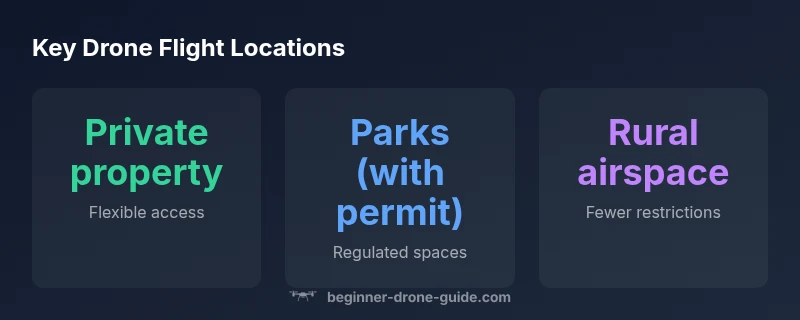
Where a drone can fly depends on airspace rules, local regulations, and weather. In general, beginners fly in visual line of sight, below altitude limits, and away from airports and crowds. According to Beginner Drone Guide, safe first flights typically occur in open rural spaces or private property with permission, after you’ve completed registration and checked geofenced zones.
The basics: airspace and permissions
Airspace is the invisible scaffolding that governs where drones can fly. Before you lift off, you should know whether you’re in controlled or uncontrolled airspace, what altitudes are allowed, and where to avoid operations near airports and heliports. For beginners, the priority is staying in the visual line of sight, flying below recommended altitude ceilings, and avoiding people and vehicles. In many regions, private property rights mean you can fly with permission on fenced land or open fields, but request consent to respect privacy and local sensibilities. Weather plays a critical role; strong winds and gusts will push your drone off course and complicate navigation. Start with a safe, quiet location, perform a thorough preflight, and log your flight with basic notes. Finally, register your drone if required and carry proof of registration during every flight. According to Beginner Drone Guide, building a habit of checking airspace and permissions turns tentative flights into confident, repeatable practice.
Airspace classes at a glance
Airspace categories help pilots know where and when they can operate. In many countries, you’ll encounter uncontrolled airspace (often called Class G) with fewer restrictions but still some altitude and proximity limits. Controlled airspace near airports requires explicit authorization, which may involve filing a simple request or using an authorization workflow. Near airports or special-use airspace, maps show red or blue zones where permission is needed. For beginners, focusing on open, less-restricted airspace reduces risk while you learn basic controls and emergency procedures. Always stay updated with current charts and notices, and verify your flight area right before takeoff to avoid last-minute issues.
Urban vs rural flying: pros and cons
Urban environments offer exciting photography and real-world applications but come with higher risk: more people, vehicles, and sensitive infrastructure, plus stricter fines or permit requirements. Rural and open-country sites generally present fewer geofence triggers and longer flight opportunities, but weather can be less predictable and wildlife can pose hazards. Beginners should start in wide-open fields or large backyards to practice takeoffs, landings, and smooth yaw/pan movements before attempting city shots or property inspections. Always respect privacy—avoid capturing identifiable individuals without consent—and build a habit of planning routes that minimize risk to people and property.
Public parks and controlled environments
Park rules vary widely by country and city. Some parks permit drone use with a permit, while others prohibit it entirely during certain hours. Look for designated drone zones and follow posted signage; if a park sits near restricted airspace, defer flight until permissions are in place. Controlled environments such as corporate campuses or university grounds may require coordination with site managers and local authorities. In all cases, a spotter helps keep the drone away from crowds, and you should avoid flying over gatherings to respect safety and privacy. Parks provide convenient settings for practice and basic video tests when permitted.
Airports, events, and temporary flight restrictions
Airports are the most sensitive airspace users; even small drones can disrupt commercial operations. You should never fly within a defined radius or altitude of an airport without explicit authorization. Temporary flight restrictions may be in place for events, emergencies, or VIP movements; always check NOTAMs and local notices before flight. If you must operate near an event, obtain written approval from organizers and coordinate with air traffic control if required. Always carry identification and drone documentation. Understanding these restrictions helps you plan safe flight windows and stay compliant while enjoying aerial capabilities.
How to verify rules before you fly
Start with official sources: check local regulations, NOTAMs, and airspace maps. Use geofencing indicators and any official aviation authority apps or dashboards to verify permitted zones. Confirm your drone is registered when required and verify weather conditions such as wind speed and precipitation before takeoff. Having a simple flight plan and a ready-to-use alternate landing zone reduces risk if conditions change mid-flight. The goal is to minimize surprises and ensure a safe, legal flight every time.
Getting permissions and waivers
Registration is often a prerequisite for most drones and flights. In areas with controlled airspace, you may need special authorization or waivers for specific operations, such as flying beyond visual line of sight or near people. Start by registering your drone with the national aviation authority and keeping proof of registration handy. If required, prepare a concise flight plan, risk assessment, and any supporting documentation to request authorization for the desired airspace. Maintain a flight log to document compliance and learning progress.
Safety, privacy, and ethical considerations
Respecting privacy is essential; avoid filming individuals without consent and minimize disruption to others. Maintain safe distances from people, property, and wildlife, and always follow local laws regarding data collection and recording. Keep noise to a minimum, especially in quiet neighborhoods or nature reserves. Practicing good etiquette and presenting clear flight intentions helps build trust with communities and authorities while preserving access to spaces for recreational and educational use.
Practical planning checklist for beginners
Before every flight, run through a practical checklist: verify airspace restrictions and weather, confirm registration and documentation, inspect the drone (propellers, battery, GPS lock), set home point and return-to-home settings, identify a safe landing zone, brief a spotter, and define a contingency plan for loss of signal or wind shifts. Plan your route to avoid obstacles, maintain line-of-sight control, and schedule flights during low-traffic times. A thoughtful preflight routine supports safer, more repeatable flights and builds confidence over time.
Comparison of flight location types
| Location Type | Typical Rules | Best Uses | Notes |
|---|---|---|---|
| Urban areas | Restricted near people and infrastructure; geofenced near airports | Aerial photography, inspections | Follow local ordinances; privacy considerations |
| Parks and recreational spaces | Permits may be required; posted rules | Leisure filming, education | Watch for crowds; avoid sensitive areas |
| Rural/open countryside | Generally more flexible; avoid flight in restricted zones | Practice flights, training | Weather and wildlife awareness |
Frequently Asked Questions
What is the difference between controlled and uncontrolled airspace?
Controlled airspace requires authorization before flight and is typically near airports or busy aviation corridors. Uncontrolled airspace, often called Class G, offers more flexibility but still has altitude and proximity limits. Always check the current maps before flying.
Controlled airspace needs permission before you fly. Uncontrolled space is easier, but you still need to stay within safe altitude and distance limits.
Do I need a permit to fly in parks?
Park rules vary by location. Some parks permit drones with a permit, others restrict aerial operations entirely. Always check local signage and obtain any required permissions before flying.
Check local park rules and obtain permits if required before flying.
Can I fly near airports?
Flying near airports is heavily restricted and often requires explicit authorization. Do not operate inside controlled airspace without permission and follow all NOTAMs.
Stay out of controlled airspace near airports unless you have authorization.
How do I register my drone?
Registration is typically required for most drones. Visit your national aviation authority's website, complete the registration process, and carry proof of registration during flights.
Register your drone on the national aviation authority site and carry proof while flying.
What should I do if I'm unsure about local rules?
If rules are unclear, pause the flight and consult official aviation resources, local authorities, or a licensed drone instructor. Never assume permissions without confirmation.
If unsure, stop and check official resources before flying.
“Understanding airspace and local rules is not optional—it's the backbone of safe, responsible flying. Always verify restrictions before takeoff and treat every flight as potentially regulated.”
Quick Summary
- Start in open, non-restricted airspace to learn basics
- Always verify airspace, weather, and permissions before flight
- Respect privacy and local rules to maintain access
- Use a preflight checklist to boost safety and confidence