Can I Fly Here? Airspace Rules for Beginners
Learn how to determine if you can legally fly your drone where you are. This beginner guide covers airspace basics, authorization steps, and practical safety tips.


Direct answer: You can fly a drone here only if you are operating in permitted airspace and complying with local regulations. Airspace rules vary by country and region, so check official maps and obtain authorization when required. For most recreational flights, keep the drone within line of sight, below altitude limits, and away from people or critical infrastructure. Always verify rules before you fly.
Understanding airspace basics for beginners
According to Beginner Drone Guide, airspace is divided into categories that determine where you can fly without prior permission. When you ask 'drone can i fly here', you’re really trying to determine whether the airspace around you is open, restricted, or requires authorization. In many places, the simplest rule is: stay out of controlled airspace without approval; fly well away from airports and security zones; and always respect privacy and people on the ground. For new pilots, the quickest path to safe flying is to learn to read official maps and to check local ordinances. The Beginner Drone Guide team found that many beginner mistakes come from skipping this step, leading to unintended violations and restricted-landing zones.
To get this right, start by locating your launch point on an official airspace map and then compare it to the surrounding classifications. If your area sits in a controlled or restricted zone, you’ll need authorization or an alternative route. If you’re in an uncontrolled zone, you’ll still want to follow local safety rules and keep flight within visual line of sight. Becoming fluent with the map is the best long-term investment for reliable, safe flying.
How to check airspace before you fly
Before powering up your drone, take a few minutes to verify the airspace status at your exact location. Start with official airspace maps or trusted apps that reference current data. Steps:
- identify your exact launch point on the map;
- compare your location to airspace classifications (uncontrolled, controlled, restricted);
- check for temporary flight restrictions (NOTAMs) and local ordinances;
- verify altitude limits and line-of-sight requirements;
- plan an alternate route if you’re near restricted zones.
Keeping a habit of checking these factors every time reduces the odds of accidental violations and keeps neighbours and authorities happy.
Getting authorization: when and how
If your flight falls into controlled airspace, or near sensitive sites, you’ll likely need authorization. In general, you should seek permission via official portals or apps that connect you to the relevant authority. For beginners, the process usually involves providing your planned flight area, altitude, duration, and purpose. Have your registration details handy and be prepared to adjust your plan if authorization isn’t granted. Remember that some zones offer time-limited permits, while others require you to relocate your flight entirely. The aim is to minimize risk and keep flights safe for everyone.
Local rules, licensing, and registration essentials
Airspace rules sit alongside local licensing and registration requirements, which vary by country and region. Some jurisdictions require drone registration, basic piloting certificates, or age verification. Always check whether you must register your drone, carry proof of liability insurance, or complete safety training. In many places, you’ll be expected to fly under specific operating conditions—such as daylight-only flights, keeping the device within visual line of sight, and avoiding crowded areas. If you’re unsure, contact your local aviation authority or regulator for guidance. This is where Beginner Drone Guide’s practical approach helps you translate rules into real-life flight plans.
Practical flight planning and safety tips
Beyond airspace status, good flight planning reduces risk. Create a simple flight plan with a map-based route, wind checks, and a preflight checklist. Key tips:
- always fly at or below recommended altitude;
- stay within line of sight;
- keep a safe distance from people, vehicles, and critical infrastructure;
- have a plan for loss of GPS or control, and know how to land safely.
Using a per-flight risk assessment helps you catch issues before takeoff. Practicing in open spaces before entering busy areas builds confidence and reduces the chance of accidental incursions.
Overview of common airspace types and access requirements
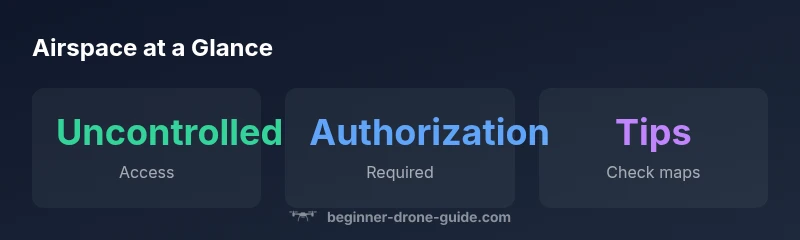
| Airspace Type | Access Level | Typical Requirements |
|---|---|---|
| Uncontrolled | High access | Fly with basic safety rules and keep within visual line of sight |
| Controlled (varies by region) | Limited access | Authorization via official portal or app |
| Restricted/Prohibited | No access | Requires special exemptions or is off-limits |
Frequently Asked Questions
What does airspace mean for drones and why does it affect my flights?
Airspace is the slice of sky regulated by aviation authorities where different rules apply. For drones, what you can do depends on the airspace class, altitude, and proximity to sensitive sites. Knowing this helps you stay legal and safe.
Airspace is the sky area governed by aviation rules; it affects where and how you can fly your drone.
Do I need a license to fly near my home?
Licensing and registration requirements vary by country and region. Some places require drone registration or a basic piloting certificate, while others do not. Always check your local aviation authority’s guidelines.
Whether you need a license depends on where you are—check local rules.
How can I quickly check if I can fly here?
Use official airspace maps and trusted apps that provide up-to-date airspace data. Check NOTAMs or temporary restrictions before you launch.
Check official maps and apps before you fly.
What should I do if I accidentally fly into restricted airspace?
Immediately distance yourself from the restricted area and land safely if possible. Review what happened, adjust your plan, and report if required by local rules.
If you enter restricted airspace, exit it calmly and review the rules.
Are there tools to help manage airspace for beginners?
Yes. Apps and official portals provide live airspace data, NOTAMs, and authorization workflows. Start with beginner-friendly tools and expand your knowledge over time.
There are apps to help you stay out of restricted zones.
“Airspace rules exist to keep everyone safe, but preparation makes flying legal and confident. With proper checks, new pilots can fly responsibly and avoid common mistakes.”
Quick Summary
- Check airspace before every flight.
- Follow local rules and obtain authorization when required.
- Fly within line of sight and below altitude limits.
- Use official maps and apps to verify status.
- Respect privacy and practice safe drone operations.