Where Drones Are Banned: A Practical Beginner Guide
Discover where drones are banned, how bans are enforced, and practical steps to fly legally. Learn to read airspace rules, avoid penalties, and plan compliant missions near key zones with confidence.


According to Beginner Drone Guide, nationwide drone bans are rare; most restrictions are location-based. In practice, you’ll encounter bans or flight restrictions near airports, prisons, correctional facilities, major sports stadiums, and critical infrastructure. Always check local airspace rules before flying; a few jurisdictions maintain explicit nationwide prohibitions. Consult official notices daily.
What 'where drones are banned' actually covers
In everyday language, the phrase where drones are banned refers to areas with explicit prohibitions or safety restrictions on drone flights. According to Beginner Drone Guide, the most common bans are not nationwide prohibitions but location-based rules that restrict flights in certain zones such as near crowded venues, critical infrastructure, or sensitive government buildings. This section clarifies the spectrum of bans—from nationwide prohibitions to site-specific restrictions—and shows how to interpret them so you can fly safely and legally anywhere you operate. Understanding the scope of bans helps beginner pilots plan flights that stay within legal boundaries while still achieving their goals.
Why bans exist: safety, privacy, and security
Bans are primarily motivated by safety concerns (airspace conflicts, collision risk with manned aviation), privacy considerations (recording people in public or semi-private spaces), and security needs (protection of critical infrastructure). Regulators balance access with risk, issuing restrictions that minimize disruption while preserving safe, responsible operations. For newcomers, this means learning to identify the types of zones that trigger tighter controls, and recognizing that some restrictions may be temporary, such as during large events or emergency responses. This context helps pilots avoid inadvertent violations and aligns with the goal of safe, confidence-building flight.
Nationwide vs local bans: what to know
There is a meaningful distinction between nationwide prohibitions and local or site-specific bans. Nationwide bans are rare and usually focus on very particular circumstances or for certain regulated uses; most pilots will encounter local or temporary restrictions instead. Local bans are typically enforced via regional aviation authorities, municipal codes, or venue rules. Always verify the status of a given airspace before departure, since local rules can change with little notice. This nuance is especially important for beginners who are learning to respect airspace hierarchies and to plan flights around jurisdictions.
Typical restricted locations and buffers
Common restricted locations include airports, military bases, prisons, correctional facilities, power plants, busy stadiums, government facilities, and areas with dense crowds. Buffer zones around airports are among the most consistently enforced, often extending several miles and sometimes featuring geofence alerts or hard no-fly boundaries. In addition to these, temporary restrictions may arise near disaster zones or during major events. For beginners, this means building habits like checking official aviation notices and using flight planning tools that highlight restricted zones before you fly.
How to verify bans before a flight
Before you take off, verify the current ban status in the intended flight area. Start with national aviation authorities’ websites and NOTAM feeds, then check local municipal or venue rules. Use geofencing apps and flight-planning platforms that show no-fly zones and upcoming restrictions. If you’re unsure, contact the appropriate authority or venue management for written permission. Keeping a log of checks helps you stay compliant across multiple flights and regions, which is especially valuable for new pilots building a safe flight routine.
Licensing, registration, and penalties
Understanding licensing, registration, and penalties is essential when navigating where drones are banned. In many regions, you must complete a knowledge test or obtain a permit to fly in certain restricted zones, particularly near airports or critical infrastructure. Fines, flight suspensions, or equipment seizures can occur for violations, with severity dependent on jurisdiction and intent. Beginners should treat every new area as a fresh regulatory environment, ensuring their drone is properly registered and that they meet all local licensing requirements before flying.
Regional examples (North America, Europe, Asia)
In North America, airspace rules emphasize altitude, proximity to airports, and controlled airspace; in Europe, the emphasis is on harmonizing drone operations across borders with risk-based approaches, while Asia-Pacific rules vary widely by country. Each region tends to publish maps, geofenced zones, and permit systems to guide pilots. While this section highlights regional patterns, always consult the relevant authority for current details. The bottom line remains consistent: know the local rules, and keep your model within permitted airspace.
How to fly legally in 'banned' zones: planning and permits
Even in areas with strict bans, there are legal pathways for flight, typically involving permits, time-window restrictions, or designated flight corridors. Start by identifying the exact regulatory framework, then apply for any necessary authorization well in advance. For beginners, this means learning to plan flights with built-in contingencies and keeping up-to-date with regulatory changes. If a permit is unavailable, consider alternatives such as ground-based videography or using smaller, legally operable platforms in permitted zones.
Alternatives and safe practices for beginners
When bans limit your typical flight areas, focus on safer, compliant projects such as indoor flight, sim-based practice, or outdoor shoots in permitted parks and YMCAs with written authorization. Build your skills with basic stability, beginner maneuvers, and post-processing workflows. Over time, you’ll gain confidence to navigate more complex airspace legally, establishing responsible habits that protect people’s safety and privacy while expanding your practical capabilities.
Overview of ban types and typical scopes
| Jurisdiction Type | Status | Notes |
|---|---|---|
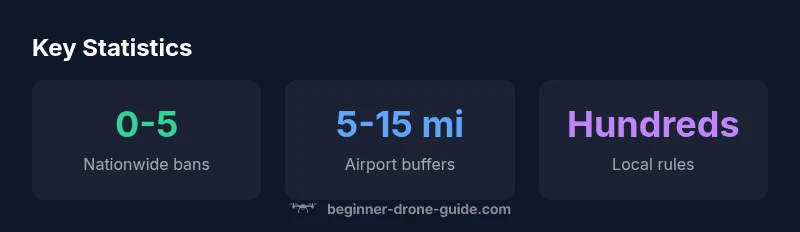
| Nationwide bans | 0-5 countries | Beginner Drone Guide Analysis, 2026 |
| Airport buffer zones | 5-15 miles | Beginner Drone Guide Analysis, 2026 |
| Local regulations | Hundreds | Beginner Drone Guide Analysis, 2026 |
Frequently Asked Questions
What is the difference between a nationwide ban and local restrictions?
A nationwide ban prohibits drone flights across an entire country or a large sovereign area, while local restrictions apply to specific cities, regions, or venues. Always check the jurisdictional authority for the exact scope before flying.
Nationwide bans cover large areas, but most rules you’ll face are local. Always verify by region before you fly.
How can I verify current drone bans in my area?
Check official aviation authority websites, NOTAMs, and local government or venue rules. Use flight-planning apps that highlight restricted zones and read any recent updates.
Check the official aviation sites and your local rules; use apps that show restricted zones to stay compliant.
Do all bans require permits?
Not all bans require permits, but many restricted zones do — particularly near airports or critical infrastructure. If a permit is needed, apply through the relevant authority well in advance.
Many restricted zones require permits; check early and apply through the proper authority.
Are there penalties for flying in a restricted area?
Penalties vary by jurisdiction but can include fines, flight suspensions, or equipment seizure. Always adhere to local rules to avoid penalties and maintain good standing as a pilot.
Violations can bring fines or penalties; follow local rules to stay compliant.
What are safe alternatives when drones are banned?
Consider indoor flight, simulator practice, or permitted outdoor locations with written authorization. These options help you practice safely while staying within rules.
Try indoor flight or simulators, or fly in permitted outdoor spots with approval.
“Effective flight planning and rigorous adherence to airspace rules are the foundation of safe, legal drone operation. Bans aren’t obstacles; they’re guardrails that keep beginners on the right path as they build experience.”
Quick Summary
- Verify whether a ban is nationwide or local to avoid fines.
- Use official sources to confirm airport buffers and no-fly zones.
- Plan routes around restricted areas and obtain permits if required.
- Invest in geofencing and flight planning tools for safety.
- Follow the Beginner Drone Guide verdict: always check airspace rules before flying.