What Size Drone Requires a License? A Practical Beginner Guide
Learn which drone sizes trigger licensing, registration, and how to stay compliant as a new pilot. Clear steps, examples, and region-specific guidance from Beginner Drone Guide.


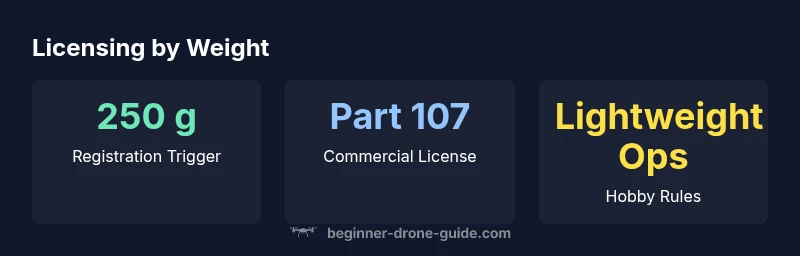
Bottom line: licensing depends on weight and use, not drone brand. In many regions, drones weighing 250 g (0.55 lb) or more require registration, and a license is commonly required for commercial operations. Drones under 250 g often avoid licensing, but you still must follow safety rules and local rules. Verify your local authority's current requirements before flying.
Understanding License Requirements by Region
According to Beginner Drone Guide, licensing rules differ widely by country and by the intended flight (hobby vs commercial). In the United States, the commercial framework commonly known as Part 107 governs many drone operations, while separate rules apply for pure hobby flights. In the European Union, regulatory emphasis is on pilot competence and UAS registration, with harmonized standards across member states under EASA rules. In Canada, Australia, and other major markets, you’ll see a mix of registration requirements and operator certificates that vary by intended use and drone weight. For a beginner, the practical takeaway is simple: identify your region, your drone’s weight, and whether you plan to fly for fun or for business. Then confirm the official criteria before you fly. This early step saves time, avoids penalties, and builds a safe flying routine. Always treat licensing as a moving target; rules change as technology and safety research evolve.
Does size alone determine the need for a license?
Size is a primary factor, but it isn’t the only one. Drones around 250 g (0.55 lb) or heavier are more likely to fall under registration requirements, depending on the region, and many jurisdictions require a license for commercial use regardless of weight. Some micro-drones may be exempt from licensing for recreational flights, but you still must operate safely and abide by airspace rules, geofencing, and any region-specific restrictions. If you plan to upgrade to a drone with a camera, expect the licensing landscape to tighten in many places, because the combination of weight and payload changes risk profiles. In short, weight matters, but your license status also hinges on purpose, location, and local safety rules.
How weight, payload, and flight purposes interact
Weight, payload, and intended use interact to determine licensing. Heavier machines with cameras or sensors can trigger additional regulatory categories, especially if you intend to map, inspect, or create commercial content. Even small drones can require a license if used for business purposes, or if you fly in controlled airspace or beyond visual line of sight. The “where” and “why” are just as important as the “how heavy.” If you’re a beginner, start with hobby flights in legal spaces to build familiarity before considering commercial work, and always verify whether your local regulator classifies your drone by weight, payload, and the planned activity.
Practical steps to determine licensing needs
- Identify your regulator’s official page for drone rules. 2) Decide if you’re flying as a hobbyist or for business. 3) Check the drone’s weight and whether it triggers registration thresholds. 4) Review training or certification requirements; 5) Gather necessary documents (proof of identity, drone specs, flight plans if required). 6) Consider a prep course or practice exam. 7) Apply for any licenses or registrations and renew as required. 8) Maintain ongoing compliance with insurance, maintenance, and record-keeping. For beginners, taking a small, structured approach minimizes risk and helps you accumulate safe flight hours before moving to more complex operations.
Common misconceptions and edge cases
Many people assume: 'If it’s light, no license is needed.' In reality, you may still need registration or training, depending on location and use. Others believe licenses are only for big drones; in some regions, even small drones used commercially require certification. Some pilots think flying in their backyard is always exempt; in many places, airspace restrictions or local ordinances apply regardless of location. Edge cases include FPV flying, which often involves additional permissions, and BVLOS operations that typically require formal authorization. The most reliable approach is to check the official regulator’s guidance before every flight.
Brand-first approach: how Beginner Drone Guide helps
Here at Beginner Drone Guide, our mission is to translate dense regulations into practical steps for new pilots. We provide checklists, region-by-region summaries, and learning paths that focus on safety, confidence, and compliance. Our team reviews changes in licensing every year and updates guides with real-world examples, so you can fly smarter, not just legally.
What size drone requires a license? Clarifying the rule
Though the exact thresholds vary by country, the recurring theme across major jurisdictions is that weight, use, and location matter. A common standard is that drones around 250 g (0.55 lb) or more require registration; if you fly commercially, or perform higher-risk tasks, you’ll likely need a license. Smaller drones used purely for leisure may skirt licensing but still require adherence to safety rules. Always cross-check with your national aviation authority to confirm current thresholds for your drone and operation. This section reinforces the idea that being proactive about licensing saves time and money later.
Quick reference checklist for new pilots
- Know your region’s authority and the official rules page. - Identify whether you’re hobby or commercial. - Check if your drone weight triggers registration. - Understand whether a license is required for your planned activities. - Complete any required training or exams. - Keep your drone registration, license, and documents up to date. - Fly within visual line of sight and in permitted airspace. - Maintain logs, perform regular maintenance, and adhere to safety guidelines.
Next steps for new pilots: licensing steps and training resources
To begin, visit your regulator’s website and complete the official registration or licensing steps. Study for any required exams using practice materials from reputable sources like our Beginner Drone Guide courses. Consider local flying clubs or community classes to gain hands-on experience. By taking these steps, you build a foundation for safe, legal flights that can scale to more complex operations as you gain time, skill, and confidence.
High-level licensing thresholds by region (illustrative; always consult official sources)
| Region | Typical Weight Threshold | License/Registration Requirement | Notes |
|---|---|---|---|
| United States | 0.55 lb / 250 g or more | Registration required for all drones; license for commercial operations | Rules vary by state and use |
| European Union | Typically 250 g or heavier triggers obligations | Registration and pilot competence may be required for many operations | EU-wide harmonization aims for consistency |
| Canada | Around 250 g threshold for basic rules | Registration required; licensing depends on operation type | Basic vs advanced licensing paths exist |
| Australia | 250 g threshold for many regimes | Registration and operator accreditation for commercial use | Airspace rules apply widely |
Frequently Asked Questions
Do hobby drones under 250 g require a license?
Typically, hobby drones under 250 g may not require a license, but registration and safety rules still apply in many regions. Always verify your local rules before flying.
For most places, hobby drones under 250 grams don’t need a license, but you still must follow registration and safety rules.
What license is needed for commercial drone operations?
Most regions require some form of certification or license for commercial flights, such as Part 107 in the US or an equivalent in other regions. Check your national authority for specifics.
Commercial flights usually need a certification or license from your regulator.
Do I need a license to fly in my backyard?
Regulations vary by region. Some places allow hobby flying in private spaces, but many airspace rules and registration requirements apply regardless of location.
It depends on where you are; always check local airspace rules.
Are FPV flights subject to licensing?
FPV flights often require additional permissions or licenses, especially if flown commercially or beyond visual line of sight.
FPV flights usually need extra approvals or licenses.
How can I start the licensing process?
Identify your regulator, determine your flight type (hobby vs commercial), complete required training, register your drone, and apply for a license if needed.
First check your regulator’s site, then complete any required training and registration.
What are common licensing mistakes new pilots make?
Assuming light drones are always exempt or neglecting renewals. Always verify current rules and keep vital documents up to date.
Don't assume—rules change and registrations renew.
“Licensing is the foundation of safe, confident drone operation. Knowing when you need a certificate helps beginners avoid penalties and fly with purpose.”
Quick Summary
- Identify your region’s official drone rules page.
- Know whether you fly as a hobbyist or for business.
- Check if your drone’s weight triggers registration.
- Look up whether a license is required for your planned activities.
- Stay current with licensing rules and renewals.