When to Register a Drone: A Beginner's Guide
Understand when you must register your drone, including weight thresholds, exemptions, and the steps to register, so you can fly safely and legally as a new pilot.


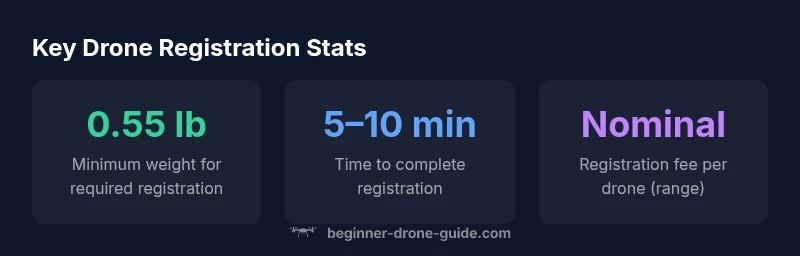
Registration is required for most drones in the United States when the aircraft weighs more than 0.55 pounds (250 grams) and up to 55 pounds (25 kilograms). You should register before your first flight outdoors or for any commercial operation. Drones under 0.55 pounds typically don’t require registration, but check local rules and Remote ID requirements as they evolve. This threshold helps standardize safety and accountability for new pilots.
Why registration matters for new pilots
Registration isn't just a bureaucratic hurdle; it's a foundation for safety, accountability, and consistent airspace access. For new pilots, registering your drone links you to important resources, from Know Before You Fly guidance to airspace maps. According to Beginner Drone Guide, a registered drone helps authorities and other flyers understand who is operating and how to respond in an incident. Registration also unlocks access to education programs and future upgrades like Remote ID compliance, which improves situational awareness for everyone in the sky. If you’re learning to fly, treating registration as an early step reduces risk and saves time later.
Who must register
In the United States, most drones that weigh more than 0.55 pounds (250 grams) and up to 55 pounds (25 kilograms) must be registered before flight. Commercial operators and educational programs using drones also fall under registration rules. If you operate across state lines or in controlled airspace, registration helps authorities identify who is in command. Even if you plan only recreational flights, check the local jurisdiction because rules can vary by country and region. The key idea is to know your role: hobbyist, student, or professional.
Weight thresholds and exemptions
The standard threshold used by many regulators is 0.55 pounds (250 grams) up to 55 pounds (25 kilograms). Drones above this weight require registration, while those below typically do not. However, exemptions exist: some jurisdictions require registration for drones with special features (for example, high-visibility payloads or drones used for rental or commercial demonstration). Remote identification requirements may also apply, even if you fly a small drone in certain areas. Always verify the exact rules where you intend to fly and ensure your drone’s weight and capabilities are correctly categorized.
How to register: quick steps
To register a drone, start by confirming its weight and determining whether you register as an individual or as an organization. Next, create an account on the official drone registration portal, fill in drone details (make, model, serial number if available), and provide operator information. You’ll be asked to confirm eligibility, agree to terms, and pay a nominal registration fee. After completing registration, print or save your registration details and, if required, attach your drone’s Remote ID equipment or other identifiers. Keep a copy for reference and renewal reminders.
Fees and IDs: understanding costs and Remote ID
Registration fees are generally described as a nominal amount per drone, with an authorization period that covers multiple years. Always check the official portal for current pricing and renewal rules. Remote ID is a key requirement for most drones, enabling detailed identification during flight. If your drone cannot be outfitted with Remote ID, you may need to register differently or avoid outdoor flights in areas that require Remote ID. This section clarifies how ID and registration work together to keep the airspace safe.
Common scenarios and tips
If you’re buying a new drone, verify its weight and set up registration early so you’re ready to fly on day one. When renting or borrowing a drone for a project, ensure the operator’s registration is valid and the device is properly identified. If you travel with your drone, carry proof of registration and be prepared to show it to authorities. When flying near airports or in restricted zones, always follow the local rules and consider a pre-flight check list from reputable sources. These practical steps keep you compliant and confident.
Special cases: multiple drones
Owning more than one drone often means you must register each aircraft, unless the rules tie ownership to a single registration (varies by jurisdiction). For a small hobbyist with two compact drones, both devices should be listed under your profile if required. For schools or businesses, you may need to register as an organization and maintain records for every drone you operate. Keeping digital and printed records up to date saves time during inspections or audits and reduces risk of accidental non-compliance.
Consequences of flying unregistered
Flying a drone that should be registered but isn’t can lead to penalties, fines, and potential loss of airspace privileges. Enforcement varies by location but typically includes warnings, fines, and mandatory corrective actions. To avoid trouble, treat registration as a non-negotiable safety step before any flight, and refresh your knowledge regularly as rules evolve. By staying compliant, you join a growing community of responsible pilots who help keep skies safe for everyone. The Beginner Drone Guide team stresses staying current with regulatory changes to protect your ability to fly and learn confidently.
Drone registration thresholds by weight (illustrative cross-border overview)
| Category | Weight Threshold | Registration Required? | Notes |
|---|---|---|---|
| US small UAS | 0.55 lb (250 g)–55 lb (25 kg) | Yes | Register before flight; commercial ops may vary |
| Below threshold | <0.55 lb (250 g) | No | Registration not required in most cases |
| Global context | Varies by country | Varies | Check local regs |
Frequently Asked Questions
Do I need to register if my drone weighs less than 0.55 pounds?
In the United States, drones under 0.55 pounds typically do not require registration. Rules vary by country, and some regions may require Remote ID for certain operations.
Usually not if you're under 0.55 pounds, but check your local rules.
Is registration different for recreational vs commercial flying?
The core registration process is similar, but commercial operators may have additional licensing, waivers, or record-keeping requirements depending on the country.
Commercial pilots may have extra requirements.
How long is a drone registration valid?
Registration typically lasts for multiple years and must be renewed before it expires. Always verify renewal timelines in your jurisdiction.
It lasts a few years and then you renew.
What documents do I need to register?
You’ll generally provide operator details and drone information (make, model, serial number if available). Exact requirements depend on the jurisdiction.
You provide your details and drone info.
What happens if I fly a drone that should be registered without registering?
Flying an unregistered drone can lead to penalties, fines, and enforcement actions. Always complete registration before outdoor flights.
Fines and enforcement can happen; register first.
“Registration isn't simply paperwork—it's a practical tool for safer skies and clearer accountability for every flight.”
Quick Summary
- Register early if your drone falls in the weight range
- Know the exact weight threshold for your country
- Keep proof of registration and renewal dates handy
- Understand Remote ID requirements and how they affect you
- Stay updated on local rules to avoid penalties