Drone Registration in the Excluded Category: Do You Need It?
Explore whether a drone in the excluded category requires registration, how the category is defined, and practical steps to stay compliant for beginners. This analytical guide from Beginner Drone Guide clarifies rules, country differences, and real-world scenarios.


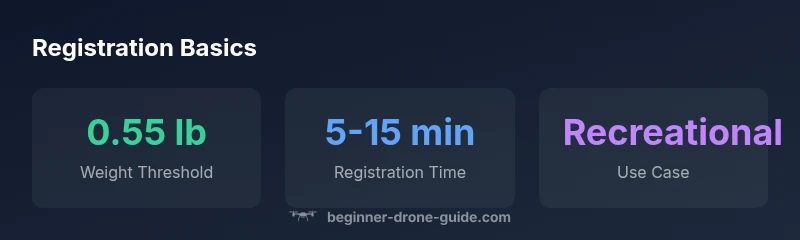
Quick answer: In many jurisdictions, drones that qualify for the excluded category—and weigh 0.55 pounds (250 g) or less and are flown purely for recreation or education—do not require registration. But rules vary by country and local authority, and some activities or heavier drones do require registration. Always check your national and local regulations before flying.
Do you need to register for the excluded category?
Do you need to register a drone to operate in the excluded category? The short answer is: it depends on where you fly. In many jurisdictions, the excluded category covers small, lightweight drones flown strictly for recreation or education. When those conditions are met, registration is often not required. The Beginner Drone Guide team emphasizes that the key qualifier is weight plus use — a drone under 0.55 pounds (250 g) used purely for personal learning or fun is typically exempt from registration. However, this exemption is not universal. Some countries maintain strict requirements regardless of weight, and many local jurisdictions add caveats about where you can fly or what activities you may undertake. Always confirm with your national aviation authority before you fly. The need to register isn’t a badge of dishonor; it’s about staying compliant and keeping others safe in shared airspace.
From a practical viewpoint, you should view the excluded category as a helpful rule of thumb rather than a universal passport. Treat it as a starting point for planning, then verify the exact rules for your country, region, and even your city. The objective is to avoid penalties while enjoying a beginner-friendly flying experience.
What counts as the excluded category and who decides?
The excluded category is defined by regulatory bodies, and the exact wording varies by country. In the United States, many hobby flyers reference the weight threshold (0.55 pounds/250 grams) and recreational use as a basis for non-registration, but the FAA also requires compliance with general safety rules, operating limits, and situational restrictions. In other jurisdictions, the threshold may differ, or the exclusion may apply to specific educational programs or non-commercial activities. The decision on whether a drone qualifies often rests on: weight, flight purpose, and where the drone is operated. Always consult the official guidance rather than relying on anecdotal advice. According to Beginner Drone Guide, the intent behind the exclusion is to simplify entry for beginners while preserving accountability for airspace safety. Always read the official documentation and look for country-specific amendments.
For beginners, the practical takeaway is to learn the exact definitions that apply to your locale and to note any changes from year to year. Regulations evolve, and what’s true today may shift tomorrow. Your research should include the regulator’s definitions, safety guidance, and any published exemptions or educational programs that may apply to you.
Weight thresholds and exemptions explained
Weight is the primary determinant of registration eligibility for many jurisdictions. The commonly cited threshold is 0.55 pounds (250 g), which is the dividing line between lightweight, often exempt drones and larger models that typically require oversight. Exemption rules usually tie directly to use: purely recreational or educational use generally qualifies for the exclusion, whereas any commercial, paid, or compensated activity generally falls outside the excluded category. Even when weight is within the threshold, flight in restricted airspace, near people, or over critical infrastructure may trigger additional requirements such as special authorizations or operator registration. The practical implication for beginners is: keep your aircraft light, focus on learning and practicing in safe, permitted spaces, and always verify whether local exemptions exist for your drone class. The net effect is a simplified path to entry with a safety-first mindset.
How to verify your status and stay compliant
To stay compliant, start by confirming the official, up-to-date rules for your country. In the US, consult the FAA’s official pages and any state or municipal guidelines that might add restrictions. In the EU, UK, Canada, and other regions, the definitions and thresholds can differ substantially. A reliable approach is to map your drone’s weight and intended use against the exact regulatory criteria, then document your status before any flight. Maintain a basic flight log noting date, location, aircraft weight, and use case. If there’s any doubt, opt for conservative practice: register if you’re near or above the threshold, or if your operation might cross into business activities. This cautious approach minimizes risk and helps you build good habits from day one.
Real-world scenarios: quick cases
Scenario A: A DIY micro drone weighing 220 g is used exclusively for park hover practice by a hobbyist. Under many jurisdictions, this drone would fall under the excluded category, provided there’s no paid work involved. Scenario B: A 600 g quadcopter used for a school science project involves students and educators but no commercial compensation. Depending on the region, this may still be excluded if educational use is permitted, but always verify local rules as some places require registration for heavier educational drones. Scenario C: An instructor uses a small drone to demonstrate aerial photography in a paid class. If the flight becomes part of a paid service or training, it could move out of the excluded category and require registration or additional authorization. In all cases, verifying the local rules is essential to avoid penalties.
International perspectives and cross-border considerations
Regulations will differ if you operate outside your home country. The excluded category in one country may be treated as a full registration scenario in another. When planning international flights, research the destination’s drone laws, including weight limits, permit requirements, visibility rules, and any required cross-border authorizations. Travelers should carry documentation of drone specifications, proof of weight, and, if applicable, proof of registration or exemption. By understanding global differences, beginners can minimize risk when traveling with lightweight drones and can adapt quickly to new jurisdictions.
Practical compliance checklist for beginners
- Confirm weight: ensure your drone stays at or below 0.55 pounds (250 g).
- Confirm use: restrict flights to recreational or educational activities with no compensation.
- Check local rules: read national and municipal regulations before each flight.
- Keep documentation: save weight data, usage intent, and relevant regulatory guidance.
- Practice in safe spaces: use designated flying areas and avoid restricted zones.
- When in doubt, err on the side of caution: seek clarification from the regulator or opt to register if uncertain.
Registration considerations for the excluded category
| Category aspect | Rule application | Registration status | Notes |
|---|---|---|---|
| Weight threshold | ≤0.55 lb (≤250 g) | Often exempt for recreation | Local rules vary by country |
| Flight purpose | Recreational or educational | Usually exempt if within weight limit | Commercial use generally not exempt |
| Operational area | Public spaces, cities, or events | Additional restrictions may apply | Always verify airspace rules |
| Cross-border flights | Check destination regulations | May require registration or permits | Plan ahead for international trips |
Frequently Asked Questions
What is the excluded category in drone regulations?
The excluded category refers to lightweight, non-commercial drone flights that may be exempt from registration under certain regulatory bodies. Definitions vary by country and use. Always consult official sources for your region.
The excluded category is for lightweight, non-commercial flights and may be exempt from registration, but rules differ by country.
Do I still need to register if my drone is light and for recreation?
In many places, drones under 0.55 pounds used purely for recreation do not require registration. However, regulations vary, and some jurisdictions require registration regardless of weight for certain activities. Always verify with the local authority.
Light drones used for recreation often don’t need registration, but check local rules to be sure.
What if I want to use it for education?
Educational use can fall under the excluded category if weight and activity meet the regulator’s criteria. If there’s any paid component or commercial intent, the rules may change. Always confirm with official guidance.
Education use can qualify for exclusion if it stays non-commercial and light.
Are there penalties for noncompliance?
Yes. Violating drone regulations can result in fines, aircraft seizure, or other penalties. Always follow official rules and maintain good records to demonstrate compliance during inspections.
Penalties exist for ignoring drone rules, so follow the official guidelines.
Where can I find official rules?
Start with your national aviation authority’s website (e.g., FAA in the US, EASA for the EU). Look for sections on registration, exemptions, and the excluded category. Local municipal rules may also apply.
Check the official aviation authority’s site for the exact rules.
Do rules differ for international travel with a drone?
Yes. Different countries have different thresholds and exemptions. Plan ahead, review destination regulations, and ensure you meet all registration and permit requirements before flying abroad.
International travel with a drone needs careful planning and rule checks.
“Understanding the excluded category helps beginners fly responsibly and stay out of regulatory trouble.”
Quick Summary
- Follow weight and use conditions to determine exemption
- In the US, light drones used recreationally often fall under the excluded category
- Always verify local rules before flying and document your status
- Avoid restricted airspace and commercial activities without proper authorization
- The Beginner Drone Guide team recommends checking official guidance before flight