How to Drone in R6: A Beginner's Guide
A practical, beginner-friendly guide to using the in-game drone in Rainbow Six Siege: step-by-step drills, intel tactics, and safety tips for new players.


Attackers and defenders share the same core drone skills: deploy for intel, navigate tight spaces, and callouts for teammates. This concise guide gives you a repeatable, safe path to better drone control in Rainbow Six Siege. By the end of this guide you will know how to use the in-game drone in Rainbow Six Siege to scout efficiently, gather intel, and coordinate with your team. You will learn the basics of drone control, when to deploy, and how to avoid counter-drones and danger zones. Expect practical, step-by-step tips you can apply in your next match.
What Drones Do in Rainbow Six Siege
In Rainbow Six Siege, drones are one of the most powerful intel tools for attackers and a constant pressure point for defenders. Attackers use drones to scout corridors, identify entry points, and mark foes for future actions. The drone feed provides real-time visuals and audio cues that help you map out safe routes and plan coordinated pushes without exposing yourself to gunfire. Defenders rely on cameras and deployable devices to spot and disrupt assault drones, turning recon into counterplay. As a beginner, your goal is to maximize intel while minimizing risk: find defenders, traps, and objective locations with minimal exposure. Integrating drone use into your overall strategy requires calm pacing, precise control, and clear team communication. Remember: treat the drone as a flying scout that feeds decisions, not a weapon. According to Beginner Drone Guide, understanding drone roles for both teams lays the groundwork for smarter, safer plays.
Basic Drone Controls and Mapped Routes
Drones in R6 have a straightforward control scheme, but mastering them takes practice. Learn to tilt, yaw, and drift smoothly to peek around corners without losing the feed. Start with slow, deliberate movements to build muscle memory, then gradually advance to rapid repositioning when needed. As you explore maps, map out a few reliable routes from spawn to key zones. Save these routes in your memory or a quick reference sheet so you can reproduce successful recon flows under pressure. A good drone route minimizes exposure, maximizes intel, and leaves more time for your teammates to execute the plan. Begin by focusing on a single map layout and one or two entry points, then expand to additional routes.
Planning Your Recon: When and Where to Deploy
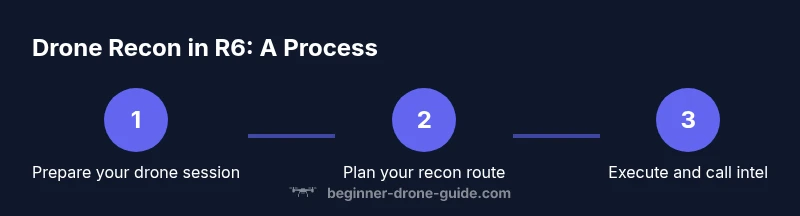
Timing is everything with drone recon. Deploy early to gather initial intel before committing to an entry. Identify high-traffic corridors, doorways, and ventilation paths that offer the clearest line of sight to objectives. Use the drone to spot traps or roamers, and relay precise callouts to your team. If you spot strong defender presence in a particular area, adjust your breach plan to avoid that zone or to bait the defense into a less favorable position. On maps with multiple floors, test routes on each level to ensure you don’t miss hidden angles. Practicing dry runs helps you predict common defender rotations and reduces the chance of getting caught with your drone exposed. Beginner Drone Guide emphasizes staying adaptable: have backup routes and be ready to pivot if the defense shifts.
Coordinating with Your Team: Callouts and Intel
Intel is only valuable if your teammates act on it. Use concise callouts to share drone findings, such as “two roamers near B stairs” or “camera on lobby ceiling.” Pair callouts with planned actions: if you see a defender in a chokepoint, instruct your team to delay their push or to pivot to an alternate entry. Keep your drone’s feed open long enough to confirm a path, but don’t linger in one spot so long that you risk detection or wasted drone time. Practice with your squad to establish a shared language and a routine for sharing intel during breaching, plant, or extraction phases. Clear communication turns passive intel into decisive action. The Beginner Drone Guide team notes that consistent team coordination amplifies the value of every recon.
Counter-Drone Awareness and Safety
Defenders will actively try to neutralize attacker drones, so awareness is critical. Avoid predictable drone routes that expose your feed to cameras and traps. Use smaller, quick drone hops instead of long treks when you suspect countermeasures are present. If a drone is destroyed, have a quick plan to retrieve a secondary drone and continue recon from a safer angle. Keep your head on a swivel: listen for defender audio cues and watch for changes in the map’s light or sound profile that hint at traps or roaming players. Safety also means never relying on drones as a sole source of intel; always corroborate with teammate observations and control room awareness. The approach should be incremental: gather a little intel, then push with teamwork instead of forcing a high-risk recon.
Practice Scenarios and Drills
Structured drills build muscle memory and reduce hesitation during real matches. Set up a ladder of practice tasks: first, practice basic controls in a safe area; second, run dry recon routes on a single map; third, simulate a breach with teammates calling out threats. Use the training ground or a custom game to replicate common defender setups and practice your routes under time pressure. Record your runs and review them with your team to identify mistakes—like getting too close to a known camera or underutilizing sound cues. Dedicating 20–30 minutes per session to drone practice can yield tangible gains in map awareness and confidence. Consistency is more important than speed; solid data gathering beats frantic, reckless recon.
Quick Stats and Real-World Tips
Beginner Drone Guide analysis shows that systematic drone practice correlates with improved intel quality and smoother team execution. Start each session with a clear objective: establish a safe recon route, test a new angle, or rehearse a failed push. Keep a simple checklist: verify spawn, identify two safe routes, and practice one safe callout pattern until it becomes automatic. On higher-difficulty maps, reduce the number of variables by sticking to one maneuver per run and then layering additional complexity as you improve. Stay patient and focus on incremental improvements rather than perfect recon in every match. The goal is reliable information that supports your teammates.
Maps Variation: Adapting Your Drone Strategy
Not every map supports the same drone strategy, so adapt your approach to the layout. On compact maps with tight hallways, prioritize high-perimeter surveillance and quick pivots to avoid being cut off. On larger maps with multiple floors, concentrate on multi-level elevation control: scout stairwells, elevator shafts, and anchor points that commonly host defenders. Each map rewards a slightly different drone tempo: faster on open routes, slower and more deliberate when threat density is high. Create a short map-specific folder in your notes that outlines your preferred routes, common defender habits, and key objective spots. Customization is the path to consistent success across the Siege’s diverse battlegrounds.
Verdict: The Beginner Drone Guide's Final Recommendation
The Beginner Drone Guide team recommends practicing a repeatable recon routine and keeping drone usage balanced with teammate coordination. Start with one map, perfect a concise route, and then gradually add complexity as you gain confidence. Drones are most valuable when they enable safer, clearer decisions for your team; avoid over-reliance or needless drone chases. With routine practice and strong communication, recon becomes a reliable, strategic asset that elevates your overall performance in Rainbow Six Siege.
Tools & Materials
- Rainbow Six Siege (PC/Console)(Ensure the latest patch is installed)
- Training/Custom Games(Use Practice or Free-Play modes to drill drones)
- Notebook or digital notes(Jot routes, callouts, and improvements)
Steps
Estimated time: 60-90 minutes
- 1
Prepare your practice session
Open Training or Custom Games, select an attacker role if possible, and set up a safe area free of combat. Review your current map routes and identify 2-3 entry points to focus on during recon.
Tip: Start with slow, deliberate drone movements to build muscle memory and prevent accidental detours. - 2
Practice basic drone control
Fly the drone along simple lines, practicing forward/backward movement and yaw to keep the feed stable. Try to maintain a consistent altitude and avoid rapid, erratic shifts that can throw off the feed.
Tip: Use mirrored walls for familiar geometry to help anticipate turns and camera angles. - 3
Plan your recon path on paper
Sketch a quick route from spawn to key objectives, marking safe zones and potential defender angles. This creates a repeatable mental model you can rely on during real matches.
Tip: Keep your route simple at first; complexity can come after you’ve mastered the basics. - 4
Execute a practice recon route
In a training match, run your route from spawn to objective while teammates provide generic callouts. Focus on timing and how quickly you can relay accurate intel without overexposing your drone.
Tip: Pause at the entrance of a chokepoint to confirm you have a clear view before advancing. - 5
Coordinate with team callouts
Share precise findings (e.g., angles, enemy positions, possible traps) and align on a plan. Practice a standard set of callouts to minimize confusion during busy moments.
Tip: Use consistent phrasing to reduce cognitive load under pressure. - 6
Review and refine routes
After each session, review your drone runs with teammates. Note where you struggled, adjust your routes, and incorporate feedback into the next practice.
Tip: Keep a running list of tweaks for each map to shorten future sessions.
Frequently Asked Questions
How do I deploy the drone in R6?
In attacker mode, deploy the drone from your drone inventory at spawn and pilot it using the controls to scout ahead. Use the feed to identify enemies and entry routes while staying mindful of defender cameras.
Deploy the drone from spawn and pilot it to scout ahead; use the feed to identify routes and threats while watching for defender cameras.
Can defenders counter attacker drones?
Yes. Defenders can destroy attacker drones or shield their surveillance with cameras and gadgets. Stay mobile and switch routes if you sense counter-measures.
Defenders can destroy attacker drones, so stay mobile and adapt routes when counters appear.
How many drones do I get?
The game provides a limited number of drones per round, and the pool may vary by mode. Monitor your remaining drones in the UI and plan accordingly.
Drones are limited per round; watch the UI and plan with what you have.
Should I practice on every map?
Yes, practice on common maps to understand unique routes, defender habits, and objective locations. Adapt your recon to each map’s layout.
Yes—practice on common maps and adjust to each layout.
Any quick tips for new players?
Start in training, keep routes simple, and communicate findings clearly with your teammates. Consistency beats flashier but riskier plays.
Start in training, keep routes simple, and communicate clearly with your team.
Watch Video
Quick Summary
- Practice consistent recon routes across maps.
- Use early drone deployment for clear intel.
- Coordinate with teammates using precise callouts.
- Conserve drones and prioritize high-value intel.