How to Drone in Siege: A Beginner's Safety Guide
Learn safe, beginner-friendly steps for drone use in siege-like training scenarios, covering planning, gear, and review. A practical guide from Beginner Drone Guide.


With this guide, you’ll learn how to safely use a drone in siege-like training scenarios. You will plan, gear up, fly with strict safety boundaries, and review outcomes to improve. Key requirements include proper permissions, a clear safety buffer, a grounded observer, and a robust abort procedure. This approach minimizes risk while building confidence for beginners.
Safety and Ethics for Siege Scenarios
According to Beginner Drone Guide, operating a drone during siege-like conditions demands more than piloting skill; it requires rigorous safety and ethical considerations. This section covers risk assessment, privacy, and emergency procedures when training or simulating drone operations in high-stress environments. For beginners, the goal is to minimize harm, protect people, and stay within safe boundaries. Before you lift off, define your objectives, secure written permission to fly in the area if possible, and set conservative limits on altitude, speed, and range. Remember: even in training, errant propellers or a sudden gust can cause injuries. Always have a ground crew, a dedicated observer, and a plan to abort the mission quickly. In discussions across communities, safety-first mindset is the most reliable way to practice responsibly; Beginner Drone Guide emphasizes this approach as foundational.
Understanding the Legal Context
Flying a drone in or around siege-like conditions raises complex legal questions. Laws vary by country and even by city, and operations in active conflict zones are typically restricted or prohibited. This is not a license to improvise; it is a reminder to seek permission, consult local authorities, and adhere to privacy and crowd-control rules. Beginner Drone Guide analysis shows that staying within designated airspace, respecting no-fly zones, and documenting your training activities reduce risk and liability. If you are learning, prioritize simulations and controlled environments rather than real-world testing in disputed areas. When in doubt, pause and reassess your plan, and always prioritize people’s safety over any training objective.
Equipment and Setup for Training
Your training setup should be simple, reliable, and forgiving. Essential gear includes a drone with a stable GPS, a spare battery pack, propeller guards for added safety, a controller or ground station, a basic tablet or screen for monitoring telemetry, and a dedicated observer. Optional but recommended items include ND filters to manage light, a microSD card for footage, a fire-safe charging station, and a small first-aid kit. Calibrations, firmware updates, and a basic flight log help you track progress. Choose a location that offers space and minimal risk to bystanders, and ensure you have a plan to abort flights immediately if something goes wrong.
Step-by-Step: Pre-Flight Preparation
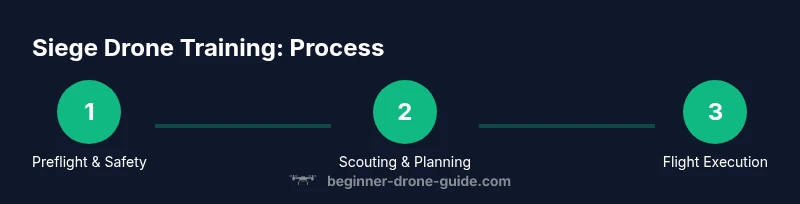
Pre-flight preparation sets the foundation for safe operations. Confirm permissions and airspace considerations, review weather conditions, and ensure you have a clear training objective. Inspect the aircraft for physical damage, verify propellers are secure, and confirm battery levels. Calibrate essential sensors and ensure GPS lock before powering on. Establish safe return-to-home margins and plan an immediate abort if anything feels off. A well-documented pre-flight routine reduces the chance of surprises mid-flight.
Step-by-Step: In-Environment Operation
During in-environment operation, stay aware of your surroundings and maintain conservative flight parameters. Keep the drone within line of sight, avoid aggressive maneuvers, and use low speeds when navigating through constrained spaces. Use a ground observer to monitor hazards, broadcast clear pan/tilt instructions, and execute planned waypoints with deliberate inputs. If wind or interference destabilizes the aircraft, execute the abort sequence and land safely. Record telemetry for later review.
Step-by-Step: Post-Flight and Review
Post-flight review is where learning solidifies. Power down safely, retrieve data logs and footage, and compare observed performance against your objectives. Note any unexpected behavior, GPS drift, or battery sag, and adjust your training plan accordingly. Share findings with your observer and log books, then schedule a follow-up session to close any gaps. Documentation and reflective practice are key to continuous improvement.
Real-World Scenarios and Risk Mitigation
In siege-like settings, training should emphasize risk mitigation: minimize exposure to bystanders, identify potential drop zones, and set clear emergency procedures. Practicing with a navigator or mission controller who can interpret wind, obstacles, and crowds improves safety. Use simulated environments whenever possible and reserve real-world practice for controlled, permissioned spaces. This approach reduces the chance of accidents and legal issues while building confidence in the drone operator.
Common Pitfalls and How to Avoid Them
Common mistakes include overestimating wind tolerance, ignoring no-fly zones, and neglecting post-flight analysis. Avoid rushing pre-flight checks, skipping calibration, or operating beyond your skill level. Always rehearse abort procedures and keep a ready-to-land mindset. By prioritizing safety margins and learning from each flight, you can build reliable, repeatable practices for siege-style scenarios.
Practice Safely: Simulators and Local Areas
Simulators are excellent for building muscle memory without risk. Use them to rehearse basic controls, camera operations, and emergency procedures before any real-world flight. When you move to actual locations, choose low-traffic, permissioned areas away from critical infrastructure. Gradually increase mission complexity as your competence grows, and always debrief after each session to identify improvements. Remember: safe practice today prevents accidents tomorrow.
AUTHORITY SOURCES
For further reading and verification, consult authoritative sources such as the U.S. Federal Aviation Administration (FAA) on unmanned aircraft systems, NASA’s drone-related learning materials, and reputable university research on drone safety. See also industry best practices published by national safety organizations. These references help ground your practice in established standards and reduce risk during siege-style training.
Tools & Materials
- Drone with stabilized camera(4K camera preferred for clearer footage)
- Controller or ground station(Must pair reliably with the drone)
- Spare batteries(At least two to allow swap during training)
- Propeller guards(Recommended for beginner-friendly practice)
- ND filters(Useful in bright outdoor lighting)
- MicroSD card(Footage storage for post-flight review)
- First-aid kit(Basic protection for small injuries)
- Flight log notebook(Record dates, times, conditions, results)
- Ground observer signal device(Loud/visual cues to communicate)
- Weather app or wind meter(Check gusts and wind direction)
Steps
Estimated time: 90-120 minutes
- 1
Define training objective
Set a specific, observable goal for the session, such as performing a smooth takeoff, a precise waypoint, or a safe landing under moderate wind. Clear goals guide your preflight checks and post-flight review.
Tip: Write the objective on a card and keep it visible during the flight. - 2
Verify permissions & airspace
Confirm you are permitted to fly in the chosen area and that it is outside restricted zones or areas with high risk. If in doubt, relocate to a controlled environment or simulator.
Tip: Have written permissions or a documented plan with a clearly defined boundary. - 3
Inspect aircraft & calibrate
Perform a thorough preflight check: inspect frame, propellers, motors, and gimbal; calibrate compass and IMU; verify GPS lock before powering on.
Tip: If any sensor reads abnormal, abort and re-check before flight. - 4
Set safety margins
Configure return-to-home, altitude caps, and maximum distance to ensure you can recover safely even if the link is interrupted.
Tip: Aim for at least 20-30% headroom beyond the planned mission distance. - 5
Power and connect
Power the drone and controller, connect the telemetry screens, and confirm the live feed and telemetry match your expectations.
Tip: Keep a backup battery ready in case of rapid discharge. - 6
Execute flight plan
Fly conservatively with slow, deliberate inputs. Use gradual yaw and pitch to maintain stability, and monitor for interference or GPS drift.
Tip: Stop immediately if the drone’s response is delayed or erratic. - 7
Maintain contact & observe
Maintain line-of-sight, use a designated observer, and communicate clearly about hazards or changes in plan.
Tip: Use standardized hand signals or radios for quick communication. - 8
Abort to land
If anything seems off — wind gusts, sensor anomaly, or loss of link — execute the abort sequence and land safely.
Tip: Practice aborts in a controlled environment to reduce risk. - 9
Review and adjust
After landing, download footage and telemetry. Compare against objectives, note improvements, and update the training plan for next time.
Tip: Document at least three concrete changes to try next session.
Frequently Asked Questions
Is it legal to fly a drone during a siege?
In most jurisdictions, flying during armed conflict or in siege areas is restricted. Always check local laws and obtain permission if possible. Prefer simulations and controlled environments for training.
In most places, avoid flying during sieges; check laws and seek permission, using simulators when possible.
What equipment is essential for siege drone training?
Essential gear includes a stable drone with camera, controller, spare batteries, propeller guards, and a device to monitor telemetry. A flight log helps track progress over time.
You need a stable drone, controller, extra batteries, guards, and a way to monitor data. Keep a flight log.
How should I handle weather risks during training?
Wait for calm conditions; avoid flying in gusty wind or rain. Wind reduces control authority and increases the chance of a loss of control.
Wait for calm weather; wind can make drones hard to control and risky.
Can I use a simulator for siege training?
Yes. Start with a high-fidelity simulator to practice controls, camera work, and emergency procedures before real flights in any environment.
Yes—start with a good simulator to learn before real flights.
What is the best way to review flights?
Always debrief after each flight. Compare telemetry and footage to objectives, journal findings, and list concrete changes for improvement.
Debrief after every flight, log findings, and plan real improvements.
Watch Video
Quick Summary
- Plan thoroughly before every flight.
- Prioritize safety and legal compliance above all.
- Use observers and abort procedures consistently.
- Review data after each session to improve.