Where to Fly Drone in Hong Kong: A Beginner's Guide
Learn where to fly a drone in Hong Kong with a practical, beginner-friendly guide. Understand licensing, airspace rules, safe locations, and planning tips to fly confidently and legally.


In Hong Kong, you can fly a drone in open, designated areas away from airports and crowds, but you must follow local airspace rules and licensing requirements. Always verify current restrictions, respect privacy, and plan for safe flights. This quick guide points you to compliant zones, registration needs, and best practices for beginners.
What to know before you fly in Hong Kong
Flying a drone in Hong Kong sits at the intersection of urban density, maritime airspace, and outdoor recreation. There’s a vibrant mix of skyscrapers, parks, and rural trails, all within a compact footprint. According to Beginner Drone Guide, the first step is understanding that airspace is tightly managed and some zones are permanently restricted. Beginners should map potential flight areas, identify no-fly zones, and aim to fly only when conditions are safe and visibility is clear. The goal is to minimize risk to people, property, and critical infrastructure while still enjoying the experience of drone flight in a dense city. As you plan, keep in mind the keyword where to fly drone in hong kong and weave it into your research so you can quickly reference compliant zones when you arrive. This foundation sets the tone for safer, more confident flights and reduces surprises mid-flight.
- Key takeaway: start with a map of restricted zones and a quick check of current restrictions before you leave the house.
- Quick tip: save a local offline map with airspace layers to reference on the spot.
Legal framework and licensing in Hong Kong
Hong Kong’s drone activity is governed by the Civil Aviation Department (CAD) and related local regulations. The rules are designed to protect airspace integrity and public safety in a high-density environment. For beginners, the essential steps involve understanding registration and licensing requirements, as well as distinguishing between general “open” operations and any area-specific permissions. The CAD emphasizes that pilots must stay informed about any temporary restrictions, flight bans, or area closures, especially during major events or extreme weather. By following official guidance, you reduce the risk of penalties or flight interruptions.
- Practical implication: expect to register your drone and carry identification when required, and be prepared to adjust plans if a restricted area is nearby.
- Pro tip: subscribe to CAD alerts or use official apps to stay updated on changes.
Where you can fly and where not
In Hong Kong, open areas away from critical infrastructure are typically the starting point for beginner flights, but airspace is not uniformly permissive. No-fly zones commonly include airports, government facilities, ports, and major transportation corridors. Even in parks and rural areas, crowds, dynamic events, and temporally restricted zones can appear with little notice. Before you fly, consult the CAD’s official airspace maps and nearby landmarks to confirm your planned spot is allowed. Always keep your drone within line of sight and avoid flying over people or property without explicit permission. And remember, local wildlife, privacy considerations, and urban noise management all shape where it’s appropriate to fly.
- Handy approach: pick a site away from busy roads and crowds, then verify the current status of the airspace.
- Caution: if you’re unsure about a location, postpone the flight and seek official confirmation.
Top beginner-friendly spots in Hong Kong for drone pilots
Finding beginner-friendly flight locations in Hong Kong means balancing scenic value with the likelihood of compliant operations. Popular areas often proposed by local clubs and hobbyists include open hillside parks, coastlines, and reservoir-adjacent plains where crowds are minimal and the terrain offers natural boundaries. For example, on Lantau Island you may find wide, open spaces with long sightlines, while Tai Tam and Sai Kung offer coastal views and fewer dense structures when restrictions permit. Always scout your spot ahead of time, check wind and visibility, and ensure you’re clear of both restricted zones and public event zones. If you’re aiming for aerial photography, choose sites with stable light and minimal foreground obstacles. The key is to pair beauty with compliance, and to verify on-the-ground access with local updates.
- Suggested process: select multiple candidate sites, then confirm restrictions before you commit to flight plans.
- Beginner mantra: plan, verify, and adapt on arrival.
Safety-first flight planning: preflight checklist
A solid preflight routine reduces surprises and keeps flights legal and safe. Start with weather checks, wind estimates, and visibility. Inspect your drone for loose screws, battery health, and propeller integrity. Confirm that the gimbal, compass, and IMU are calibrated, and ensure firmware is up to date. Charge spare batteries and ensure memory cards are ready. Finally, set a conservative maximum altitude and a geofence if available, and review your flight plan aloud as a quick mental check. In crowded environments, enable return-to-home features and confirm that you have a clear landing zone with no obstacles. The preparation you do before takeoff is where most safety wins are earned.
- Actionable item: run through a short preflight checklist before every flight.
- Warning: never bypass safety features or skip calibration steps to save time.
Step-by-step: getting started with Hong Kong flights (for beginners)
If you are new to flying drones in Hong Kong, follow a structured, repeatable process to stay compliant and safe. The steps below are designed to be performed in order and with clear purpose.
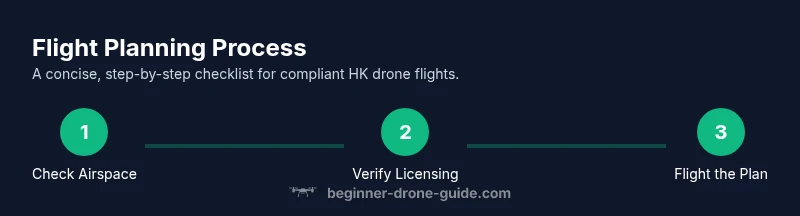
- Check official airspace maps for your intended location. 2) Verify registration/licensing requirements with CAD. 3) Prepare your drone and gear with a quick preflight. 4) Scout your flight area for hazards and crowds. 5) Plan your route and set up safety features like geofencing. 6) Perform a controlled test hover in a safe zone. 7) Fly with eyes on-screen and hands on controls, maintaining a safe distance from people. 8) Land, power down safely, and review the flight.
- Pro tip: keep an on-site log of flight details for future reference.
- Warning: if conditions deteriorate, abort the flight immediately and seek a safer spot.
Post-flight etiquette and ongoing compliance
After landing, secure your drone and review the flight data for any anomalies. Store data responsibly, respect privacy when filming people, and avoid sharing identifiable information without consent. Staying compliant means staying up-to-date with any rule changes and rechecking airspace maps before future flights. Join local drone communities to learn from others’ experiences and keep your skills sharp while avoiding common pitfalls. This ongoing diligence is what separates confident beginners from intermittent hobbyists.
- Tip: maintain a simple flight log with date, location, weather, and any issues.
- Caution: always respect others’ privacy and property, even in open spaces.
Tools & Materials
- Drone with standard controller(Essential for basic flights; ensure firmware is up to date)
- Smartphone with flight app(For controls, maps, and live telemetry)
- Spare batteries and charger(Critical for longer sessions; bring a portable charger if possible)
- MicroSD card (spare)(Extra memory for capturing media)
- ND filters (optional)(Helpful for bright Hong Kong days)
- Replacement props(Carry a spare pair in case of damage)
- ID/registration documents(Carry proof of ownership or registration where applicable)
- Weather/app for forecasts(Check wind, rain risk, and visibility)
- Notepad and pen(Log flight details and learnings)
Steps
Estimated time: Total 60-90 minutes
- 1
Check airspace and restrictions
Open the official CAD airspace map and confirm your chosen spot is allowed for your flight category. Note any temporary exclusions and time-based restrictions that may apply to the location you plan to fly from.
Tip: If in doubt, choose a different site and verify again later. - 2
Verify licensing/registration
Confirm whether your drone requires registration and ensure you hold any required licenses for the planned flight. Keep documentation accessible during the flight.
Tip: Update your records if you change drone weight or intended use. - 3
Preflight check and calibration
Inspect the airframe, battery health, propellers, compass, and GPS. Update firmware if needed and calibrate sensors before takeoff.
Tip: Perform a quick compass calibration away from metal structures. - 4
Scout the location
Walk the site to identify potential hazards, crowd density, and tree lines or power lines. Plan a safe takeoff and landing zone.
Tip: Choose a spot with a clear escape path for emergencies. - 5
Set flight plan and safety features
Program waypoints or a simple hover path if supported, and enable geofence and return-to-home features. Set a conservative altitude limit.
Tip: Test the return-to-home function at a safe altitude. - 6
Execute a controlled hover test
Lift off to a low altitude, hover for 20–30 seconds to verify stability and control responsiveness, then proceed.
Tip: Be ready to land if drift or control lag is detected. - 7
Conduct the flight with LOS
Fly with visual line of sight, maintain a comfortable distance from people, and avoid chasing shots over crowds.
Tip: Monitor battery life closely to ensure a safe return. - 8
Landing and review
Land smoothly, power down safely, and review the flight data for any errors or issues to improve future flights.
Tip: Document learnings to build safer habits.
Frequently Asked Questions
Do I need to register my drone in Hong Kong?
Yes, many drones require registration with relevant authorities in Hong Kong. Always verify current requirements before you fly.
Yes. Check the latest registration rules before flying.
What areas are no-fly zones in Hong Kong?
No-fly zones include airports, government facilities, ports, and some crowded or sensitive areas. Always consult official airspace maps.
No-fly zones include airports and sensitive sites; check maps first.
Can I fly in parks and public spaces?
Sometimes, but it depends on current restrictions and crowd presence. Always verify with CAD maps and local authorities on the day of flight.
Yes, but only where permitted; verify first.
Is commercial drone work allowed in Hong Kong?
Commercial operations typically require additional permissions or licenses. Check CAD guidance and obtain approvals for the specific mission.
Commercial flights need extra permissions.
What about privacy and filming people?
Respect privacy by avoiding identifiable filming of individuals without consent, especially in residential or private settings.
Respect privacy; avoid filming people without consent.
What are the penalties for violations?
Penalties can include fines, flight bans, and seizure of equipment. Always comply with rules to avoid penalties.
Penalties can be fines or equipment seizure; stay compliant.
Watch Video
Quick Summary
- Know airspace rules before every flight.
- Fly in compliant, open locations away from crowds.
- Register your drone and maintain proper licensing as required.
- Plan, prep, and stay adaptable on site.