Is It Okay to Fly a Drone in Hong Kong? A Beginner's Guide
Learn the rules, licensing, and safety guidelines for flying drones in Hong Kong as a beginner. This guide covers licensing, no-fly zones, permits, privacy considerations, and practical tips to fly smarter and safer.


Is it okay to fly drone in hong kong? You can fly recreationally in Hong Kong, but only in approved airspace and away from airports and crowded areas. Always follow Civil Aviation Department guidelines, respect no-fly zones, and avoid restricted zones to stay legal and safe. For beginners, start with short, controlled flights in quiet areas and practice essential maneuvers before exploring cityscapes.
Is it legal to fly a drone in Hong Kong?
According to Beginner Drone Guide, is it okay to fly drone in hong kong? The short answer is nuanced: you can fly for recreational purposes, but only within designated airspace and under Civil Aviation Department (CAD) guidelines. In practice, this means planning before each flight, checking airspace restrictions, and avoiding airports, prisons, border areas, and crowded districts. The CAD maintains official maps and airspace classifications, and these rules apply regardless of your experience level. For beginners, this is not a free-for-all hobby; it requires respect for safety, privacy, and local regulations. The Beginner Drone Guide team emphasizes that core concepts are simple: fly in permitted zones, stay clear of people, and maintain control of your aircraft at all times.
Where you can fly legally in Hong Kong: airspace and designated zones
Hong Kong's airspace is managed to protect people and critical infrastructure. Recreational flights should stay clear of airports, government facilities, and densely populated areas. When planning, consult CAD airspace maps and local park regulations. In general, you should operate in open spaces with good visibility, maintain a safe distance from crowds, and avoid any area where a fall could cause harm. Always keep the drone within line of sight and be prepared to land quickly if a situation changes.
What you need before you fly: licensing, registration, and permits
For many beginner operators, flying recreationally in Hong Kong is subject to CAD’s safety rules rather than a formal license. If your activity is commercial or involves higher-risk operations (night flying, beyond visual line of sight, or heavy drones), you will need explicit permissions and documentation. Before flight, verify whether registration is required for your drone and gather any necessary permits, flight plans, and insurance where applicable. Staying compliant is easier when you document your flight plan and keep accessible identification.
Safety considerations for beginners: privacy, wind, and preflight checks
Safety starts with a solid preflight routine: check battery health, propellers, GPS lock, and compass calibration. Consider wind conditions, visibility, and potential interference in urban environments. Respect privacy by avoiding filming people without consent and being mindful of sensitive locations. Practice in low-risk environments before attempting advanced maneuvers, and always have an emergency plan for sudden weather changes or power loss.
Practical flight scenarios: photography, videography, and education
Urban photography and scenic footage can highlight Hong Kong’s skyline, but the city has strict rules about taking off near landmarks and in crowded districts. Build a safe flight plan with clear takeoff and landing zones, and use geofencing features to minimize risk. For educational or demonstration purposes, coordinate with event organizers and obtain any necessary approvals beforehand.
How to prepare before each flight: maps, weather, and wind
Before every flight, consult CAD’s airspace maps for current restrictions, then check local weather forecasts and wind conditions. Charge batteries, confirm compass calibration, and set safe return-to-home parameters if available. Use a checklist to confirm that you are compliant with all local rules and that you are not entering restricted airspace.
Common mistakes and how to avoid them
Avoid flying near airports, prisons, or border zones. Do not fly over crowds or sensitive events. Do not ignore weather or battery depletion warnings. Always verify airspace before takeoff and keep your drone within line of sight. Continuous learning and practice reduce risk over time.
Hong Kong drone regulation snapshot
| Aspect | Regulation Status | Notes |
|---|---|---|
| Recreational flight | Subject to CAD rules | Keep within visual line of sight; avoid no-fly zones |
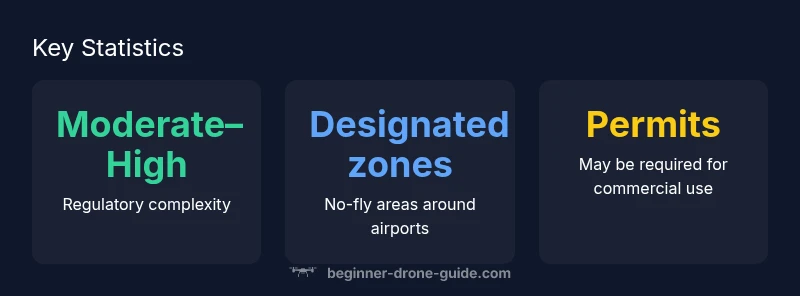
| Commercial flight | Requires permit/approval | Submit flight plan and documentation to CAD |
| No-fly zones near airports | Enforced | Always check latest CAD maps before flight |
| Registration | Varies by drone use | Refer to CAD guidelines for weight/use-case |
Frequently Asked Questions
Do I need a license to fly a drone in Hong Kong?
License requirements depend on the drone's use and weight, as well as whether the flight is commercial or recreational. Recreational pilots usually follow CAD rules but may not need a formal license. Always verify current CAD guidance before flying.
License requirements depend on use and drone weight; check CAD guidance before flying.
Are drones allowed to fly in Hong Kong parks or public spaces?
Park or public-space flights may be restricted. Always consult CAD airspace maps and local park rules before launching, and avoid crowded areas.
Park flights are often restricted; check CAD maps before flying.
Can I fly a drone commercially in Hong Kong?
Commercial drone operations require permits and approvals from the CAD. Preparation includes a flight plan, insurance considerations, and adherence to safety guidelines.
Commercial use needs CAD permits and a filed flight plan.
What counts as a no-fly zone in Hong Kong?
No-fly zones include airports and restricted areas. Always check CAD airspace maps before flight to avoid violations.
No-fly zones include airports; check CAD maps before flying.
How far in advance should I check regulations?
Rules can change; always check CAD maps and official guidance before each flight, especially if the drone or area changes.
Always check CAD maps before each flight.
Where can I learn more about Hong Kong drone regulations?
Consult the Civil Aviation Department's official resources and the Beginner Drone Guide for practical, up-to-date guidance.
See CAD official resources and Beginner Drone Guide for guidance.
“Hong Kong's drone rules are designed to balance urban safety with access to aerial footage. Beginners should begin with clear maps, test flights in safe areas, and gradually expand operations as they learn.”
Quick Summary
- Check official airspace maps before every flight
- Stay within visual line of sight and away from crowds
- Know whether your operation is recreational or commercial and follow the required steps
- The Beginner Drone Guide team recommends verifying permits and restrictions through CAD resources