Where to Fly a Drone in Singapore: A Beginner's Guide
Discover safe, legal places to fly drones in Singapore, with CAAS rules, registration guidance, and practical tips for new pilots. A friendly, beginner-focused overview from Beginner Drone Guide.


Goal: Learn where you can fly a drone legally in Singapore and how to stay compliant. This guide helps you identify airspace rules, determine when registration or permits are needed, and follow safety practices to avoid fines or flight bans. Before you fly, check official CAAS guidance, choose a suitable location, and maintain visual contact with your drone at all times. Respect privacy and local rules.
Understanding the regulatory landscape in Singapore
Drones in Singapore are regulated by the Civil Aviation Authority of Singapore (CAAS). The CAAS oversees unmanned aircraft and publishes guidance on where, when, and how you may fly. For recreational pilots, it’s vital to understand the concepts of registration, airspace awareness, and area restrictions. The Beginner Drone Guide team emphasizes starting with official rules to avoid penalties or flight restrictions. Always verify the latest guidance from CAAS before any flight, because regulations can evolve with new safety concerns. In training materials, CAAS makes a clear distinction between recreational and commercial use, and it highlights the importance of responsible operation for everyone in the sky.
According to Beginner Drone Guide, a proactive first step is to review CAAS resources and partner agency advisories so you know exactly where you can fly, what weather or time limits apply, and how to comply with privacy expectations. Keeping a mindset of continual learning helps new pilots stay compliant as airspace rules adapt to new drones and use cases. This foundation sets the tone for safer flights and fewer surprises when you finally take off.
Where you can fly: open spaces, parks, and private property with permission
Singapore offers several categories of flight locations for drones. Open outdoor spaces away from crowds and critical infrastructure are commonly used by beginners to practice basic maneuvers. Private property is permissible with the owner’s consent, and certain publicly accessible parks may be suitable if you follow posted guidelines and avoid sensitive zones. Always confirm there are no active restrictions for your chosen site and respect any posted signs or park rules. CAAS geofencing technology and local advisories help pilots avoid no-fly zones, but it remains the pilot’s duty to verify the airspace before takeoff. Based on Beginner Drone Guide analysis, new pilots often underestimate boundary checks; a quick pre-flight airspace check reduces the risk of unintentionally entering restricted airspace and helps you plan a safe route that minimizes risk to people and property.
Pre-flight checks and gear for beginners
Preparation is the pillar of safe drone flight. Start with a hardware and documentation check: ensure your drone and controller are functioning, firmware is up to date, and you have any required registration or compliance proof readily available. Calibrate sensors and compass as recommended by the manufacturer, inspect propellers for damage, and verify battery health and charge levels for both the drone and the controller. Pack spare batteries, a microSD card for footage, and a basic tool kit. A simple pre-flight checklist written on your phone is a practical habit that keeps you consistent. The aim is to minimize surprises once you’re airborne and to extend the life of your gear by performing routine maintenance.
As you practice, keep the drone within visual line of sight, maintain stable control input, and avoid flying over people or moving vehicles. In practice, beginners benefit from starting at a low altitude in an empty area, circling slowly to build familiarity with the controls, and gradually expanding your flight envelope as you become more confident.
Planning a safe flight: airspace, crowds, and privacy
Smart planning starts before you power on. Identify any local no-fly zones and restricted areas using CAAS guidance and official apps, and plan a route that avoids crowd gatherings and sensitive locations. Always check the weather and wind conditions, as poor weather can affect stability and control. Respect privacy by avoiding filming people without consent and being mindful of nearby residences or facilities. If you plan to film or photograph property, obtain permission where required, and consider notifying neighbors to reduce surprises. Practicing good communication with people nearby can prevent misunderstandings and create a friendlier flying environment.
One practical tip is to stage a fallback plan: identify a safe landing spot in case you lose connection or encounter an unexpected obstacle. This kind of contingency reduces risk and gives you confidence to handle small emergencies without panicking.
What to do if you violate rules: penalties, remedies, and next steps
If you inadvertently fly in a restricted area or fail to meet CAAS requirements, stop flying immediately and consult the official guidance to determine your next steps. Do not attempt to fly again until you are compliant with the latest rules. If penalties apply, work with the appropriate authorities to understand the options for resolution or remediation, which may include retraining, re-evaluating your operation, or temporary flight restrictions. The key is transparency and safety—document your flight plan, review what happened, and implement corrective measures before your next flight. The goal is to keep flying lawful and safe while rebuilding trust with the local community and authorities.
The Beginner Drone Guide team recommends treating any compliance slip as a learning opportunity. Stand by CAAS guidance and communicate openly if you need clarification on a specific rule or permit.
Authority sources and staying up to date
To ensure you’re following current rules, regularly consult CAAS resources and related government advisories. Official CAAS pages cover UAS safety, permits, and registration prerequisites. You may also reference government portals and education institutions that summarize aviation safety practices for beginners. Staying informed is essential, as airspace rules can change with new drone technology and evolving safety concerns. For ongoing learning, bookmark the CAAS drone safety pages and subscribe to official updates from credible sources.
Key sources include the CAAS Unmanned Aircraft guidance, local aviation advisories, and safety education materials from reputable universities or public agencies. This approach helps beginners stay compliant and fly with confidence.
Tools & Materials
- Drone (unmanned aircraft)(Ensure it has working sensors and firmware up to date)
- Remote controller(Keep within easy reach during flight)
- Spare batteries(Carry at least one extra charge for longer sessions)
- Battery charger and cables(Have a stable power source and portable charger)
- Registration/certification proof (if required)(Carry documentation in case of verification)
- Propeller guards (optional but recommended)(Useful for beginners and indoor practice)
- Phone or tablet with CAAS apps(For real-time airspace checks and maps)
- MicroSD card for footage(Optional but helpful for recording flights)
- Basic toolkit(Small screwdriver and spare screws for field maintenance)
Steps
Estimated time: 60-90 minutes
- 1
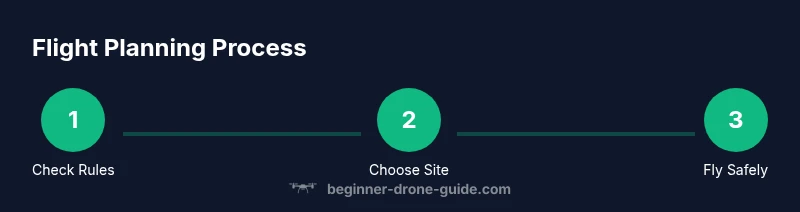
Check regulatory requirements
Before any flight, review CAAS guidelines relevant to recreational drones. Verify whether your drone needs registration or a permit for your planned flight and confirm your location is allowed for drone activity. This step prevents avoidable violations and keeps your flight safe from the start.
Tip: Keep a physical or digital copy of your compliance documents in the field. - 2
Choose a legal flight location
Select an open space away from crowds, airports, and critical infrastructure. If you fly near private property, obtain consent from the owner. Use maps or official guidance to confirm the airspace status and any temporary restrictions.
Tip: Scout the site in daylight and avoid high-traffic hours. - 3
Perform pre-flight checks
Power up the drone, check battery levels, calibrate sensors, verify propellers for damage, and ensure firmware is current. Confirm the controller connects reliably and you can see the live telemetry. Prepare your landing plan in case you need to abort.
Tip: Have a visual watch for wind gusts and sudden obstacles. - 4
Set flight parameters and maintain LOS
Set your maximum altitude and distance limits according to your comfort level, and keep the drone within line of sight at all times. Plan a simple route before lift-off and stick to it to reduce drift and disorientation.
Tip: Practice in a controlled, predictable environment first. - 5
Execute the flight with safety in mind
Take off smoothly, hover to verify stability, and gradually execute planned maneuvers. Monitor the surroundings and be prepared to land immediately if anything seems off. Respect privacy and avoid recording individuals without consent.
Tip: If you lose signal, initiate a controlled landing rather than attempting risky maneuvers. - 6
Post-flight review and maintenance
Power down safely, transfer footage if captured, and inspect the drone for wear. Recharge batteries and review flight data to identify any issues for future flights. Update your checklist for next time based on what you learned.
Tip: Document maintenance and update firmware after each flight.
Frequently Asked Questions
Do I need to register my drone in Singapore?
CAAS requires drone registration or compliance verification for certain drones and operators. Always verify current requirements on the CAAS website before flying.
Registration requirements depend on the drone and use case. Check CAAS guidance to confirm if you need to register.
What is the minimum age to fly a drone in Singapore?
There isn't a universal minimum age published by CAAS; supervision and safe operation are advised for younger pilots. Always follow local guidelines and get an adult's help if needed.
There isn’t a fixed age published; supervise younger pilots and follow safe operation guidelines.
Can I fly near airports or restricted areas?
Flying near airports or restricted zones is prohibited without explicit authorization. Always check official maps and obtain any required permissions before flight.
No, you must avoid airports and restricted areas unless you have authorization.
What should I do if I forget to register or break a rule?
If you violate rules, stop flying, consult CAAS guidance, and address any compliance gaps before flying again. Penalties can apply for non-compliance.
If you break a rule, stop and check CAAS guidance before flying again.
Where are good beginner-friendly places to fly in Singapore?
Look for wide, open spaces away from crowds and critical infrastructure. When possible, obtain permission for private land and follow posted park rules.
Seek open spaces away from people and infrastructure and follow park rules.
Is a license required for hobby flights?
CAAS differentiates between recreational and commercial use; for hobby flights, follow the recreational guidelines and CAAS recommendations. If your use case changes to commercial, licensing requirements may apply.
Recreational use generally follows CAAS guidelines; commercial use may require licensing.
Watch Video
Quick Summary
- Know the rules before you fly
- Check airspace and permissions before each flight
- Register your drone if required and keep proof handy
- Fly in open spaces away from crowds
- Stay updated with CAAS guidelines