Why Is a Drone Over My House at Night? Practical Troubleshooting Guide
A beginner-friendly troubleshooting guide explaining why a drone may hover above your home after dark, what it could mean, and practical steps to stay safe, report concerns, and protect privacy.


Steps to take when you spot a drone over your home at night. Most likely it’s a routine night flight by a hobbyist or a legitimate service; not necessarily an imminent threat. Start by noting location, altitude, and behavior, check local rules, and avoid confrontation. If you feel unsafe or the behavior continues, contact local authorities or your airport authority.
Why is a drone over my house at night
If you notice a drone hovering above your home after dark, you’re not alone. Understanding why is a drone over my house at night helps you respond calmly and effectively. In many neighborhoods across 2026, night flights happen for a variety of reasons, from casual hobby activity to legitimate inspections or filming. The first thing to know is that such flights rarely indicate immediate danger, but they can raise concerns about privacy, safety, and airspace rules. According to Beginner Drone Guide, maintaining a calm, safety-first approach is essential. In the coming sections we’ll unpack common causes, how to observe the drone’s behavior, and practical steps you can take right now to protect yourself while respecting lawful operations. By the end, you’ll have a clear, repeatable plan to assess the situation without escalating risk.
Distinguishing legitimate flights from suspicious activity
When a drone appears over your house at night, the distinction between legitimate and suspicious activity is not always clear. Look for telltale signs: is the drone part of a known service, such as utility inspections, real estate tours, or law-enforcement unmanned aircraft, or is it a casual hobby flyer? Legitimate operators typically use clearly marked devices, visible lighting that complies with local rules, and predictable flight patterns. Suspicious activity might include erratic circling, lingering near bedrooms or windows, or attempts to stay out of sight. Keep in mind that many drones have small registration numbers or logos that can help identify the operator later, but do not rely on quick judgments. The goal is safety and privacy, not confrontation. If the flight continues for minutes or returns repeatedly, note details and consider reporting to the appropriate authorities or a local aviation hotline. Remember: you don’t have to prove a crime to seek guidance or document your concerns.
What to observe: flight patterns, lights, and noises
Orderly, steady flight at a consistent altitude may indicate a professional operation or a hobby flyer without malicious intent. Irregular looping, rapid changes in direction, or hovering near windows are red flags. Pay attention to the drone’s lights: white navigation lights, red/green position lights, or strobe patterns can indicate orientation and distance. The sound level matters too; a distant hum is normal, while a loud, nearby buzz may signal a closer approach. If you’re safely indoors, note the exact time, approximate altitude, direction of travel, and any distinguishing features such as color, size, or visible markings. These details can help authorities or a security professional assess risk and respond appropriately without requiring you to confront anyone directly. Treat each sighting as data, not a confrontation opportunity.
Legal and safety considerations at night
Night drone flights introduce additional safety concerns for both operators and bystanders. Many communities require proper lighting, anti-collision equipment, and adherence to local airspace rules when flying after dusk. Privacy is another factor; overflight near homes can feel invasive even if the operator is operating within the letter of the law. The best practice is to treat the situation as a safety puzzle: prioritize your privacy, avoid interactions, and document what you observe if it helps a legitimate report. If you rent rooms or have vulnerable family members, consider extra privacy measures like closing blinds, using sound-dampening coverings, or adjusting outdoor lighting to reduce glare. Remember, laws vary by location, so check your jurisdiction’s guidance before taking action beyond your personal safety.
Immediate steps you can take now
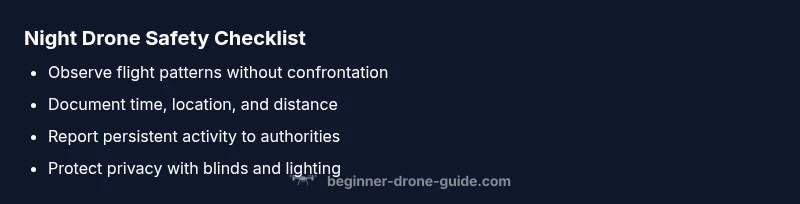
- Do not attempt to intercept or confront the drone. Stay indoors with doors locked and windows closed, especially if the drone seems very close or persistent.
- If you have a safe view from inside, observe color, size, markings, and approximate altitude. Avoid opening windows or stepping outside.
- Use exterior lighting to help you observe the drone’s path, distance, and lingering time, but avoid deliberately shining lights at the operator.
- Document the sighting with accurate timestamps, photos from indoors if possible, and short video clips when safe.
- Check local non-emergency reporting channels or your airport authority for guidance and to log a report.
- If you feel unsafe or the drone makes direct efforts to invade privacy, contact emergency services immediately.
How to document and report suspicious drone activity
Create a sightings log; record date, time, location, altitude estimate, flight path, and any notable behaviors. Save video clips or photos captured safely, and note weather conditions. If this pattern repeats, file a report with local law enforcement or aviation authorities and share your logs. Provide a concise description of the operator’s actions and any risks to people or property. Avoid sharing personal information beyond what is needed to pursue the report, and seek guidance from a lawyer if you suspect illegal activity.
Privacy, fence lines, and protecting your property
Privacy is more than a feeling; it is about controlling what others can observe from the air. Consider practical measures: install heavy curtains or blinds at night, apply privacy film to lower visibility from outside, and use strategic lighting to limit viewable angles. Planting hedges or shrubs near exposure points can create physical barriers, and outdoor cameras with clear signage may deter close approaches. If you live in a high-traffic drone area, discuss a neighborhood privacy policy with residents or local associations. Remember to document and report patterns rather than engaging with operators.
Long-term strategies for safer nights and responsible drone use
Develop a routine privacy plan: review your home’s sightlines, secure vulnerable windows, and consider privacy-focused landscaping. Engage with a local drone club or community group to stay informed about common flight hours, permitted activities, and best practices. If you own a drone, ensure you follow safety guidelines, maintain up-to-date registrations, and use geofencing features. For neighbors who fly often, consider a courteous outreach to agree on respectful flight times. These steps help reduce conflicts while encouraging responsible drone use in your area.
When to seek professional help
Sometimes the best action is to involve professionals. Security consultants or drone-safety specialists can assess risk for your property, help you understand local regulations, and advise on privacy protections. They can assist with documentation, liaise with law enforcement if persistent threats exist, and help you implement a privacy plan that respects both your rights and legitimate drone activity. If the situation feels unsafe, rely on professional guidance rather than attempting DIY interventions.
Steps
Estimated time: 30-45 minutes
- 1
Pause and assess from indoors
Take a deep breath and avoid rushing outside. Sit by a window to observe the drone’s path calmly while ensuring you are protected. This helps you gather accurate details without escalating risk.
Tip: Do not open doors to the outside while the drone is overhead. - 2
Note key details
Record approximate altitude, distance from your home, color, size, any visible markings, and the drone’s flight direction. Log the time and weather conditions as context for later reporting.
Tip: Focusing on observable features increases the usefulness of your report. - 3
Use lighting to observe safely
If you can do so from indoors, use exterior lighting to better view the drone’s path and distance. Avoid shining directly at the operator and never attempt to chase or block the drone.
Tip: Keep your exposure to the drone minimal to protect privacy. - 4
Check for official guidance
Consult local non-emergency lines or the civil aviation authority’s guidelines for night flights. Follow their instructions for documentation or reporting if required.
Tip: Not all flight activity is illegal; official guidance helps you respond correctly. - 5
Document and preserve evidence
Save any video or photo evidence, timestamp it, and store it securely. This helps if authorities request information later.
Tip: Back up your files and note the source device used to capture footage. - 6
Report if warranted
If the drone shows threatening behavior or repeats over multiple nights, file a report with local law enforcement or aviation authorities and provide your evidence.
Tip: Keep copies of your report for follow-up. - 7
Review privacy protections
Assess your home’s privacy setup like blinds, privacy films, and lighting. Implement changes to reduce future intrusions.
Tip: Small changes can significantly reduce visible exposure. - 8
Seek professional help if needed
If the situation continues or escalates, contact a security professional or drone-safety specialist for a formal risk assessment.
Tip: Professional help can guide you through formal processes and protections.
Diagnosis: Drone hovering over home at night
Possible Causes
- highPossible legitimate night flight (e.g., service inspection, real estate shoot)
- highCasual hobbyist night flight
- mediumPersistent or targeted surveillance by an unknown operator
- lowMisidentified aerial object (e.g., weather balloon)
Fixes
- easyDocument observations: time, location, altitude, flight path, lights, and any markings.
- easyCheck local regulations for night flights and privacy rules; verify if any permit is required.
- easyIf the activity persists or feels unsafe, contact local authorities or airport/air-traffic authority.
- easyAvoid confrontation; implement privacy measures and, if needed, report with gathered evidence.
Frequently Asked Questions
Is it illegal for a drone to fly over my house at night?
Laws vary by location, and many places require proper lighting and permissions for night flights. Always consult local regulations and airspace guidance before taking action beyond personal safety.
Laws vary by location; check your local airspace rules and any night flight requirements.
What should I do if the drone is repeatedly above my home?
Document the sightings, observe patterns, and report to the appropriate authorities if the behavior continues or seems threatening.
Document patterns and report persistent activity to authorities.
Can I identify who is flying the drone?
It can be difficult to identify the operator; registration numbers or logos may not be visible. Rely on documentation and official reporting channels.
Identifying the operator isn’t always possible; use your evidence and report it.
Are my privacy rights protected at night?
Privacy rights vary by jurisdiction. Implement privacy measures and report concerns if you believe your privacy is being invaded.
Privacy rules differ by area; take protective steps and report concerns.
What equipment can help deter intrusive drone activity?
Privacy screens, blinds, and strategic lighting can reduce visibility. Avoid direct engagement; seek guidance from authorities for persistent issues.
Privacy screens and good lighting can help reduce drone visibility.
When should I call authorities?
If the drone seems threatening, continues over time, or violates local rules, contact non-emergency or emergency services as appropriate.
Call authorities if you feel unsafe or the behavior continues.
Watch Video
Quick Summary
- Observe calmly before acting
- Document patterns to support reports
- Prioritize personal safety and privacy
- Know local rules and report persistently unsafe behavior
- Seek professional help when needed