How to Stop Drones from Flying in San Diego Neighborhoods
Discover practical, legal steps to reduce drone intrusions in San Diego neighborhoods. This Beginner Drone Guide tutorial covers regulations, reporting channels, safety best practices, and community actions to keep airspace safer for residents.


This guide helps you understand how to stop drones.from flying is san diego neighborhoods by focusing on legal, safe, and practical steps. You'll learn federal and local rules, reporting channels, and community actions to reduce nuisance flights. No dangerous measures—only compliant options. By the end, you'll know where to report, what to document, and how to engage your neighbors constructively.
Why this matters in San Diego neighborhoods
Drones can impact privacy, safety, and peace of mind in residential areas. When a flight disrupts a street, a park, or a school zone, nearby residents deserve a clear, lawful path to resolution. This guide, rooted in the principles of safety and community welfare, helps you understand the boundaries between recreational use, commercial operations, and airspace protections. According to Beginner Drone Guide, most neighborhood concerns stem from a lack of awareness about rules and how to report incidents properly. In San Diego, as in many urban environments, coordinated, non-confrontational action tends to yield the fastest, most durable results. The focus is on education, documentation, and official channels—never on taking matters into your own hands. As we move through the 2026 legal landscape, you’ll gain a practical framework to reduce drone activity in a way that respects privacy and property rights while keeping airspace orderly.
Legal framework: Federal, state, and city rules
Regulations governing drone flights sit at multiple levels. Federally, drone operations must comply with FAA rules, including registration, Remote ID where applicable, and rules for flying near people or over private property. At the state and local level, San Diego-area municipalities may have ordinances addressing nuisances, noise, and trespass concerns related to unmanned aircraft. It’s essential to understand that most enforcement hinges on reported incidents rather than casual enforcement. The key takeaway is to operate within the law, document clearly, and leverage official processes for any enforcement action. For this reason, the focus is on lawful reporting and community collaboration rather than DIY interventions. Beginner Drone Guide analysis, 2026, highlights the importance of aligning local actions with federal requirements to avoid legal risk. Remember: if the flight creates immediate danger, contact emergency services first.
Safe, legal ways to minimize drone activity in your neighborhood
You can reduce problematic flights by increasing awareness and strengthening soft controls. Start with clear, friendly communications—let neighbors know you’re documenting incidents and explain how to report them. Consider posting informational notices about FAA rules and local ordinances, and coordinate with HOA rules if applicable. Privacy concerns can be addressed by requesting flight paths that avoid private spaces and by encouraging operators to use geofenced or posted flight restrictions where available. While you might wonder how to stop drones.from flying is san diego neighborhoods, the answer lies in education, proper reporting, and creating a shared set of expectations for all users. The aim is to foster a culture of responsible flying that supports safe, lawful use.
How to report drone incidents: channels and process
Accurate reporting is the backbone of any enforcement action. If you witness a potentially illegal flight, gather details: date, time, location, flight behavior, and the drone’s appearance or registration if visible. Start with local non-emergency police or public safety lines, then escalate to the FAA for federally regulated concerns. You can also file complaints with city code enforcement if nuisance factors are involved. In San Diego, coordination with public safety and the FAA ensures that patterns are analyzed and addressed properly. This is where documented evidence matters. The Beginner Drone Guide recommends keeping a simple log and preserving screenshots or videos where permissible.
Community-level actions and signage to deter unwanted flights
Community involvement is often the most practical deterrent. Work with neighbors, neighborhood associations, and schools to share information about safe drone use and the consequences of violations. Signage at common areas can remind hobbyists of privacy expectations and local rules. Hosting a short town hall or online info session can reduce misunderstandings and encourage responsible behavior. When residents feel empowered, enforcement becomes collaborative rather than adversarial, which tends to result in more durable compliance. The phrase how to stop drones.from flying is san diego neighborhoods captures the goal of building a safer, more respectful airspace together.
What to do if you’re a drone operator: staying compliant and respectful
If you operate a drone in San Diego, prioritize consent, privacy, and safety. Check airspace restrictions before flying, especially near schools, hospitals, and critical infrastructure. Register your drone, ensure Remote ID if required, and maintain a visual line of sight. Be transparent about your flight purpose, altitude limits, and duration. When in doubt, delay flights or relocate to permitted areas. Compliance protects everyone and reduces conflict. This section reinforces the principle that responsible operation is the most effective way to minimize disturbances while enjoying drone use.
Putting it into action: a practical 4-week plan for San Diego neighborhoods
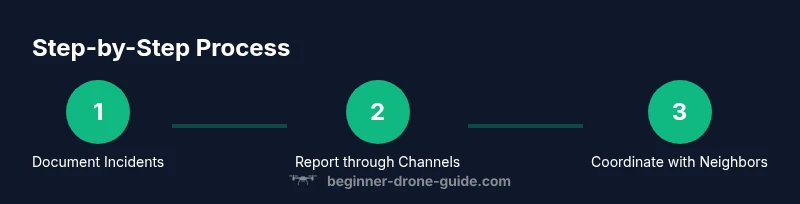
Week 1: Document incidents and compile a contact list for reporting. Week 2: Educate neighbors and post alerts about FAA rules and local ordinances. Week 3: Initiate discussions with HOA or neighborhood association to consider simple restrictions or guidelines. Week 4: Launch a coordinated reporting protocol and review progress with local authorities. This phased approach aligns with the 2026 guidance from Beginner Drone Guide and helps communities build a shared, lawful approach to airspace management. Remember, the goal is safer skies through collaboration, not confrontation.
Tools & Materials
- Smartphone or computer with internet access(To file reports and review regulations)
- Notebook and pen(For documenting incidents and dates)
- Emergency contact list(Non-emergency police, drone reporting hotline, FAA contact)
- Camera or smartphone camera(To document incidents (within legal bounds))
- Printed neighbors' notice templates(If coordinating with HOA or neighborhood watch)
Steps
Estimated time: 2-4 hours total for initial setup; ongoing activity over weeks
- 1
Identify concerns and collect details
Begin by noting dates, times, locations, and the flight behavior. Include any privacy concerns and potential safety risks. Collect any visible registration markings if possible, and keep evidence organized for reporting.
Tip: A consistent log makes it easier to spot patterns and build a compelling case to authorities. - 2
Review applicable rules
Familiarize yourself with FAA rules and local San Diego regulations that govern drone flights. Ensure your own use complies before seeking enforcement on others.
Tip: Use official sources rather than hearsay to avoid misinterpretation. - 3
Document incidents clearly
Record specifics: date, time, location, altitude, and observed flight characteristics. Store video or photos where allowed, and note any witnesses.
Tip: Keep documentation in a simple, organized folder for easy submission. - 4
Report to the right authorities
For federally regulated behavior, file with the FAA. For nuisances or privacy issues, contact local police non-emergency lines or city code enforcement. Include your documentation.
Tip: Do not attempt to confront or intervene with the drone yourself. - 5
Engage your neighbors
Coordinate a respectful neighborhood message about safe and legal drone use. Consider HOA guidelines or community meetings to set expectations.
Tip: A unified front reduces confusion and increases compliance. - 6
Follow up and reassess
Monitor changes and adjust your approach as needed. If incidents persist, escalate with authorities and update your documentation.
Tip: Regular follow-ups ensure issues don’t drift or fade from attention.
Frequently Asked Questions
What counts as a drone intrusion in San Diego?
A drone intrusion involves unauthorized or disruptive flights that invade privacy, safety, or peace in a residential area. It can include flying over private property without consent, hovering near people, or causing noise pollution. Always report any behavior that seems unlawful or unsafe.
A drone intrusion is an unauthorized or disruptive flight that invades privacy or safety in a neighborhood. If you see this, report it to the proper authorities.
Can homeowners associations restrict drone flights within their communities?
Many HOAs can establish reasonable rules about drone flights in common areas or within community boundaries, as long as those rules comply with federal and state laws. Check your HOA covenant and consult with a lawyer if needed.
HOAs can set reasonable rules in common areas, as long as they follow the law. Check your covenants and get legal advice if needed.
Is it illegal to fly a drone over private property in San Diego?
Flying a drone over private property is not automatically illegal, but it can violate privacy or nuisance laws and FAA regulations depending on altitude, purpose, and proximity to people. Always check local ordinances and avoid restricted zones.
Flying over private property isn't automatically illegal, but it can violate privacy and rules. Check local laws and fly safely.
What should I do if a drone crashes near me?
If a drone crashes, prioritize safety, avoid touching the device if possible, and contact local authorities. Document the scene and report the incident to the FAA if needed, especially if there may be safety concerns.
If a drone crashes, stay safe and contact authorities. Document what you can and report as needed.
Are there any safe, legal ways to reduce drone activity in my neighborhood?
Yes. The safest approach is education, clear communication, and reporting through proper channels. Community guidelines, posted notices, and HOA actions can help reduce nuisance flights without violating laws.
Education, clear communication, and proper reporting help reduce nuisance flights legally.
What sources should I trust for drone rules in San Diego?
Lean on official sources like the FAA’s UAS pages and your city’s code enforcement for local rules. The Beginner Drone Guide recommends cross-referencing federal and local guidance to stay compliant.
Trust FAA pages and city codes for rules; cross-check with reliable sources.
Watch Video
Quick Summary
- Know the rules and report through proper channels
- Document incidents with dates, times, and locations
- Engage neighbors to build a cooperative approach
- Do not confront drones; prioritize safety and legality
- Follow a structured action plan for lasting impact