How to Save Your Drone From Birds: A Practical Guide for Beginners
Learn practical, beginner-friendly steps to protect your drone from birds, reduce encounters during flight, and recover safely if birds appear, with deterrents and smart flight planning.


How to save your drone from birds involves proactive preflight planning, using humane deterrents, adjusting flight paths, and having emergency procedures ready. Enable obstacle avoidance, set safe altitudes, and be prepared to land quickly if birds approach. This guide helps beginners reduce wildlife interactions and fly smarter.
Why birds threaten drones and how to save drone from birds in practice
If you're asking how to save drone from birds, you're not alone. Birds can surprise drones with fast attacks, especially during takeoff, landing, or low-altitude flights near water or meadows. A strike can bend propellers, trigger vibration, or force an emergency landing. According to Beginner Drone Guide, prevention is more effective than repair, and a well-planned flight reduces surprises. This section explains how bird behavior intersects with drone operation and the big ideas behind staying safe.
Birds are attracted to movement and the small silhouettes of drones, especially when you fly near wetlands, open fields, or bird-rich habitats. Understanding their habits helps you predict risk and choose safer flight windows. By combining careful planning with humane deterrents and smart piloting, you can dramatically lower the chance of a disturbance or collision.
Preflight planning: building a bird-aware flight plan
A strong bird-aware plan starts before you power on your drone. Identify the site’s bird activity by time of day and season, check for nesting areas, and choose routes that avoid known roosts. Set conservative safety margins for altitude and speed, and decide your escape routes in case birds approach. Prepare deterrents in advance and confirm that they are legal where you fly. Finally, ensure your firmware and safety features are up to date.
Deterrents and situational awareness
Deterrents should be humane and legal. Use visual cues such as reflective tape, bright streamers, and decoys placed away from the takeoff zone to discourage birds without startling people. Gentle audio deterrents can help in some environments but remember their effectiveness is limited and they may disturb wildlife or violate local rules. Stay alert: birds often travel in flocks and may change direction suddenly, so maintain a scanning habit and assign a spotter if needed.
Safe flight techniques to minimize encounters
Keep flight paths clear of obvious bird corridors and avoid flying low over water, where birds congregate. Use obstacle avoidance features and set conservative ascent/descent rates to prevent sudden movements that could attract attention. Maintain steady, predictable motion and communicate your intentions with smooth control inputs. If wind shifts, adjust altitude to keep a balanced profile away from roosts and feeding grounds.
In-flight responses if birds appear
If birds approach or harass your drone, slow down, reduce maneuvering, and gently gain altitude to increase separation. Steer away from flocks and avoid chasing the birds. If a collision is imminent, initiate a controlled landing and promptly inspect propellers and arms for damage. If you lose signal, rely on return-to-home and land in a safe, open area with a clear landing zone.
Post-flight review and improvements
After landing, review footage to see if deterrents were effective and whether flight paths or times should be adjusted. Record bird activity patterns and update your preflight plan accordingly. Revisit your deterrent setup and ensure all devices are in working order. Sharing observations with local drone communities can help others learn what works in similar environments.
AUTHORITY SOURCES
- FAA UAS rules and safety guidance: https://www.faa.gov/uas/
- NOAA wildlife and birds safety resources: https://www.noaa.gov/
- U.S. Fish and Wildlife Service wildlife protection guidelines: https://www.fws.gov/
Additional considerations for beginners
For new pilots, the most important habits are a thorough preflight check, conservative flight profiles, and a willingness to land early when wildlife activity increases. Practice in controlled environments before attempting flights over bird-rich areas. Respect wildlife, follow local regulations, and always fly with a buddy or spotter when the environment is uncertain.
Tools & Materials
- Bird deterrents kit (visual decoys, reflective tape, and lightweight streamers)(Use humane, non-harmful options and ensure they comply with local rules.)
- Preflight plan and emergency procedures document(Include step-by-step actions for quick landing and RTH activation.)
- Spare propellers and basic tool kit(Have spares ready for minor damage from near-miss impacts.)
- Safe landing surface or mat(Provides a clear, safe zone for touch downs during bird activity.)
- Personal protective equipment (gloves, eye protection)(For handling equipment during rapid response scenarios.)
Steps
Estimated time: 30-45 minutes
- 1
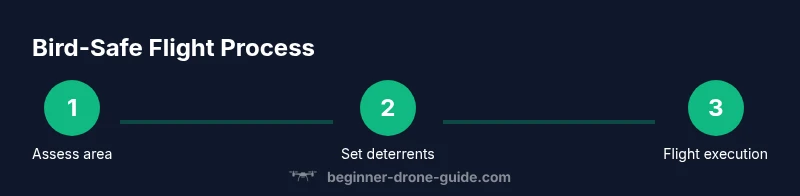
Assess the flight area for bird activity
Begin with a quick site scan to identify roosts, feeding grounds, and typical bird movement. Note time of day and weather, which influence bird activity. This helps you choose a safer route and altitude before powering on the drone.
Tip: Look for flocks or birds perched near trees or water. - 2
Install deterrents and verify readiness
Position humane visual deterrents away from the takeoff zone so birds notice them without feeling threatened by your approach. Test any audio deterrents at low volume if allowed by local rules. Confirm deterrents won’t interfere with flight sensors.
Tip: Place deterrents at a distance that doesn’t distract you during the takeoff. - 3
Configure flight controls and safety features
Enable obstacle avoidance and set conservative maximum altitude and speed. Program automatic return-to-home in case of unexpected wildlife encounters. Ensure GPS lock and satellites are healthy before takeoff.
Tip: Do a short test hover to verify responsiveness of controls. - 4
Perform a cautious takeoff and maintain visibility
Lift off slowly while monitoring birds in all directions. Keep the drone within line of sight and at a height that minimizes bird interactions. Communicate your intentions with gradual, predictable movements.
Tip: Avoid sudden turns or high-speed maneuvers near birds. - 5
If birds appear, adjust route and plan landing
Gently steer away from active flocks and ascend to a safer altitude if possible. If the risk increases, trigger return-to-home or land in a clear, open area away from water or trees.
Tip: Do not chase birds; use controlled, incremental movements. - 6
Post-flight review and plan adjustment
Inspect for any damage, note bird activity observed, and update your preflight plan. Consider adjusting flight times or deterrent placement for future sessions.
Tip: Document lessons learned for your next flight.
Frequently Asked Questions
What attracts birds to drones and how can I prevent encounters?
Birds are drawn to the small moving targets and reflective surfaces of drones. To prevent encounters, fly during calmer times of day, use humane deterrents, and maintain a clear flight path away from known bird habitats.
Birds are drawn to small moving drones; use deterrents and plan routes to reduce encounters.
Are bird deterrents legal and safe for drones?
Most humane deterrents are allowed if they do not harm wildlife or people and comply with local regulations. Check your area’s rules before using any deterrents.
Use humane deterrents and verify local rules before flying.
What should I do if a bird collides with my drone?
If a collision occurs, land immediately if safe, inspect for damage, and avoid flying again until you check propulsion and sensors. Report any injury or wildlife interaction if required by local laws.
Land safely, inspect for damage, and follow local rules after a collision.
Can I recover a damaged drone after a bird strike?
Minor damage may be repairable with spare parts and basic tools. For serious damage, consult a professional technician and verify firmware safety before the next flight.
Minor damage can often be repaired; major damage may need a pro.
Should I avoid bird-rich areas altogether?
If you’re new to flying, start away from bird habitats and gradually test conditions near them as you gain experience. Always prioritize safety and wildlife respect.
Start away from birds and build experience gradually.
Watch Video
Quick Summary
- Plan around bird activity before every flight
- Use humane deterrents and stay compliant with rules
- Maintain line-of-sight and slow, predictable movements
- Land quickly if wildlife threat escalates
- Review flights and update deterrents after each session