How to Protect a Drone From Birds: Practical Guide
Learn practical, beginner-friendly methods to protect your drone from birds, covering preflight planning, safe flight techniques, deterrents, and emergency procedures for safer flights.


You can protect your drone from birds by planning routes that avoid nesting areas, flying at safer altitudes, and using deterrents when necessary. Start with a thorough preflight check, monitor bird activity during flight, and land safely if a flock approaches. This guide walks you through practical steps, gear, and best practices for safer drone flights.
Why birds are a risk to drones
Birds are unpredictable and can swoop toward propellers, cause partial or full loss of control, or trigger emergency landings. According to Beginner Drone Guide, even small songbirds can disrupt a flight if startled, while larger raptors may pose collision risks near open fields. Understanding flight behavior, nesting cycles, and feeding grounds helps you plan safer routes and timing. Visual detection of flocks and perched birds matters as much as wind and visibility. By anticipating where birds are likely to be found, you can reduce the odds of a close encounter and maintain safer operation under varied weather conditions. This awareness feeds into every step of your preflight routine and on-the-fly decisions during flight.
Birds are more active at dawn and dusk, in windy conditions, and near water sources or tree lines. While some species avoid flying near moving rotors, others are curious or territorial and may investigate quickly. For beginners, the takeaway is simple: the more you know about local birds, the better you can plan and react. Keep an eye on wind shifts that push birds into your flight corridor and always have an exit route in mind. This section lays the groundwork for the practical steps that follow.
Preflight planning to reduce bird encounters
A solid preflight plan minimizes exposure to birds. Start with a detailed look at the area using maps and recent reports of bird activity. Avoid known nesting sites, roosts, or feeding grounds, especially at dawn and dusk when birds are most active. Choose a flight corridor with open visibility, minimal trees, and a clear landing zone. Set your home point and altitude ceiling before takeoff, and ensure your spotter can communicate clearly. Finally, bring a lightweight deterrent option and keep it accessible in case a flock appears mid-flight.
Planning also involves weather checks: wind speed and direction can push birds toward your path. If you notice a dense avian presence beforehand, postpone the flight or choose a different route. A well-documented preflight routine reduces risk because you can act quickly when birds appear in or near your planned corridor.
In-flight tactics to stay clear of birds
During flight, maintain sufficient altitude to stay above typical bird flight paths and adjust speed to avoid chasing terms with flocks. Use a slow, steady pace and avoid sudden accelerations that could attract curiosity or provocation. If you spot birds ahead, divert away or land if the birds appear to be circling or approaching aggressively. Keep the drone in sight at all times, and use propeller guards or obstacle avoidance to reduce risk if a near-miss occurs. Practice with calm, controlled maneuvers in safe environments before venturing into bird-prone areas.
Communication between the pilot and the spotter is critical. If birds close in, prioritize safe landing rather than risk a panic maneuver that could compromise the drone. The key is predictable, smooth movements that do not surprise wildlife.
Deterrents and safety tools you can use
Deterrents should be humane and compliant with local regulations. Visual deterrents (bright markers, reflective tape, or decoy predator silhouettes) can discourage birds from approaching. Audible deterrents, such as safe warnings, can help, but avoid startling birds too aggressively. Always test deterrents in advance in a controlled space and store them in a safe, accessible place for quick deployment. Pair deterrents with a robust preflight checklist and a plan to abort if birds persist.
Use deterrents as a backup, not a primary safety measure. A well-planned flight path and vigilant crew reduce reliance on deterrents and increase your ability to respond calmly when birds are nearby.
Post-flight checks and learning from near-misses
After each flight, review bird encounters in a log. Note time of day, weather, location, and any bird activity that occurred. Share observations with your crew so you can adjust future plans. If a bird scare happens, restore safety margins and consider alternate routes for next time. This continual learning builds confidence and reduces risk as you gain experience.
Documenting near misses helps you refine routes, timing, and determent choices for increasingly bird-safe flights.
Bird behavior and flight dynamics
Birds react to drones based on shape, motion, and sound. Predatory silhouettes may deter, while flapping blades can attract curiosity. Larger birds tend to react more aggressively in loose flocks, while smaller passerines might investigate more closely. Knowing which species are common in your area allows targeted planning: if waterfowl are present near a lake, anticipate sudden takeoffs; if raptors are known to patrol ridges, avoid those ridges during flight. This understanding translates into smarter flight corridors and safer engagements with wildlife.
Seasonal considerations and migration patterns
Bird activity shifts with the seasons. Breeding season draws many species to nesting sites, increasing the likelihood of near encounters or territorial displays near your flight area. Migration periods bring flocks across traditional routes, potentially altering the risk landscape from week to week. Before every flight, check regional wildlife advisories and adjust flight plans to avoid peak activity windows. Being aware of seasonal patterns reduces risk and supports safer experimentation for beginners.
Training drills you can perform safely
Practice with a dedicated training zone that mimics real-world bird encounters, using calm, simulated bird approaches. Schedule repeated drills focusing on detection, early avoidance, and smooth landings. Keep a log of drills and outcomes to track progress. Use a helper to simulate birds at various distances so you can refine your response times and teach your eyes to recognize warning signs early.
Quick checklists for different environments
Urban environments require tighter margins and faster decision-making, while rural fields offer longer sightlines but more wide-open space to encounter large birds. Create checklists tailored to your typical missions: urban checklists emphasize rotor safety near buildings and pedestrians; rural checklists highlight open space, water sources, and nesting hotspots. Adapting to environment legs your risk and boosts confidence.
Authority sources
- FAA UAS Safety: https://www.faa.gov/uas
- Cornell Lab of Ornithology: https://birds.cornell.edu
- U.S. Fish and Wildlife Service: https://www.fws.gov
Tools & Materials
- Spare propellers(Carry correct propeller size for your drone model)
- Preflight checklist (printed or digital)(Checklists should cover area, birds, weather, and emergency steps)
- Spotter or second operator(Person to watch for birds and communicate hazards)
- High-visibility markers/vest(Improve visibility to bystanders and birds)
- Safe landing zone markers(Define a clear, obstacle-free landing area)
- Humane deterrents (visual/audible)(Use only legal deterrents and test before flight)
Steps
Estimated time: 45-60 minutes
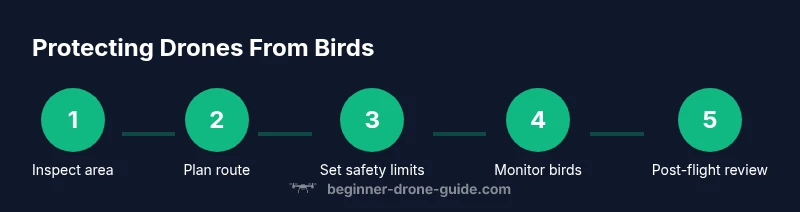
- 1
Inspect and scout the area
Check the takeoff site for visible birds, nests, and roosts. Review recent bird activity reports and communicate with your spotter about any nearby hazards. Confirm you have a safe landing zone and alternate routes in case birds are encountered.
Tip: Do a preflight walk-around to spot branches or perches that could drop debris during takeoff. - 2
Plan flight path to avoid birds
Draw a route that steers clear of known bird hotspots and flight near water or tree lines. Set reliability checks in your app for terrain and no-fly zones; adjust altitude to stay above typical bird heights while keeping within manufacturer limits.
Tip: Choose corridors with good line-of-sight and minimal distractions. - 3
Configure safety settings
Set the drone's maximum altitude, speed, and return-to-home behavior to reduce risk if a flock appears. Enable obstacle sensing and designate a safe emergency landing point. Update geofence and safety settings as needed before launch.
Tip: Test obstacle sensors in a safe area before business flights. - 4
Execute flight with vigilance
Fly with your spotter watching for birds and be ready to pause or land if activity increases. Maintain line-of-sight, monitor wind shifts, and adjust speed to avoid provoking birds. If birds close in, disengage aggressive maneuvers and head away.
Tip: Keep a calm pace to prevent startling birds. - 5
Use deterrents when needed
If birds become curious or start circling, deploy humane deterrents per local regulations and your preflight plan. Do not rely on deterrents alone; be prepared to land if the situation worsens.
Tip: Test deterrents in a safe space prior to field use. - 6
Post-flight review
Document any bird sightings and interventions in a flight log. Note the time of day, weather, location, bird behavior, and whether deterring actions were effective. Use these notes to adapt future flights.
Tip: Share observations with your team to improve safety.
Frequently Asked Questions
Why are birds attracted to drones?
Birds may approach drones out of curiosity or defense, potentially causing collisions or panic during flight.
Birds often approach drones out of curiosity or defense, which can lead to collisions if not managed.
What is the best time to fly to minimize bird encounters?
Early morning or late afternoon can reduce some bird activity, but always check local wildlife patterns and stay within legal flight windows.
Early morning or late afternoon can minimize some bird activity, but check local wildlife patterns and rules.
Are deterrents legal and safe to use?
Yes, as long as deterrents are humane and comply with local regulations. Avoid harmful devices and follow manufacturers guidelines.
Deterrents are allowed if humane and legal; follow local rules and manufacturer guidelines.
What should I do if a bird collides with my drone?
Land immediately, inspect the drone for damage, and reschedule your flight if needed. Report wildlife encounters to local authorities if required.
If a bird hits your drone, land safely, inspect for damage, and adjust plans for next time.
How can I learn from near-misses?
Review flight footage and logs, note bird activity, and adjust routes, timing, and deterrents for future flights.
Review near misses and adjust routes and deterrents to improve safety next time.
Watch Video
Quick Summary
- Plan flight routes away from bird hotspots.
- Maintain a human spotter during high-risk flights.
- Have humane deterrents ready and tested.
- Review near-miss data to improve safety.