How to Deal with Drone Attacks: A Practical Guide for Beginners
A practical, beginner-friendly guide covering safety steps, documentation, reporting, and prevention when faced with drone attacks. Learn to stay calm, protect yourself, and build safer flying habits.


According to Beginner Drone Guide, dealing with drone attacks is a skill you can learn with a clear, safety-first plan. This guide provides a practical, step-by-step approach for beginners to stay safe, document incidents, report properly, and review procedures to prevent repeats. You’ll gain a structured method you can apply in the moment and afterward to protect yourself and others.
Understanding Drone Attacks: What Counts
Drone attacks come in many forms, from close-range passes that feel threatening to persistent surveillance that invades privacy. For beginners, the key is to recognize signs of an unsafe encounter: sudden maneuvers toward people, repeated hoverings over a specific area, or drones behaving erratically near your flight zone. While not all drones qualify as 'attacks', any experience that creates fear, disrupts operations, or risks safety should be treated seriously. According to Beginner Drone Guide, knowing what constitutes an attack helps you respond calmly and consistently rather than improvising under pressure. In practice, the line between a casual encounter and an attack is often the intent and the impact on safety.
From a safety-first perspective, you should also understand your local laws and community rules related to drone behavior. This knowledge reduces confusion during high-stress moments and clarifies when to escalate to authorities. Keep in mind that attackers may be motivated by privacy invasion, harassment, or simple mischief; recognizing motive can guide the appropriate response without compromising your own safety.
Immediate Safety Actions (First 60 Seconds)
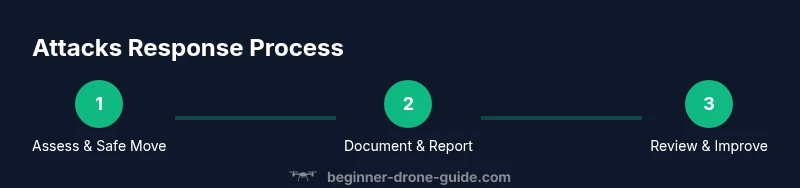
In the first moments of a suspected attack, your primary objective is safety. Pause the flight (if safe to do so), reduce altitude, and orient yourself away from people and bystanders. Move to a sheltered or open space depending on the drone's behavior, and maintain a visible stance to avoid escalation. Do not confront the operator or attempt to snatch the drone. Clear your airspace and instruct others nearby to step back. If you are in a vehicle, slow and stop in a safe location. After securing safety, begin documenting what you observed. This initial calm, safety-first approach prevents impulsive reactions that could worsen risk for you or bystanders. As you practice, you’ll gain quicker instincts and a more confident, safe response.
Documentation and Evidence: What to Capture
Detail time, location, weather, drone category if visible, and operator actions. Use your phone to record video and photos from a safe distance; preserve metadata such as timestamps. Capture multiple angles: the drone's proximity to people, its flight path, and any signage or registration visible. Organize evidence with a simple log and save copies to cloud storage. Clear, organized records speed up investigations and improve your accountability should legal or insurance questions arise. If you can safely do so, note any language or threats used by the operator—that context can be important for authorities and platforms.
Reporting Pathways: Who to Notify and When
Prompt reporting improves response and helps create safer skies for everyone. If there is an immediate danger, contact local law enforcement or aviation authorities. If the attack occurs during a sanctioned flight, notify your supervisor, safety officer, or flight instructor. File a report with the platform or park authority if the drone infringed on private property or caused a safety risk. Include the evidence you collected and your incident log. Reporting promptly also helps your own record-keeping for training and legal purposes. In addition, share a concise summary with any drone club or mentor you belong to—they can offer guidance and support.
Prevention and Preparedness: Reducing Risk Over Time
Develop a safety-first mindset and integrate safeguards into your flight planning. Use geofencing, check your airspace, and stay updated on local regulations. Practice calm responses via drills with a club or mentor, and create a personal 'attack response' checklist. Review and revise your flight plans after every incident. This ongoing practice reduces the likelihood of future encounters and makes you a safer pilot. Consider adding additional observers or a buddy system for flights in shared spaces, which creates a built-in mechanism for early detection and de-escalation. Remember, prevention is more effective than reaction.
Real-world Scenarios and Practical Exercises
Simulate common situations to build muscle memory for safe responses. Scenario A: A drone hovers aggressively over a park; you enact your safety plan, document, and retreat. Scenario B: A drone follows you along a route; you disengage and head to a safe area while recording the incident. After each drill, review what worked, update your checklist, and discuss improvements with peers. Regular practice reinforces confidence and reduces hesitation when real incidents occur.
Tools & Materials
- Smartphone with camera and reporting app(For immediate reporting to authorities and documenting evidence)
- Notebook and pen(Record times, locations, and observations)
- Evidence kit (external storage or USB drive)(Store video clips securely; avoid editing metadata)
- First aid kit(In case of any injuries during encounters)
- Personal protective gear(Glasses, hat, or helmet if in crowded settings)
Steps
Estimated time: 15-60 minutes
- 1
Assess surroundings to establish safety
Scan the area for threats and identify safe routes. Determine if you can safely land or retreat to a sheltered position without putting bystanders at risk.
Tip: Keep your hands visible and avoid sudden movements that could escalate the situation. - 2
Move to a safe position and create distance
If feasible, steer away from crowds and direct the flight path away from people. Seek solid cover or open space as appropriate to the environment.
Tip: Do not chase or attempt to capture the drone; this can be dangerous and counterproductive. - 3
Document the encounter
Record time, location, drone behavior, and any threats. Capture stills or video from a safe distance and collect identifying details when visible.
Tip: Preserve metadata (timestamps, camera settings) for accuracy. - 4
Report to authorities and relevant parties
Notify local law enforcement or aviation authorities if safety is at risk. Inform your supervisor or flight instructor if part of a club or school, and file a report with the platform if applicable.
Tip: Provide a concise incident summary with available evidence. - 5
Submit and store the incident record
File the report with your organization or insurer if required, and back up evidence to secure storage.
Tip: Use a standard incident form and keep copies in multiple locations. - 6
Debrief and adjust safety plans
Analyze what happened, update safety protocols, and incorporate lessons learned into future flights.
Tip: Share findings with peers to broaden safety awareness.
Frequently Asked Questions
What counts as a drone attack?
A drone attack includes deliberate intimidation, unsafe proximity, or actions that threaten safety or privacy. If you feel unsafe or experience recurring harassment, treat it as an attack and respond with the safety protocol.
A drone attack is deliberate intimidation or unsafe behavior by a drone that threatens safety or privacy.
What should I do immediately during an attack?
Prioritize safety, move to cover, document the encounter, and avoid confrontation. If there is imminent danger, contact authorities right away.
Stay safe, move away from people, document what you see, and contact authorities if needed.
Do I need to report every drone encounter?
Yes, especially when safety is at risk or privacy is impacted. Keep a simple log and report incidents to authorities or your organization as appropriate.
Yes, report safety-focused encounters to keep skies safer and help authorities.
How can I prevent future attacks on my flights?
Enhance planning with geofencing, airspace checks, and updated regulations. Practice with a club or mentor and maintain a personal attack response checklist.
Use geofencing, plan ahead, and practice with others to reduce risks.
What evidence should I collect?
Video and photos with timestamps, location data, and a brief description of the operator’s actions. Preserve original files and metadata.
Capture video, photos, and notes with timestamps for solid evidence.
Are there legal considerations I should know?
Know local drone regulations and privacy laws. When in doubt, prioritize safety and reporting and consult a legal adviser if needed.
Be aware of local rules and privacy laws; safety and reporting come first.
Watch Video
Quick Summary
- Act first for safety, then document
- Keep evidence organized and secure
- Report promptly to authorities and relevant bodies
- Review and improve safety plans after each incident
- Practice drills to build confidence