How to Get Rid of Drones: Safe, Legal Deterrents for Your Property
Learn legal, safety-focused ways to deter drone intrusions. This beginner-friendly guide covers rights, reporting, and practical deterrents to protect privacy and safety.


Getting rid of drones on your property should be done legally and safely. Start by knowing your rights and contacting authorities if needed, document incidents, and use non-harmful deterrents like signage and lighting. Always prioritize safety, privacy, and compliance with local regulations.
Why Getting Rid of Drones Is a Legal and Privacy Concern
Drones can intrude on privacy and safety, which is why many homeowners wonder how to get rid of drones. This topic isn't about harming devices; it's about lawful, respectful ways to reduce nuisance and protect your space. If you're looking for guidance on how to get rid of drones on your property, this guide emphasizes privacy, airspace rules, and practical steps. According to Beginner Drone Guide, most concerns can be addressed through awareness, documentation, and non-harmful deterrents that comply with local regulations. Understanding that the airspace around your home is governed by national and local rules helps you navigate conversations with neighbors, businesses, and authorities. The goal is to deter unwanted activity while staying within the law and maintaining a constructive approach.
Understanding Your Rights and Local Regulations
Your rights when a drone invades your privacy depend on your jurisdiction. In many places, you own the airspace above your property only to the extent that flight does not threaten safety; you cannot physically shoot or force a drone to land. The right approach is to know what authorities consider a violation—for example, repeated overflights, photography of private areas, or loitering near critical infrastructure. Beginner Drone Guide analysis, 2026, indicates that a majority of homeowners resolve concerns using documented incidents, official reports, and non-technical deterrents rather than force. Check your city or state aviation authority for guidance, and review privacy laws that govern surveillance. If in doubt, consult a licensed attorney or contact your local law enforcement to outline your options. This knowledge empowers you to establish clear expectations with operators and neighbors while protecting your privacy.
Non-Harmful Deterrents That Work
A range of deterrents can reduce drone activity without harming the device or the operator. Start with visible privacy measures and clearly posted signs indicating a no-drone zone. Improve lighting with motion-activated LEDs to deter low-flying activity at night. Use physical privacy screens or tent-like shade structures to obscure sensitive areas. Privacy-conscious properties may consider temporary visual obstructions like plantings or banners. Most experts agree that deterrents should be non-invasive and comply with laws; never attempt to intercept, jam, or disable a drone. These approaches preserve safety while discouraging unwanted flights. In practice, combine signage, lighting, and distance approaches (e.g., directing drones away from sensitive zones) as a first line of contact. If the drone persists, escalate to authorities and provide documentation of incidents.
How to Document Incidents and Build a Case
Document what happened: date, time, location, drone color and type if visible, flight path, and what privacy or safety risk occurred. Save photos or short video clips from a safe distance; avoid approaching the operator or interfering physically. Note weather conditions, as wind or interference can affect flight behavior. Create a concise incident log and compile evidence with timestamps. When sharing information with authorities, provide copies rather than originals. This careful documentation helps authorities assess risk and decide next steps. Remember to archive raw files in a secure location and maintain a consistent format for each entry.
Communicating with Operators and Property Management
Whenever possible, communicate calmly with the drone operator or property management to explain concerns and request compliance. Use a non-confrontational tone; emphasize privacy and safety and reference applicable rules. If direct contact seems unsafe, rely on official channels rather than social media or public shaming. Keep records of conversations and requests. Collaboration with the community often yields faster, more durable results. In many cases, operators are unaware that a flight causes distress; a respectful conversation can resolve issues without escalation.
When to Involve Authorities and What to Expect
If a drone continues to violate privacy or safety boundaries after you’ve attempted deterrents and conversation, it’s appropriate to contact authorities. Start with local law enforcement and, if necessary, report to the aviation authority or a privacy commission. Provide a clear incident log, collected videos or photos, dates, times, and descriptions of risk. Authorities will assess the situation and advise on next steps; in some cases, they may issue warnings, impose restrictions on the operator, or investigate criminal violations. By following official channels, you protect your rights while avoiding unsafe or illegal actions.
Designing Your Space to Deter Drones
Physical layout decisions can reduce drone visibility and access to sensitive areas. Position outdoor living spaces and valuables away from exposed windows; use strategic landscaping to limit line of sight. Install privacy screens or temporary fencing that complies with local codes. Post clear signage indicating no-fly zones and privacy expectations. Avoid creating hazards that could cause injury or conflict. Combine these measures with lighting and visible reminders to deter incidental flights. A well-planned space sends a consistent message: privacy matters, and drones must respect boundaries.
Debunking Myths: Common Misconceptions About Drones
Many people assume drones are immune to regulation or that all incursions require aggressive responses. In reality, rules governing airspace, privacy, and trespass often apply, and non-harmful deterrents are usually the preferred first line of defense. Another myth is that signage alone will stop flights; while helpful, it works best when combined with lighting, landscaping, and escalation procedures. Finally, some assume you must tolerate repeated disturbances; you have the right to seek relief through the proper channels and to document incidents for authorities.
Putting It All Together: A Practical Plan
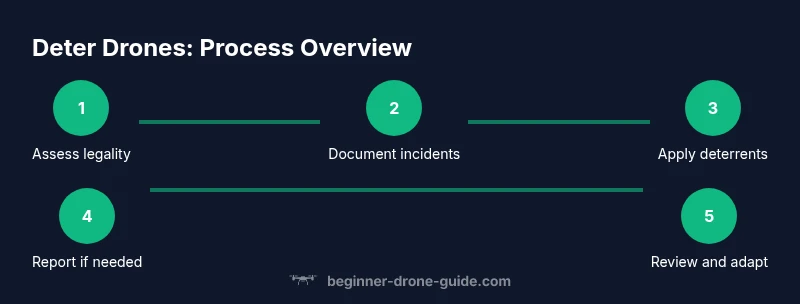
This final section combines rights, documentation, deterrents, and reporting into a coherent plan you can implement step by step. Begin by reviewing local rules and posting privacy signage around you. Next, document every incident with date, time, and visual evidence, then try polite outreach to the pilot or property manager. If the problem persists, contact authorities and provide your organized record. The objective is to deter unwanted flights while staying within the law and protecting privacy. The Beginner Drone Guide team recommends adopting a consistent, lawful approach to address drone intrusions and to review and adjust your plan as laws and technology evolve.
Tools & Materials
- Privacy signage (no-drone zone)(Post at property entrances and around vulnerable areas)
- Outdoor lighting (motion-activated)(Energy-efficient LEDs; consider placement to avoid glare)
- Documentation tools (camera or smartphone)(Capture date/time, drone color, and flight path from a safe distance)
- Access to local aviation and privacy guidelines(Know where to report and which regulations apply)
- Incident log template or app(Standardize how you record each encounter)
Steps
Estimated time: 2-4 hours for initial setup; ongoing monitoring and updates
- 1
Assess legal standing
Begin by researching your local laws to determine what constitutes a violation and which authorities handle drone incidents. Understand that you cannot physically intervene or damage the drone, and that privacy and safety are key concerns. This step sets boundaries for what actions are permissible and which channels to use.
Tip: Begin with official guidelines from your local aviation authority and note any exceptions. - 2
Document the incident
Record the date, time, location, and flight path of the drone. Capture clear photos or short video clips from a safe distance and preserve weather conditions that might influence the drone's behavior. A well-documented incident log strengthens your case if you need to report it later.
Tip: Use consistent file naming and organize evidence by date for easy retrieval. - 3
Review guidelines and exemptions
Consult official guidelines for privacy and airspace rules to understand what protections you have and what actions are allowed. If your jurisdiction offers complaint forms or reporting channels, use them to outline the incident clearly. This step reduces ambiguity when communicating with authorities.
Tip: Record the exact rule or policy you cite when making a report. - 4
Set up non-harmful deterrents
Install visible privacy measures, such as signage and privacy screens, and consider motion-activated lighting to deter low-altitude flights at night. Ensure all deterrents comply with local laws and do not interfere with other airspace users. This creates a proactive layer of protection without escalating risk.
Tip: Test deterrents to confirm they don’t create new hazards or privacy issues. - 5
Attempt communication with the operator
If safe, reach out to the drone operator or property management to explain concerns and request compliance. Use a respectful, factual tone and reference relevant regulations. Document the interaction and any commitments made so there is a written trail.
Tip: Keep conversations civil; many issues resolve quickly with clear communication. - 6
Report to authorities if necessary
If intrusions continue or escalate, file an official report with local law enforcement or the aviation authority. Provide your incident log, evidence, and a concise summary of the risk. Authorities will advise on next steps and may investigate.
Tip: Include a timeline of events and emphasize privacy and safety impacts. - 7
Monitor and adjust your plan
Regularly review your deterrent setup and incident records to identify patterns and adjust as laws or drone technology changes. Update signage, lighting, or reporting contacts as needed. Ongoing vigilance helps maintain a practical, lawful defense.
Tip: Schedule quarterly reviews to stay current with regulations.
Frequently Asked Questions
What legal options do I have to get drones away from my property?
Your first step is to understand local laws and report violations to authorities. Consider non-harmful deterrents and document incidents for official follow-up.
Know your rights and report violations to authorities; use safe deterrents.
Can I use deterrents like lights and signs to keep drones out?
Yes, non-harmful deterrents like signage and lighting can help, provided they do not obstruct airspace or create hazards. Always ensure compliance with local rules.
Non-harmful deterrents are usually permitted when used correctly.
Should I confront a drone operator?
Confrontation is discouraged for safety and legal reasons. If possible, communicate calmly or rely on official channels to resolve concerns.
Avoid direct confrontation; use formal channels when needed.
How do I report a drone incident?
Contact local law enforcement or the aviation authority and provide your incident log, evidence, and a concise description of the risk.
File a report with the appropriate authority and share your evidence.
Are there privacy-protective measures I can install?
Yes; signage, screens, and landscaping can help protect privacy if they are non-harmful and compliant with laws.
Use privacy-enhancing measures that stay within legal bounds.
What should I do if a drone is near critical infrastructure?
Immediately report to authorities and avoid attempting to interfere with the drone. Provide details and any evidence you have collected.
If near critical assets, contact authorities right away.
Watch Video
Quick Summary
- Know your rights and local regulations
- Document incidents meticulously
- Use non-harmful deterrents first
- Report incidents promptly to authorities
- Review and adjust your deterrent plan