Can Exhaust Tips Cause a Drone? A Beginner's Troubleshooting Guide
Explore whether exhaust tips affect drone performance and learn a practical, beginner-friendly troubleshooting flow. If you notice heat, smoke, or unusual behavior, follow these steps safely.


In most consumer drones, exhaust tips don’t exist because these are electric machines without exhaust; therefore exhaust tips cannot cause a drone to fail. If you notice smoke, burning smell, or heat near the motors, stop flying, power down, and inspect for battery damage, loose wiring, or debris. Keep clear of propellers and seek professional help for repairs.
Can Exhaust Tips Cause Drone Problems?
Many beginners ask: can exhaust tips cause drone problems? The truth for most consumer drones is that there are no exhaust tips to worry about because these are electric machines with sealed housings. If your drone shows signs of trouble, exhaust-related causes are unlikely. Understanding what can actually affect flight performance helps you troubleshoot quickly and safely. In this guide, we'll separate myths from real issues and give you a practical, beginner-friendly checklist. For beginners, the question can exhaust tips cause drone problems; the answer is usually no. We’ll also explain how to distinguish heat, odor, and smoke signs from real errors.
This section lays the groundwork: know what is normal, what isn’t, and how to approach problems calmly to avoid mishaps.
What Exhaust Really Is in Drones
In most consumer drones, there is no exhaust outlet. Drones use electric motors and sealed housings, so there is no combustion exhaust venting heat away as a visible plume. The concept of an 'exhaust tip' typically belongs to gas-powered engines and is not part of common quadcopters. If you ever see fumes, it’s a red flag indicating a hazard such as battery thermal runaway or damaged wiring. In rare cases, specialized flight platforms may have exhausts, but they are not standard for beginners' models. Understanding the absence of exhaust helps you avoid chasing phantom problems.
So, can exhaust tips cause drone issues? Not in typical electric models; focus on real wear-and-tear factors instead.
Common Causes of Drone Troubles (Besides Exhaust)
When troubleshooting, focus on real, observable factors. Common culprits include a degraded battery, damaged propellers, loose or frayed wiring, failed ESCs, software glitches, or RF interference from nearby devices. The fuel of troubleshooting is to test one factor at a time and document what changes your tests produce. Remember: can exhaust tips cause drone issues is not the typical root cause for electric drones; more often, the issue is mechanical, electrical, or software related.
This section helps you build a practical mental map: battery health, physical damage, and software state matter more than any exhaust concept.
Quick Checks You Can Do Before Flight
Before you fly, perform these easy checks:
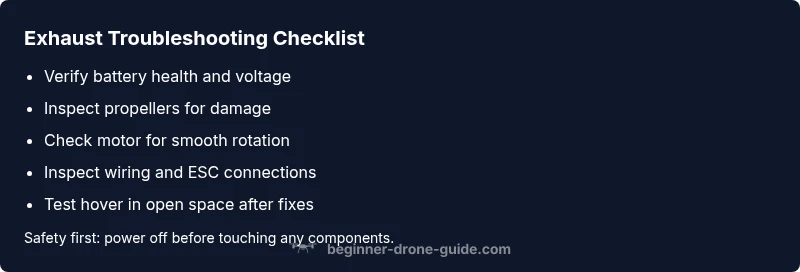
- Inspect all propellers for cracks and replace damaged blades.
- Check battery health and voltage with the manufacturer’s app.
- Ensure motors spin freely without grinding or catching.
- Confirm firmware and app versions are current.
- Calibrate compass and IMU as recommended. These steps reduce risk and address many flight problems, and they’re especially important if you’re worried about issues related to exhaust myths.
These quick checks are your first line of defense. They are simple, fast, and highly effective at catching problems before takeoff.
How to Inspect for Heat, Smoke, or Odor
If you notice heat, a burning odor, or smoke, stop flying immediately and power down the drone safely. Remove the battery if you can safely do so. Check for swollen batteries, melted insulation, or burnt wiring. Do not attempt to fly again until the issue is resolved. These signs are safety-critical and often point to battery damage or motor binding rather than exhaust. After cooling, inspect each component and document findings before planning a repair or replacement.
Preventing Problems: Best Practices for Beginners
Adopt a routine pre-flight checklist, fly in open spaces, and stay within line of sight. Keep spare propellers, a charged battery, and a basic tool kit onboard. Practice gentle throttle and hover to spot anomalies early. By following these safety-focused habits, you’ll reduce the chances of problems that might be mistaken for exhaust-related issues. Remember, can exhaust tips cause drone problems is typically a red herring; proactive maintenance matters more.
When to Seek Professional Help
If you cannot identify the cause after the basic checks, or you notice continued smoke, burning smell, or persistent abnormal behavior, contact a certified drone technician or your local service center. Do not attempt risky repairs yourself. Professional help is essential when you suspect a battery fault or motor failure, which can be hazardous if mishandled. Regular service intervals can also improve reliability and safety.
Steps
Estimated time: 45-60 minutes
- 1
Power down and remove the battery
Safely power off the drone and disconnect the battery. Allow all components to cool before touching any wiring or connectors.
Tip: Use insulated gloves if the parts feel hot. - 2
Inspect propellers and frames
Check for cracks, chips, or bending in all propellers. Replace any damaged blades and inspect mounting hardware for looseness.
Tip: Use a balancing tool after replacing props to avoid vibrations. - 3
Check motors and wiring
Manually spin each motor to feel for roughness or binding. Inspect wiring for signs of wear, scorching, or loose connections.
Tip: Disconnect power before handling internal components. - 4
Test in a safe hover
Reconnect the battery and perform a low-altitude hover in a wide-open area while watching for abnormal behavior.
Tip: Have a spotter and keep your hands away from propellers. - 5
Document and decide
If issues persist, log symptoms, parts inspected, and test results. Decide on repair or parts replacement and consult a technician if unsure.
Tip: Never fly with unresolved faults.
Diagnosis: Drone shows reduced lift and unusual odor during or after flight
Possible Causes
- highBattery overheating or swelling
- mediumMotor binding or debris causing friction
- lowDamaged wiring or ESC insulation
Fixes
- easyPower down safely and remove the battery; let the drone cool in a ventilated area
- easyInspect batteries for swelling; replace if swollen or damaged
- easyInspect motors for debris; clean gently, ensure bearings rotate freely
- mediumCheck wiring and ESC connections; look for melted insulation or loose plugs; reseat or replace as needed
Frequently Asked Questions
Can exhaust tips cause drone problems on electric drones?
No, most drones are electric and have no exhaust. Problems usually arise from battery, motors, or software.
No, electric drones typically have no exhaust. Check battery, motors, or software for issues.
What should I do if I smell burning during a flight?
Safely land, power off, and inspect for battery or wiring damage. Do not fly again until it’s resolved.
Land safely, power off, and inspect for damage. Do not fly until cleared.
Is smoke from a drone always dangerous?
Yes. Smoke indicates overheating or an electrical fault. Stop flying and assess immediately.
Smoke means a fault. Stop flying and check the drone right away.
Can exhaust tips be a real cause for drone crashes?
For standard drones, no. Crashes are usually prop, battery, or software failures.
No; typical crashes come from prop, battery, or software issues.
Do gas-powered drones exist for beginners?
Gas-powered drones exist but are uncommon; most beginners use electric models.
Gas-powered drones are rare; most beginners use electric models.
How can I tell if my drone's battery is failing?
Look for swelling, heat, or short run times. Replace if swelling or heat present.
Watch for swelling or heat; replace the battery if needed.
Watch Video
Quick Summary
- Exhaust tips are not typical in consumer drones; focus on real wear-and-tear factors.
- Follow a step-by-step diagnostic flow to isolate problems safely.
- Prioritize battery and propeller health to prevent issues that might be mistaken for exhaust.
- Seek professional help when unsure or when signs indicate hazardous faults.