How to Get a Drone Out of a Tree: A Safe Retrieval Guide
A practical, beginner-friendly guide showing safe, step-by-step ways to get a drone out of a tree, with tools, safety tips, and post-retrieval checks for your next flight.


According to Beginner Drone Guide, you can safely retrieve a drone stuck in a tree by first ensuring the area is safe, then using non-climbing methods to avoid injury. Plan your approach, check for entanglement, and consider rope-assisted retrieval or professional help for tall trees. The aim is to minimize risk, protect the drone, and avoid property damage.
Why retrieving a drone from a tree safely matters
Retrieving a drone from a tree is a common mishap for new pilots, especially when practicing in outdoor spaces with limited open ground. The risk is not only physical—potential falls, damaged branches, and damaged propellers can become costly repairs—but also legal and warranty-related if the drone sustains damage during an unsafe rescue. According to Beginner Drone Guide analysis, prioritizing safety and a planned approach reduces the chance of injury and equipment damage. Understanding your drone’s basics, such as propeller guards and safe disassembly options, helps you avoid impulsive pulls that can snag wires or tear down limbs. A calm, patient plan keeps bystanders out of harm’s way and preserves your gear for future flights.
Assess the situation quickly: is it safe to attempt retrieval?
Before you touch anything, take a quick but careful look at the scene. Consider the tree height, limb stability, weather conditions, and whether you or a helper can reach safely without climbing. If the drone is in a high or unstable fork, or if branches are pulling toward power lines or traffic, stop and reassess. Do not attempt to grab the drone if you have to climb, risk a fall, or push limbs toward people. In such cases, seek professional help. Evaluating risk up front saves time, reduces danger, and protects the drone from further damage. If the area looks solid and you have a clear line of sight to the drone, proceed with a conservative retrieval plan.
Tools and materials you'll need before you start
Having the right tools ready minimizes delays and prevents improvisation under pressure. Essentials include a sturdy pair of gloves, eye protection, a long-reaching retrieval tool or telescoping pole, and rope with carabiners. Non-slip footwear and a helmet are advised if you foresee any climbing assistance. Optional items like a hanging anchor strap or a second helper can improve control when lowering the drone. This block will guide you through what to grab and what to leave behind, so you’re not scrambling when the drone is just out of reach.
Low-height retrieval plan: using a pole or rope
For drones within arm’s reach or just a few feet up, a long pole or telescoping tool can dislodge or guide the drone without climbing. Start by clearing loose branches away from the immediate drone area using slow, controlled movements. If the drone is entangled in twigs or cords, gently free the lines rather than yanking. Use the rope as a backup to create a gentle lowering line or to loop around a branch for steady tension. Keep a clear path so your tools don’t snag other branches or cause further entanglement. This approach minimizes risk while you preserve the drone’s orientation for a safe grab.
High-tangle scenarios: when to escalate or call a pro
If the drone is lodged in a tall tree, or if branches are heavy, brittle, or tangled with power lines, do not attempt risky maneuvers. Rope-assisted retrieval with a trained spotter can work for taller trees, but only if you have proper training and equipment. If the situation involves altura beyond arm’s reach, or if you’re unsure about your ability to control tools safely, contact a local tree services professional or search-and-rescue team for safe extraction. The goal is to avoid injury and prevent further damage to the drone and tree.
Alternative methods and safety-first choices
Alternative methods include using a camera pole to visualize the drone’s position and identify a safe path to disentangle it. If you’re not confident, consider renting or borrowing a specialized drone retrieval tool from a local maker space or drone club. Avoid using metal hooks near sensitive drone components, and never cut branches that may destabilize the tree or the drone. If you suspect the drone’s battery or electronics were compromised during the incident, power down the unit and avoid attempting powered tests in precarious positions.
Post-retrieval checks to protect the drone
Once you’ve retrieved the drone, perform a quick, thorough inspection. Check for propeller damage, loose motors, or bent shafts. Inspect the battery contacts and consider a gentle power cycle to verify that the flight controller responds correctly. If you notice any damage or irregular performance, schedule a professional inspection or contact the manufacturer’s support line. Safely powering the drone after a fall reduces the risk of in-flight failure when you next fly.
Preventive tips to avoid future tree rescues
Practice in open spaces to minimize tree proximity, and always keep your throws and landings under control. Install propeller guards for extra protection, and familiarize yourself with the drone’s recovery options and safe-priority settings. Consider using a dedicated launch area away from trees and power lines, and keep a minimal toolkit with retrieval aids in your backpack for quick responses. Regularly practice safe retrieval with a friend or family member watching the area for hazards.
Authority sources
For official safety guidelines, refer to the following sources:
- https://www.faa.gov/uas/
- https://www.faa.gov/uas/getting_started/
- https://www.faa.gov/uas/getting_started/where_to_fly/
These resources provide foundational safety practices for hobbyist and recreational pilots, including risk assessment, safe operating procedures, and general guidelines around flight in populated or elevated environments.
Tools & Materials
- Safety gear (helmet, gloves, sturdy footwear)(Eye protection and non-slip boots recommended; use a helmet if climbing is involved.)
- Telescoping retrieval tool or long pole(Soft tip preferred to avoid propeller or body damage.)
- Rope with carabiners(Static rope is safer for controlled lowering; test knot integrity before use.)
- Ladder or climbing harness (optional)(Only if you have training and a secured belay system.)
- Camera or phone(Use to document entanglement and guide the retrieval path.)
Steps
Estimated time: 60-120 minutes
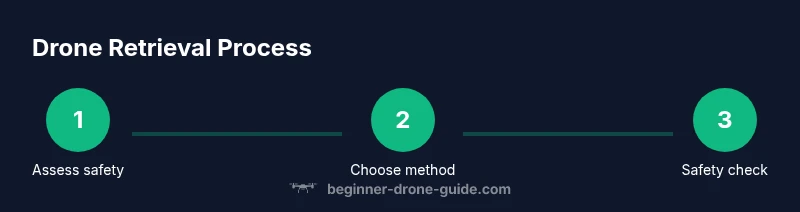
- 1
Assess safety and establish a perimeter
Survey the area for bystanders and hazards. Note the tree height, branch stability, and weather conditions. Decide if the risk is acceptable to proceed with non-climbing methods.
Tip: Have a spotter keep others clear and communicate clearly about every move you plan. - 2
Identify entanglement and drone orientation
Look at how the drone is caught and which branches or cords are restricting movement. Attempt to determine the best angle for access without moving the drone further into the canopy.
Tip: Take a photo to help you plan the safest disentangling path. - 3
Choose retrieval method
Decide whether a telescoping tool, rope lift, or professional help is most appropriate for the current height and entanglement. Avoid climbing if possible.
Tip: Start with the least hazardous method and escalate only if necessary. - 4
Prepare anchor points and equipment
Secure a strong anchor for the rope, and align your tools so they won’t snag or drop the drone unexpectedly. Double-check knots and tension before any movement.
Tip: Use a backup anchor where practical to prevent rope slippage. - 5
Extend tool and free entanglements
Gently extend the retrieval tool toward the drone, working slowly to loosen branches without applying sudden force. If a line is caught, work from the outside in, keeping branches supported.
Tip: Never yank; micro-adjustments reduce risk of propeller contact or branch breakage. - 6
Lower or guide the drone safely
Once disentangled, secure a controlled lowering path. Have a helper ready to catch or guide the drone as it comes within reach.
Tip: Stay in position and communicate the slow lowering cadence to your helper. - 7
Inspect the drone before power on
Check propellers, motors, and the battery contacts for damage. Ensure the device is dry and free of debris before attempting to power it.
Tip: If any component looks bent or loose, do not power on—seek professional evaluation. - 8
Test flight in a safe area
Move to a clear, open space and perform a short hover test to confirm recovery after the retrieval. Monitor for unusual vibrations or control issues.
Tip: Have a recovery plan ready in case the drone behaves unexpectedly.
Frequently Asked Questions
Is it safe to retrieve a drone from a tree by myself?
Yes, if the tree is stable, the drone is within reach without climbing, and you have the proper tools. If there is any doubt about stability or your ability to reach safely, seek professional help.
Yes, you can retrieve it yourself if the tree is stable and you have the right tools; otherwise, get professional help.
What if the drone is high up and tangled with branches?
Avoid climbing if possible. Use rope-assisted methods with a spotter or contact a tree service. If you’re unsure, don’t take further risks.
If it’s high and tangled, don’t push your luck—use rope methods with a spotter or call a pro.
Can retrieving a drone from a tree void the warranty?
Warranty coverage can be affected by improper handling or damage during a retrieval. Always review your drone’s warranty terms and contact the manufacturer if you’re unsure.
Yes, improper handling can affect warranty; check the terms or contact support if unsure.
Should I use metal tools around the drone?
Avoid metal hooks or sharp tools near the propellers and electronics. Use plastic or soft-tipped tools to minimize the risk of damage.
Avoid metal tools near the drone; use soft or plastic tools to prevent damage.
What should I do after retrieving the drone?
Power down, inspect for damage, and perform a careful battery test in a safe area. If anything seems off, contact support or a professional for checks before next flight.
Power down, inspect for damage, test safely, and seek professional checks if anything looks wrong.
Are there safer training methods to avoid this in the future?
Practice retrieval drills in open, risk-free environments with a mock scenario to build confidence without endangering yourself or your gear.
Practice in open spaces with mock scenarios to build safe retrieval habits.
Watch Video
Quick Summary
- Assess safety before attempting any retrieval
- Choose non-climbing methods first to reduce risk
- Prepare and test tools to avoid unintended damage
- Disentangle gently, moving in small steps
- Inspect the drone thoroughly after recovery