UAV Endurance in TDs: How Long Do Drones Last?
Explore UAV endurance in technical data sheets (TDs), practical ranges across common models, and strategies to maximize flight time for beginner pilots.


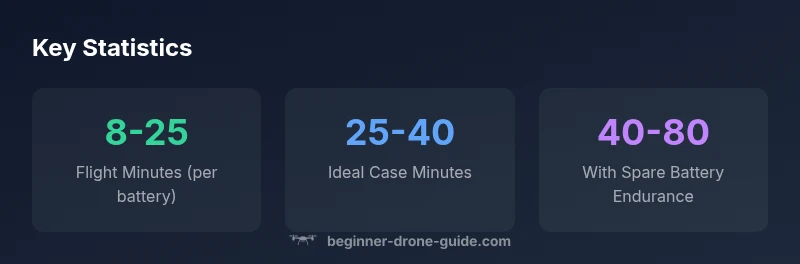
In TDs, endurance is the flight time a drone can achieve on a full battery under defined test conditions. For most consumer UAVs, a single charge yields about 8–25 minutes of flight, with higher-end models sometimes reaching 25–40 minutes in optimal conditions. Payload, wind, and propeller efficiency greatly affect endurance, so always consult the TD for your exact model.
What TDs Really Mean for UAV Endurance
When pilots look at a drone's Technical Data Sheet (TD), endurance is the core figure that translates what you can actually do in the air. TDs attempt to quantify flight time under standardized conditions, but those conditions are rarely your everyday reality. The Beginner Drone Guide team emphasizes that TD figures are best treated as a baseline rather than a guaranteed outcome. They assume a controlled environment, moderate speed, a typical payload, and favorable weather. In the real world, you’ll often see shorter flight times due to wind, higher wind resistance, heavier batteries, or added payload like cameras or sensors. For new pilots, TDs provide a useful starting point for comparing models and planning initial practice flights. Remember to check your model’s TD alongside its energy management strategy, including battery type and discharge rate, to estimate practical endurance accurately.
How TDs Define Endurance: Test Conditions and Variables
Endurance in TDs is usually listed under a “flight time” or “endurance” heading with a note about the test conditions. These conditions often include factors like wind speed, ambient temperature, payload weight, and flight profile (hover, cruise, or high-speed). The data is generated under controlled lab-like tests, which helps manufacturers present apples-to-apples comparisons. As a result, two drones with the same nominal flight time could behave very differently in the field if their powertrains, aerodynamics, or battery chemistry diverge. For beginners, this means you should read the fine print in the TD and adjust expectations to your own practice environment.
Primary Factors That Influence UAV Endurance
Several interdependent factors determine real-world endurance: (1) Payload: heavier gear reduces lift efficiency and drains the battery faster. (2) Battery chemistry and health: newer, higher-capacity cells generally provide longer flight times, while aging cells decrease performance. (3) Winds and air density: headwinds and hot, humid air increase energy consumption. (4) Flight speed and profile: aggressive maneuvers or high-speed transit consumes more power than gentle cruising. (5) Propeller efficiency and drone weight: optimized props and lighter builds improve endurance. (6) Temperature: cold or hot conditions can reduce battery capacity and performance. In practice, pilots should consider all these when translating TD endurance into real-world planning. Refer to the TD for the exact test conditions so you can map them onto your typical flight profile.
How to Estimate Flight Time for Your Specific UAV
Start with the TD-listed endurance for your model, then apply a conservative correction based on your payload and expected wind. A simple method is to estimate endurance loss per kilogram of payload and per 5 mph of headwind. For example, if the TD shows 20 minutes with a standard payload, and you plan to add 0.25 kg, you might expect around 14–18 minutes in typical field conditions. Use online calculators or vendor-supported flight-time estimators provided by manufacturers, but validate them with real-world testing in torque-free hover and standard cruising. Always log your actual flight times per battery and compare them to TD estimates to fine-tune your planning.
Strategies to Maximize Endurance in Real-World Flights
To get the most flight time, prioritize: (1) Minimizing payload to essential gear, (2) Using high-efficiency, lighter batteries and optimized power management, (3) Flying in calm, moderate temperatures, (4) Maintaining batteries at proper voltage and storage levels, (5) Preflighting and tuning motor/prop setups for efficiency. Consider scheduling longer practice flights during periods of light wind and mild temperatures. For more ambitious missions, plan battery swaps or carry spare packs and consider staged flight plans that minimize time spent in low-efficiency hover. By aligning TD-based expectations with disciplined field testing, you’ll improve your ability to predict endurance and execute safer flights.
Interpreting TD Data Across Models and Generations
TDs can differ across drone generations, even within the same brand. A newer model may achieve modestly longer endurance thanks to improved motors, lighter frames, or higher-capacity cells, while older models may see declines due to wear. When comparing TDs, normalize by payload and environmental assumptions to avoid misreading improvements. Compare multiple models using the same test conditions—wind, temperature, payload, and flight profile—to get a fair sense of endurance differences. This approach helps beginners set realistic flight goals and avoid overconfidence in a single data point.
Safety and Practical Planning: Don’t Push Endurance Past Its Limits
While it’s tempting to aim for maximum airtime, pushing a drone beyond what its TD predicts can degrade performance and safety. Battery health degrades with repeated deep discharge, and operating at the edge of endurance can leave you with insufficient reserve for safe landing in emergencies. Always keep a buffer of at least 20–30 percent of the predicted endurance for contingencies, and develop a flight plan that includes alternate landing options. Training with shorter missions initially helps you build the skill to manage endurance under real-world constraints, gradually expanding your scope as you gain experience.
Putting TD Data into Flight Planning for Beginners
A practical approach is to build a planning checklist around: (1) Understanding the TD’s test conditions, (2) Estimating endurance with your payload by a conservative adjustment, (3) Scheduling preflight checks that confirm battery health and weight, (4) Establishing a landing buffer and contingency plan, and (5) Recording flight times to refine future estimates. As you gain flying hours, your instinct for when to swap batteries or reduce payload will grow, turning TD numbers into actionable planning heuristics. The TD remains a baseline, not a guarantee, and your success relies on disciplined planning and continuous learning.
]},
dataTable":{"headers":["Drone Type","Endurance per Battery (min)","Typical Payload Impact","Notes"],"rows":[["Entry-level quadcopter","8-12","Low","Good for learning, light cameras"],["Mid-range camera drone","12-20","Medium","Balanced payload and wind"],["Professional drone","20-40","High","Premium battery, optimized props"]],"caption":"Estimated endurance by drone category"},
Estimated endurance by drone category
| Drone Type | Endurance per Battery (min) | Typical Payload Impact | Notes |
|---|---|---|---|
| Entry-level quadcopter | 8-12 | Low | Good for learning, light cameras |
| Mid-range camera drone | 12-20 | Medium | Balanced payload and wind |
| Professional drone | 20-40 | High | Premium battery, optimized props |
Frequently Asked Questions
What factors influence UAV endurance listed in TDs?
Endurance is affected by payload, battery chemistry, temperature, wind, speed, and flight profile. TDs provide a baseline under specified test conditions; real-world results vary with how you fly and what you carry.
Payload, weather, and flight style affect how long you stay airborne. TDs are guidelines, not guarantees.
How can I maximize endurance for a beginner?
Start with minimal payload, use efficient flight modes, and practice in calm conditions. Carry spares and plan staged missions to conserve energy. Validate TD estimates with real-world tests.
Keep weights down, fly calmly, and test endurance gradually before long flights.
Do TD-listed endurance figures apply to all drones?
TD endurance is model-specific and conditioned by the drone’s design, battery, and firmware. Always read the TD for your exact model and consider field-testing under your typical mission profile.
TDs describe your model, but your actual endurance will depend on how you fly.
Is it safe to push a drone beyond listed endurance?
No. Pushing beyond endurance can lead to battery damage, reduced responsiveness, or unexpected landings. Always maintain a safety margin and prepare for an immediate landing if needed.
Don’t push past what the TD suggests; keep a safe buffer.
What is the typical range of endurance for entry-level drones?
Entry-level drones usually offer about 8–12 minutes per battery, while some mid-range models may reach 12–20 minutes. Always verify with the TD and test in practice flights.
Typical entry-level endurance is under 15 minutes per battery.
How do environmental conditions affect endurance?
Higher winds, heat, and humidity increase power consumption and reduce battery capacity. Cold weather can also reduce performance. Plan flights for mild conditions and adjust expectations accordingly.
Weather and temperature change how long your drone can fly.
“Endurance figures in TDs are guidance, not guarantees. Real-world results depend on payload, weather, and flight style, so plan conservatively.”
Quick Summary
- Actively reference the TD for model-endurance baselines
- Minimize payload to maximize flight time
- Wind, temperature, and health of the battery change endurance
- Carry spare batteries or plan battery swaps for longer missions
- Always test endurance in realistic conditions before critical flights