How Long Does a Drone Battery Last? A Practical Guide for Beginners
Learn how long drone batteries last, the factors that affect flight time, and practical tips to maximize endurance for beginner pilots. This guide breaks down battery chemistry, weight, environment, and charging habits with real-world ranges.


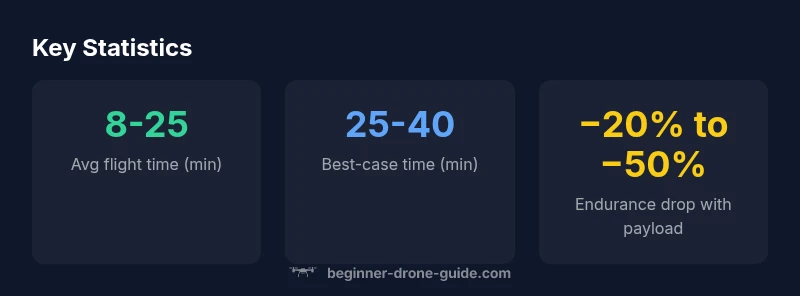
Typically, a consumer drone battery lasts about 8 to 25 minutes per full charge, with higher-end models pushing toward 30 minutes under optimal conditions. Real-world flight times depend on weight, altitude, wind, payload, and your flying style. For beginners, expect shorter durations at first as you learn to fly smoothly and conserve power. When planning, use these ranges as starting points and adjust for your specific drone and environment.
What 'how long does a drone battery last' really means
If you're asking how long does a drone battery last, you're not alone. In practice, flight time is best understood as real-world endurance rather than a single manufacturer number. According to Beginner Drone Guide, the most useful frame is to compare the drone's endurance under typical operating conditions, including normal flight maneuvers, mild winds, and a reasonable payload. The exact duration depends on several interacting factors: the drone's weight, battery size, chemistry, temperature, and how aggressively you fly. In this article, we unpack those variables, share ranges you can use for planning, and give practical tips for maximizing safety and enjoyment while staying within safe limits. This framing helps beginners avoid chasing inflated specs and instead set realistic flight plans for practice and learning.
Battery chemistry and energy density
Drones typically use lithium-based chemistries, with LiPo (lithium polymer) and Li-ion cells dominating the market. LiPo packs offer high energy density and lightweight form factors, which is ideal for maximizing flight time without adding excessive weight. Li-ion packs, common in longer-life consumer devices, tend to be heavier per unit of energy but can offer good durability and cycle life. The key takeaway for endurance is not just the chemistry, but how much energy is stored (measured in watt-hours, Wh) relative to the drone's weight and efficiency. In other words, two drones with similar weights but different battery chemistries may still show different real-world times depending on how efficiently they use that energy.
How weight and payload affect endurance
Weight is the most direct lever on flight time. A lighter drone requires less power to stay aloft, so any added payload—camera gear, sensors, or protective rigs—reduces available energy for forward motion and hover. Even modest payloads can noticeably shrink duration, especially in higher-speed maneuvers or windy conditions. Conversely, removing unnecessary accessories or using lighter props can yield measurable gains. Beyond the drone's own weight, the efficiency of the propulsion system and aerodynamic design also matter. A well-tuned, streamlined setup can stretch endurance compared with a bulky, drag-heavy rig.
Flight environment and flight behavior
Environment matters just as much as hardware. Wind adds gusts that the motors must counter, increasing current draw. Flying at high altitude reduces air density, forcing the motors to work harder. Temperature affects chemical reactions inside the battery; very cold conditions typically decrease available capacity. Aggressive flying—rapid climbs, sharp accelerations, and constant full-throttle maneuvers—consumes energy faster than smooth, steady flying. For beginners, practicing with gradual, controlled motions is an easy way to preserve battery life while building piloting skills.
Measuring and testing endurance
To get a practical sense of your drone's endurance, perform controlled test flights in a safe area. Use a consistent flight pattern (takeoff, hover, gentle circle, return) at a moderate altitude and record the duration. Compare this to the manufacturer rating and note how factors like payload and wind change the time. Regular testing helps you build a personal endurance chart for different payloads and weather conditions. Keep a log and update it as batteries age or as you change equipment.
Tips to maximize flight time for beginners
- Fly smoothly: limit rapid starts and stops; steady throttle improves efficiency.
- Reduce weight: remove unnecessary accessories and carry only essential gear.
- Optimize payload: use lighter cameras or smaller gimbals when possible.
- Preflight battery care: avoid deep discharges; store batteries partially charged in cool places.
- Temperature awareness: allow batteries to warm to near-operating temperature before use, especially in cold weather.
- Battery rotation: cycle through multiple batteries to maintain peak performance and reduce wear on any single pack.
- Plan routes efficiently: design flights to minimize back-and-forth motion and maximize forward progression.
- Use smart features: engage economy modes or hover-guard features that limit power draw during idle time.
For beginners, these practices not only extend flight time but also build safer, more predictable flight habits that translate into better learning outcomes.
Battery safety, charging, and storage best practices
Always use the charger designed for your specific battery chemistry and capacity. Never mix cells of different ages or conditions in a single pack. Avoid charging in extreme temperatures and never leave charging batteries unattended. After a flight, let the battery cool before recharging if it’s warm to the touch. When storing, keep batteries at a partial charge (around 40–60%) in a cool, dry place and inspect for swelling or damage before reuse. Proper care extends both safety and usable life.
Common myths about battery life
A frequent myth is that bigger batteries always mean longer flight times. In reality, the relationship is more nuanced: battery capacity must be balanced with weight, propulsion efficiency, and flight style. Another misconception is that charging a battery quickly damages it beyond repair. Modern LiPo and Li-ion packs tolerate reasonable fast charging when using the appropriate charger and settings, but frequent fast charging at high currents can contribute to heat buildup and accelerated wear if not managed properly. Understanding these nuances helps set realistic expectations.
Planning flights: setting realistic expectations
Before taking off, estimate how long you realistically need to fly and compare it to the expected endurance under the current conditions. If you need more time, consider carrying an additional charged battery or planning shorter, more frequent sessions rather than a single long flight. For beginners, practice flights that maximize learning with sub-second aim to maintain control without pushing the battery to its limits. With careful planning, you can achieve safer, more enjoyable flights while gradually extending your endurance.
Estimated flight times by drone category
| Drone Category | Typical Flight Time | Notes |
|---|---|---|
| Toy/mini drone | 8-15 minutes | Light payload, limited propulsion |
| Mid-range consumer drone | 15-25 minutes | Balanced endurance with modest payload |
| High-end/professional drone | 25-40 minutes | Heavier packs, optimized efficiency |
| FPV/advanced model | 20-30 minutes | High power draw, dynamic flight |
Frequently Asked Questions
How long does a typical consumer drone battery last on a full charge?
Most consumer drones last roughly 8–25 minutes per charge, depending on factors like payload, wind, and altitude. Real-world times are often shorter than the manufacturer rating.
Most drones last about eight to twenty-five minutes per charge, depending on conditions such as weight and wind.
What factors most affect flight time?
Weight, payload, wind, temperature, and battery age are the main drivers of endurance. Heavier drones and windy conditions consistently reduce flight time.
Weight and wind are the biggest movers of flight time.
Can I extend battery life without a bigger battery?
Yes. Fly smoother, reduce unnecessary maneuvers, and remove optional accessories when possible to save power.
You can stretch time by flying gently and removing extra gear.
Does FPV or extra equipment increase power use?
Yes, additional motors, cameras, or payloads add weight and increase power draw, reducing endurance.
Extra gear means more battery drain, so plan accordingly.
How should I charge and store batteries to maximize lifespan?
Follow manufacturer guidelines, avoid deep discharges, store at partial charge in a cool place, and inspect packs regularly for swelling.
Charge and store batteries properly to last longer.
“Battery life is not a fixed number—it's a function of weight, wind, and how you fly. Understanding endurance helps you plan safer, smarter flights.”
Quick Summary
- Estimate real-world flight times using weight, wind, and battery chemistry
- Plan conservatively to maximize safety and learning
- Reduce payload and fly smoothly to extend endurance
- Carry spare charged batteries for longer sessions