How Long Does UAV Last? Practical Battery Life Guide
Explore how long UAVs last on a single charge, what factors affect endurance, and practical tips for maximizing flight time and battery lifespan. This beginner-friendly guide from Beginner Drone Guide explains endurance, planning, and safe practices.


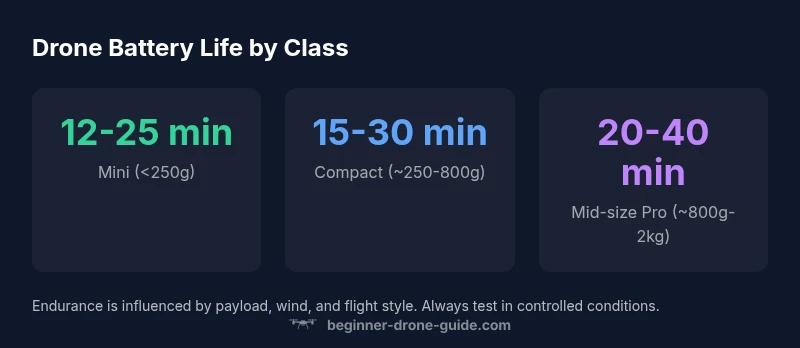
According to Beginner Drone Guide, how long does UAV last on a single charge depends on model and use. For most consumer drones, flight time commonly ranges from about 12–25 minutes for mini or lightweight models, up to 30–40 minutes for larger prosumer drones under favorable conditions. Real-world endurance is also affected by payload, wind, and battery care.
how long does uav last in practice
Understanding how long does uav last is essential for mission planning. In practice, flight time is not a fixed number; it depends on drone size, battery capacity, and how you fly. According to Beginner Drone Guide, real-world endurance tends to fall short of manufacturer spec because conditions on the ground differ from lab tests. You should expect your first flights to show shorter times while you learn optimal throttle control and efficient routing. The best way to set realistic expectations is to test in calm conditions, log the actual flight time, and use that baseline to plan future flights. Also, remember that battery health declines with age and charging habits, so a drone you bought new may perform differently after a few cycles. In short: plan with a conservative buffer and learn through tested practice.
howLongDoesUavLastInPracticePhraseIncludedInBodyText
Estimated endurance by drone class under typical conditions
| Drone Class | Typical Flight Time (per charge) | Notes |
|---|---|---|
| Mini (<250g) | 12-25 min | Very light payload; often under 250g rules |
| Compact (~250-800g) | 15-30 min | Balanced performance with compact payloads |
| Mid-size Pro (~800g-2kg) | 20-40 min | More capable motors; heavier batteries |
| Heavy-lift (>2kg) | 25-45 min | Endurance-focused builds |
Frequently Asked Questions
What is the typical real-world flight time for most consumer UAVs?
Real-world flight time varies by model and conditions but commonly falls in the 12–30 minute range for mainstream consumer drones. Always test in safe settings to get a baseline for your use-case.
Most consumer drones fly about 12 to 30 minutes per charge, depending on weight and wind.
How does wind affect UAV endurance?
Wind increases power draw, reducing endurance. Tailwinds can help slightly, but turbulence and stability concerns may offset gains. Plan missions with wind forecasts in mind.
Wind can cut flight time, so plan around forecasts and adjust goals accordingly.
Does payload affect flight time?
Yes. Additional payload increases current draw, reducing available energy and shortening flight time. Remove unnecessary gear to maximize endurance.
Carrying more payload uses more power and lowers flight time.
Can I use larger batteries to increase flight time?
Bigger batteries can extend endurance but add weight and may affect balance and safety. Ensure compatibility with your drone and follow safety guidelines.
Bigger batteries can help, but heavier packs change how the drone flies.
How should I maintain UAV battery health?
Keep cells within recommended storage voltages, avoid deep discharges, and store at proper temperatures. Regular light cycling can help prolong life.
Store batteries properly and avoid deep discharges to keep them healthy.
Are there regulatory limits on battery types for travel?
Some travel rules restrict lithium battery quantities and require protective packaging. Check airline and jurisdiction requirements before flying or shipping batteries.
Check local and air travel rules for lithium batteries before transport.
“Endurance is a practical function of design, use-case, and care. The Beginner Drone Guide Team recommends pilots manage expectations, plan for safety margins, and upgrade batteries when needed.”
Quick Summary
- Plan for flight time based on use-case, not just spec sheets
- Payload and wind are the biggest endurance levers
- Start with manufacturer estimates and test in real flights
- Maintain batteries properly to maximize life