How Long Do Drones Last? A Practical Guide for Beginners
Explore how long drones last, the factors that affect flight time, and practical, beginner-friendly tips to maximize battery life in 2026. This guide helps beginners.


Most consumer drones last roughly 8 to 30 minutes per charge, with wind, payload, and flying style driving the difference. Ultralight mini-drones tend toward the lower end, while larger, efficient models push toward the upper end. Real-world flight times often fall short of manufacturer claims, especially with extra gear. Understanding these factors helps beginners set realistic expectations and plan flights safely.
Why flight time varies and how we measure it
In practice, the question how long do drones last isn't answered by a single number. Flight time depends on many interacting factors, including drone weight, battery capacity, flying style, wind, and temperature. According to Beginner Drone Guide, measuring flight time accurately means recording the time from takeoff to landing under controlled conditions, then comparing that to manufacturer specs. In real-world use, you should expect times to drift from one flight to the next. This variability is why beginner pilots should plan around conservative estimates and gradually test limits in safe environments. The key is to understand the core levers that push or pull endurance: payload management, efficient flight planning, and battery care.
Over time, pilots learn to calibrate expectations for different missions. The balance between speed and efficiency matters: a calm hover uses less power than rapid, dynamic maneuvers. When you compare two drones, start with the baseline flight time at similar weights and environmental conditions to make a fair assessment.
Typical flight times by drone category
While manufacturers advertise optimistic figures, real-world flight times vary widely by category. For quick reference, here are typical ranges you can expect:
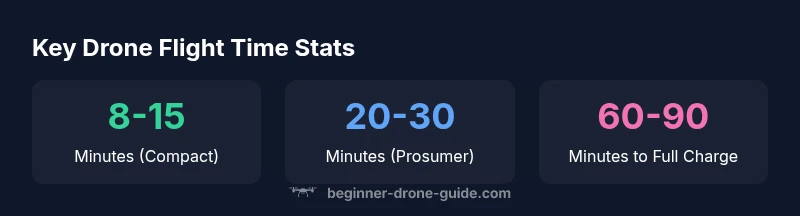
- Mini/Compact drones: about 8–15 minutes per charge.
- Mid-size hobby drones with a standard camera: around 15–25 minutes.
- Prosumer or professional drones: roughly 20–30 minutes, depending on payload and flight conditions.
- FPV racing drones: frequently under 12–15 minutes due to high power and weight.
Note that these ranges assume a healthy battery and moderate weather. With heavy payloads, colder temperatures, or strong winds, you’ll see shorter times. Always perform your own test flights to calibrate expectations with your specific gear.
Battery chemistry, capacity, and aging
Drone batteries are typically lithium polymer (LiPo) packs that store energy in milliamp-hours and deliver bursts of current for takeoff and hover. The higher the capacity (mAh) and the higher the voltage, the longer the potential flight time, all else equal. Battery health degrades with each charging cycle, reducing peak capacity and peak current delivery. Most hobbyist drones use modular batteries that can be swapped; this makes it easy to carry spares for longer sessions. As drones evolve, manufacturers improve energy efficiency and sensor processing, but you still face the basic physics: heavier systems burn more energy, and wind adds drag. The result is a multi-factor matrix that determines how long you can stay aloft on a given mission.
Understanding battery behavior helps you plan better: when you replace or swap packs, you usually gain more consistent performance across flights.
How wind, temperature, and payload affect flight time
Endurance is not just a function of the battery; external conditions and payload dramatically change outcomes. Wind increases drag, forcing the motors to work harder and shorten flight time. Cold temperatures reduce chemical reaction rates inside LiPo cells, lowering available capacity. Heavier payloads, including cameras, gimbals, or sensors, directly increase drain. Altitude matters too: thinner air reduces lift efficiency. The combination of these factors explains why two flights with identical batteries can yield very different results. For a beginner, the best practice is to keep payload light, fly in calm weather, and monitor battery voltage closely to avoid deep discharge.
When training, log environmental conditions with each test flight to build a practical profile.
Practical tips to maximize flight time
Start smart: fully charge batteries and store them at proper temperatures. Plan flights with conservative margins and use low-power flight modes when possible. Remove unnecessary payload and minimize gimbal use unless required. Optimize the speed profile—smooth, steady flight consumes less energy than rapid accelerations. Preflight checks, calibrated GPS, and gentle maneuvers all contribute to efficiency. Keep the battery cool in flight, and avoid flying in extreme heat or direct sun for extended periods. Regularly inspect connections and balance the motors for even wear; a balanced craft uses less power. Finally, practice flying with the goal of efficiency: slow, controlled climbs and deliberate turns save energy over time.
These practices translate into more reliable times during real missions and reduce the risk of mid-flight brownouts.
Real-world scenarios and case studies
Case 1: A lightweight beginner drone with a small camera ran two 15-minute flights in moderate winds, completing a simple neighborhood mapping task. The second flight used a slower speed profile and saved enough energy for a third quick hover. Case 2: A mid-size drone with a 4K camera performed a 25-minute flight in mild wind; adding a small accessory increased payload and reduced time to about 18 minutes. The takeaway is that small tweaks—weight, wind, and flight style—have outsized effects on endurance, especially for new pilots.
In both cases, the pilots adjusted their flight plans based on observed performance, not manufacturer claims alone.
Battery health, lifecycle planning and replacement strategies
To maximize long-term value, monitor cell health and cycle counts, and replace batteries before they degrade below usable capacity. Store batteries at partial charge in a cool, dry place and avoid deep discharge. When possible, buy spare packs from the manufacturer or reputable third-party suppliers who provide consistent voltage and impedance specs. As you gain experience, you’ll learn to trade payload for duration strategically—carrying fewer sensors on longer missions, or accepting shorter flight times for higher quality data. With proper care, your drone can maintain reasonable flight times across many seasons of use.
Comparison of flight times by drone type
| Drone Type | Typical Flight Time (min) | Battery Type/Voltage | Notes |
|---|---|---|---|
| Mini/Compact | 8-15 | LiPo 2S | Best for short, casual flights |
| Mid-size Camera Drone | 15-25 | LiPo 3S-4S | Balanced endurance |
| Prosumer/Professional | 20-30 | LiPo 4S | Higher payloads, longer times |
| FPV Racing | 6-12 | LiPo 2S-3S | Prioritizes speed over endurance |
Frequently Asked Questions
What factors influence flight time?
Flight time is influenced by weight, battery capacity, wind, temperature, altitude, and payload. Heavier drones and strong winds increase power draw and reduce endurance. Battery health and flying style also matter.
Flight time depends on weight, battery, wind, and temperature—lighter is better.
Can I extend time with a bigger battery?
Bigger batteries can extend flight time if they fit and don’t overload the frame. They add weight and can affect balance and safety.
Yes, larger packs can help, but they add weight and may affect safety.
Is manufacturer flight time the same as real-world time?
Manufacturer figures assume ideal conditions; real flights are often shorter due to wind, temperature, and payload.
Specs assume ideal conditions; real flights are usually shorter.
How should I test my drone's actual flight time?
Do a controlled test flight in calm conditions with minimal payload and note the duration from takeoff to landing.
Do a calm, controlled test flight and time it.
Does temperature affect battery life?
Yes. Cold slows chemical reactions, reducing capacity; heat can raise resistance and shorten cycles.
Temperature does affect battery life; keep batteries within optimal temps.
When should I replace drone batteries?
Replace when capacity declines noticeably or cycles reach manufacturer guidelines; carry spare packs and follow safety guidelines.
Replace when performance drops; have spares and follow safety rules.
“Flight time is a system constraint, not a single metric. With careful maneuvering and well-maintained batteries, you can approach the upper end of typical estimates.”
Quick Summary
- Plan flights with conservative battery margins
- Weigh payload against endurance for best results
- Test real-world flight times under varied conditions
- Maintain batteries to extend usable life