How Can Drones Be Stopped? A Beginner’s Guide to Safe, Legal Countermeasures
A practical, beginner-friendly guide to stopping unauthorized drones through safety-focused, legal methods—regulations, detection, reporting, and prevention.


Stop unauthorized or dangerous drones through legal, non-destructive measures: enforce airspace restrictions, rely on registered operator data, use detection systems, and report incidents to authorities. Do not jam signals or damage property—that’s illegal in most jurisdictions. This guide outlines safe, beginner-friendly steps to protect people and property while staying compliant with the law.
Understanding Why Drones Need to be Stopped
Drones can pose risks to safety, privacy, and critical infrastructure. For beginners, understanding why there is a need to stop unauthorized drone flights helps you see why legitimate controls exist and why certain actions are illegal. The aim is not to penalize hobbyists but to ensure safe skies, protect sensitive sites, and deter nuisance or malicious activity. In many cases, a drone is off-course or operated by someone unaware of the rules; in others, it is deliberate. Either way, the priority is to de-escalate, document, and involve the proper authorities. Laws vary by country and city, so always verify local rules before taking action. A layered approach—prevention, detection, and coordinated response—gives beginners a practical pathway to safer airspace while staying well within the law.
Legal Foundations for Stopping Drones
According to Beginner Drone Guide, the legal landscape is foundational to safe drone management. Most jurisdictions allow property owners and authorities to enforce airspace rules through official channels, while prohibiting destructive acts. Key concepts include drone registration, operator accountability, and remote identification, which help link flights to responsible people. Understanding local regulations helps you distinguish between lawful responses (reporting, warnings, coordinate with authorities) and illegal actions (jamming, interception, or damage). Remember that legal frameworks are designed to balance safety, privacy, and innovation. Begin with the basics: know what airspace you control, learn how to access approved flight information, and stay aligned with regulatory guidance on counter-drone measures.
Non-Destructive Detection and Verification Methods
Stopping drones safely relies on detecting and confirming a drone’s presence and intent without causing harm. Common, lawful detection methods include visible observers who track flight paths, environmental monitoring (cameras in authorized spaces), and official sensor networks or RF-based detection used by authorized entities. Public use of detection tools should always respect privacy and follow applicable laws. If you observe a drone behaving suspiciously, document observable details (time, location, aircraft color, flight path) and report to the appropriate authority. The goal is to verify risk and escalate appropriately, not to confront the operator directly.
Airspace Restrictions and Geofencing: The First Line of Defense
Geofencing and official airspace restrictions limit where and how drones can fly. Many consumer drones honor these rules when connected to the internet and integrated with up-to-date data. For beginners, enabling geofencing features, staying within approved corridors, and understanding restricted zones reduces risk. Operators should consult local regulations and airspace maps, ensure remote ID is active where required, and respect temporary flight restrictions (TFRs) around events or emergencies. This approach prevents many incidents from occurring in the first place and supports safer, compliant operation.
Documentation and Reporting: Building a Case
Effective stopping starts with solid documentation. Record date, time, location, flight pattern, and any interactions with the drone or operator. Save video or photos when available, note witnesses, and capture any warnings issued. Build a clear incident log that you can share with authorities or property managers. Documentation helps authorities assess risk, determine accountability, and decide on appropriate actions. Always preserve evidence in a secure, accessible way and respect privacy laws when recording.
Responding Safely: Step-by-Step Actions for Property Owners
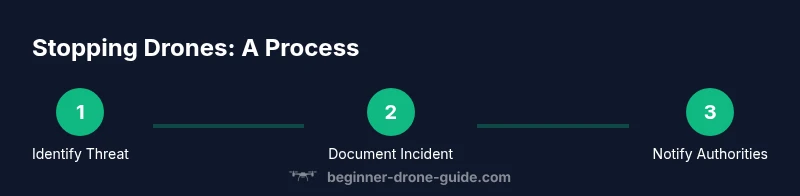
First, ensure people are at a safe distance and avoid escalating the situation. Then, document the incident, identify whether the flight violates airspace rules, and issue clear, non-confrontational warnings from a safe vantage point. Contact the drone operator if possible or report to authorities with your incident details. If the situation poses an immediate threat, prioritize personal safety and call emergency services. After the event, review site security measures and update procedures to reduce repeat incidents. Avoid any action that could be perceived as destruction or unlawful detainment of the aircraft.
When and How to Involve Authorities
In many cases, coordinating with local authorities is the safest and most effective path. Start by contacting local law enforcement or aviation authorities if there is a risk to people or critical infrastructure. Provide a concise incident log, including times, locations, and descriptions of the drone’s behavior. Some jurisdictions empower authorities to issue warnings or escalate to enforcement actions; always follow their guidance. Private individuals should avoid attempting to disable or seize a drone themselves. Legal action and professional counter-UAS resources are the proper channels for removing a threat.
Counter-UAS Technologies: What is Legally Allowed
Counter-UAS technologies range from detection networks to controlled containment used by authorized organizations. Public, individual use should focus on detection and reporting rather than disruption. The legality of various counter-drone tools varies by country and context, so consult official regulations before exploring any capability. For beginners, the takeaway is to stay within the law, work with property owners or authorities, and rely on approved, transparent processes to address threats.
Prevention and Training for Beginners
A proactive approach reduces incidents: educate staff and family about airspace rules, practice responsible flying, and keep equipment updated with the latest regulatory guidance. Regular training improves your ability to recognize suspicious activity and respond calmly. Use official resources, such as government guidance and reputable drone education programs, to stay current on changes in policy. Building good habits now helps you fly responsibly while protecting people and property.
Tools & Materials
- Computer or tablet with internet access(For researching regulations, filing reports, and logging incidents)
- Notebook and pen(Record observations, times, and actions taken)
- Camera or smartphone(Capture non-identifying footage for documentation; respect privacy)
- Access to official airspace maps(Know restricted zones and temporary flight restrictions)
- Notepad or incident log template(Structured records to share with authorities)
Steps
Estimated time: Total time: 60-90 minutes
- 1
Identify potential threat
Scan the area for drone activity and note initial flight patterns. Determine whether the aircraft appears to be in a restricted zone or violating airspace rules.
Tip: Keep a safe distance and avoid confrontation; do not attempt to intercept. - 2
Assess the risk and legality
Review local laws to determine if this is a prohibited flight. Consider weather, time of day, and proximity to people or critical infrastructure.
Tip: If in doubt, treat as a potential risk and escalate to authorities. - 3
Document the incident
Record times, location, flight path, and any identifiable markers. Save video or photos and log your observations in a structured way.
Tip: Use official templates if available to ensure consistency. - 4
Issue non-confrontational warnings
From a safe vantage point, warn the operator that they may be violating airspace rules and that authorities may be contacted.
Tip: Keep communications calm and non-threatening. - 5
Contact the appropriate authorities
If risk persists or safety is threatened, contact local law enforcement or aviation authorities with your incident details.
Tip: Provide a concise summary and your evidence when possible. - 6
Coordinate with property owners or event organizers
Share incident details with stakeholders to ensure consistent responses and documentation.
Tip: Avoid sharing sensitive personal data; focus on flight behavior and location. - 7
Review and improve procedures
After the incident, analyze what happened and update security measures and reporting protocols.
Tip: Schedule regular drills to stay prepared. - 8
Educate and train regularly
Provide ongoing training on airspace rules and safe responses for anyone present on site.
Tip: Use official training resources and certifications when appropriate. - 9
Respect privacy and safety in all actions
Never attempt to damage, seize, or jam drones; such actions are illegal and dangerous.
Tip: Always prioritize safety and legal compliance.
Frequently Asked Questions
Is it legal to shoot down a drone?
No. Shooting down or damaging a drone is illegal in most jurisdictions and can expose you to civil or criminal penalties. Instead, report incidents and rely on authorized counter-UAS processes. If you perceive an imminent threat, contact authorities immediately.
No. Shooting down a drone is illegal in most places. Report the incident to authorities and use approved counter-UAS processes for safety.
What should I do if a drone invades my private property?
Remain calm, document the incident, and avoid confronting the operator. Notify property management or law enforcement as appropriate, especially if there is a safety risk or privacy violation. Follow local laws about reporting and requests for information.
Stay calm and document what’s happening, then contact authorities if needed and follow local reporting rules.
What are common methods used to legally stop drones?
Legitimate methods include enforcing airspace restrictions, using remote ID data for operator accountability, and coordinating with authorities. Detection and reporting help authorities assess risk, while blocking or disrupting flights is typically reserved for authorized entities.
Use official airspace restrictions and reporting. Detection helps authorities decide next steps.
Can I use counter-UAS devices on my own?
Generally no. Most counter-UAS tools require licensing and authorization because of safety and privacy implications. Use them only through approved channels and authorities.
Usually not. Counter-UAS tools require official authorization—work with authorities instead.
Are there privacy laws I should know when addressing drones?
Yes. Privacy regulations vary by location and context. Avoid capturing identifiable individuals without consent, and focus on flight behavior and safety issues when reporting incidents.
Privacy laws differ by place; be mindful when recording and reporting.
What signs indicate a drone might be a threat?
Persistent loitering near sensitive sites, erratic flight patterns, and ignoring warnings are common indicators. If in doubt, treat it as a potential threat and escalate to authorities.
Look for persistent hovering, strange paths, and ignoring warnings; report if unsure.
Watch Video
Quick Summary
- Identify threats calmly and document first.
- Rely on legal channels and official guidance.
- Do not use destructive or unlawful methods.
- Geofencing and airspace rules prevent many incidents.
- Training and preparation reduce risk over time.