Drone Training Class: Learn to Fly with Confidence
A practical, beginner-friendly guide to finding, enrolling in, and succeeding in a drone training class. Learn prerequisites, safety practices, hands-on flight, certification options, and how to turn class time into real-world skills.


By reading this guide, you will learn how to locate a reputable drone training class, enroll with confidence, and complete essential prerequisites. You’ll gain practical safety skills, understand class formats, and learn how to translate classroom lessons into real-world flights. Follow the step-by-step plan to maximize learning and set you on the path to responsible, enjoyable drone operation.
What a drone training class covers
A drone training class is designed to translate theory into practical piloting ability. For beginners, curricula typically include basic flight concepts, drone controls, pre-flight checks, airspace awareness, and safety protocols. Expect hands-on flight time under instructor supervision, simulations that mimic real-world scenarios, and feedback that helps you refine stick control, altitude management, and smooth landings. The aim is to build confidence while reducing the risk of incidents. According to Beginner Drone Guide, a structured training path accelerates learning and helps newcomers fly smarter from day one. Beginner Drone Guide analysis shows that students who commit to a classroom plus practice schedule tend to retain core safety habits longer and apply them more consistently.
Choosing the right class: factors to consider
Not all drone training classes are created equal. Start by identifying your goals (recreational flying, photography, mapping, or commercial work) and match them to a course that emphasizes those outcomes. Look for qualified instructors with real-world flight experience and clear assessment criteria. Check the class size; smaller groups usually mean more hands-on time. Review the syllabus for grounded theory, flight simulations, ground school, and the number of supervised flight hours. Consider format (in-person vs. online theory plus in-person practice), duration, schedule compatibility, and whether the program offers a certificate of completion relevant to local licensing or job needs. Also assess safety protocols, equipment availability, and whether loaner drones are provided—these elements dramatically affect your learning pace and anxiety level.
Prerequisites and gear you’ll need
Most beginner classes welcome absolute newcomers, but some programs set minimum age, basic literacy, and a willingness to follow safety rules. You’ll typically need a compatible drone (or access to one), a controller, spare batteries, propeller guards for indoor work, a notebook or device for logging practice, and weather-appropriate attire for outdoor sessions. Some programs require you to complete a short pre-course safety briefing or online modules before hands-on flights. If you don’t own a drone, many classes provide loaner options, but confirm in advance. Ensure you have any local documentation ready, such as proof of age or permissions where required.
What a typical session looks like: schedule and structure
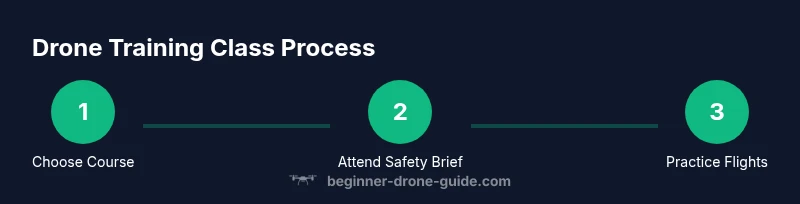
A standard class day often starts with a safety briefing, followed by a quick theory refresher and a short Q&A. Instructors then demonstrate core maneuvers—hovering, gentle takeoffs, controlled landings, and basic figure-8 patterns—before you try them under supervision. Expect staggered practice blocks with short debriefs after each set of flights. Many programs allot time for data review, with video feedback showing your tendencies and how to improve. Expect warm-up drills, then progressive challenges as you gain stability and confidence. The best courses weave ethics, privacy, and airspace rules into practice to reinforce responsible use.
Safety, rules, and risk management in training
Safety is the backbone of any drone training class. You’ll learn pre-flight checks, battery management, wind considerations, and safe proximity to people and property. Instructors emphasize airspace awareness and a repeatable risk assessment process before every flight. You’ll practice emergency procedures such as motor cutoffs, controlled autorotation (as applicable), and safe emergency landings. Understanding local regulations, safe geofencing practices, and privacy considerations helps reduce incidents and protects everyone involved. Always follow the instructor’s lead, stay within your visual line of sight, and maintain an exit path in case a flight deviates.
Certification, licensing, and continuing education after the class
Completing a drone training class often yields a certificate of completion that may support eligibility for certain programs or credentials, but licensing requirements vary by country. In many regions, you’ll still need to meet local regulatory standards (for example, knowledge tests or registration) beyond classroom training. Use your certificate to showcase your commitment and to structure a continuing practice plan. Look for advanced modules that cover navigation, aerial photography techniques, mission planning, and data management to progress beyond beginner level. Many programs also offer alumni resources, refresher courses, or recurrent safety trainings to keep skills sharp.
Real-world practice: turning classroom skills into flight
The classroom is the springboard to real-world flying. Develop a personal practice plan that includes weekly flight time, a progression of capture goals (photos, video, mapping) and a log that tracks performance and lessons learned. Schedule time for controlled outdoor flying in varied wind conditions and lighting. Practice maintenance routines, such as propeller inspection and firmware updates, to prevent technical issues. Seek opportunities to fly in supervised community events or local clubs to gain varied experience while maintaining safety and accountability.
Planning your next steps: selecting a course and building a personal practice plan
To continue your growth, compare at least three classes that fit your goals and budget, and prioritize those with hands-on hours and clear outcomes. Create a two-week action plan: reserve a spot in a class, prepare your gear, and schedule time for post-class practice. Build a simple ongoing practice routine, for example 30 minutes of flight drills twice a week plus a 1-hour review of flight footage. Track your progress with a checklist of skills (hovering stability, precise yaw control, smooth landings) and gradually raise the difficulty (indoor to outdoor, daylight to dusk).
Final thoughts on getting the most from a drone training class
A well-chosen drone training class can shorten your learning curve dramatically and set you up for safer, more capable flying. Engage actively, ask questions, and apply feedback consistently. Pair the class with practical, self-directed practice, and you’ll build a durable skill set that translates into clearer footage, safer operations, and more confidence behind the sticks.
Tools & Materials
- Drone (beginner-friendly model)(A stable, easily controllable quadcopter with beginner modes; consider a stable form factor for indoor practice.)
- Remote controller(Ensure it pairs reliably with your drone and has enough range for classroom and outdoor use.)
- Propeller guards(Excellent for indoor practice and new-pilot training to reduceImpact on people and objects.)
- Extra batteries(Having at least one spare helps maximize flight time during practice blocks.)
- MicroSD card(Optional for storing flight video and data for review.)
- Notebook or digital device(Capture note-worthy tips, flight logs, and instructor feedback.)
- Safety gear(Eye protection or safety glasses can be helpful during indoor drills.)
Steps
Estimated time: 6-12 hours
- 1
Define goals and prerequisites
Identify your primary objectives (recreational flying, photography, mapping) and confirm any class prerequisites. This ensures you select a program aligned with your needs and that you arrive prepared with required documents or prerequisites completed.
Tip: Write down three concrete goals for the class and two questions to ask the instructor. - 2
Compare class formats and schedules
Review syllabus, class size, delivery format (in-person vs. hybrid), and available flight hours. Prioritize programs that offer ample supervised practice and clear assessment criteria.
Tip: Ask to see a sample week schedule or a short video tour of a typical session. - 3
Prepare gear and enroll
Gather essential gear, confirm loaner drone availability if needed, and enroll in the course. Ensure you have any required pre-course modules completed beforehand.
Tip: Verify cancellation policies and make note of late-arrival policies. - 4
Attend orientation and safety briefing
Participate in the safety briefing, review flight boundaries, and understand emergency procedures before any hands-on flights.
Tip: Ask for a printed checklist you can carry during all flights. - 5
Engage in demonstrations and supervised flights
Watch instructor demonstrations, then practice with supervision. Focus on fundamentals first (hover, stable ascent, gentle landings) before attempting advanced maneuvers.
Tip: Record a short clip of your first five flights for later review. - 6
Complete assessments and feedback
Finish quizzes or practical checks and review feedback thoroughly. Identify two concrete improvements to practice before the next session.
Tip: Create a personal action list from feedback and schedule time to redo drills. - 7
Create a post-class practice plan
Develop a plan that blends indoor drills with outdoor flights, gradually increasing difficulty and duration.
Tip: Schedule weekly practice blocks and keep a simple log of progress. - 8
Plan next steps and ongoing education
Choose an advanced module or a related course to continue building skills and certifications.
Tip: Maintain momentum by joining a local pilots group or online community.
Frequently Asked Questions
What is a drone training class?
A drone training class teaches piloting fundamentals, safety rules, and hands-on flight in a guided environment. It provides structured practice and feedback to help you fly confidently.
Drone training classes teach piloting basics, safety, and hands-on flight with guided instruction to help you fly confidently.
Do I need my own drone to enroll?
Most programs allow use of a loaner drone, but owning a drone can speed up practice outside class hours. Check in advance what equipment is provided.
You can usually enroll with a loaner, but owning your own drone speeds up practice outside class.
Are there age or licensing requirements?
Age requirements vary by country and program. Licensing requirements depend on local regulations; a training class may help prepare you, but always verify with local authorities.
Age rules vary; licensing depends on your country. Check local regulations and use the class to prepare.
How long does a typical class last?
Typical classes span several hours, a weekend boot camp, or a series of sessions over weeks, depending on depth and format. Expect a mix of theory and multiple flight blocks.
Most classes run a few hours to a few weeks, with time split between theory and flight practice.
What should I bring to class?
Bring your drone (or rely on loaner), controller, spare batteries, guard gear, a notebook or device, and weather-appropriate clothing. A charged power bank can be handy.
Bring your drone or use a loaner, spare batteries, guards, and a notebook.
How much does it cost and what’s included?
Costs vary by program and duration; many offer tiered pricing. Look for what’s included (training materials, equipment use, and certification) and ask about any additional fees.
Prices vary; ask what’s included and about any extra charges.
Watch Video
Quick Summary
- Choose a class with ample hands-on flight time
- Prioritize safety and regulatory awareness
- Develop a concrete post-class practice plan
- Use feedback to drive progressive skill growth