Find Drone Flying Classes Near Me: A Practical Beginner's Guide
Find local drone flying classes near me with practical guidance for beginners, comparing curricula, safety standards, licensing basics, and hands-on flight time from trusted training centers.


Looking for drone flying classes near you? Start by filtering for beginner-friendly curricula, local flight clubs, and FAA-registered training centers. Compare price ranges, schedule flexibility, in-person vs. virtual options, and practical flight time. Beginner Drone Guide recommends checking safety certifications and local regulations before enrolling. Read reviews, ask about flight simulators, and confirm access to supervised air space and a structured progression from basics to advanced maneuvers.
Overview: Finding drone flying classes near me
If you’re just getting started with piloting drones, your first question is often practical: where can I take drone flying classes near me? The best programs for beginners combine safe, supervised flight time with clear skill-building milestones. They typically balance hands-on practice at a flight field or indoor simulator with classroom time on airspace rules, weather considerations, and preflight checklists. According to Beginner Drone Guide, starting with a local, instructor-led course helps you build muscle memory and confidence faster than self-directed study. When evaluating options, look for a program that offers a structured progression from basic hover and orientation through basic maneuvers, emergency procedures, and data collection fundamentals. Also consider accessibility: proximity to your home or workplace, flexible scheduling, and the availability of make-up sessions if you miss a class. Finally, verify that the school emphasizes safety culture, with trained instructors who model responsible flight and enforce no-fly zones and local regulations.
Curriculum and skill progression for beginners
Most beginner-friendly classes start with fundamentals: orientation, basic controls, orientation to the controller, and simple hover drills. As students gain confidence, curricula introduce more complex maneuvers, steady flight, and recovery from instability. A well-structured program maps out a clear progression from Level 1 basics (hover, yaw, pitch, roll) to Level 2 control (simple transitions, banked turns), then to Level 3 data collection and safe landing techniques. A strong course will also integrate safety modules: weather assessment, battery management, preflight checklists, and emergency procedures. Expect assignments that blend simulated scenarios with real-world practice, plus quizzes that reinforce regulatory knowledge and airspace awareness. According to the Beginner Drone Guide analysis, a good program balances theory with substantial hands-on time and regular feedback from certified instructors.
In-person vs online options for your learning style
In-person classes offer direct supervision, immediate feedback, and controlled flight environments ideal for beginners. Online or hybrid courses provide flexibility and access to expert instructors who may not be geographically nearby. The best choice depends on your schedule, learning style, and local access. For new pilots, a blended approach often works well: start with a beginner in-person session to build fundamentals, then supplement with online modules for theory and regulatory content. Online formats can include simulators that replicate flight without risking equipment, which is valuable for practicing routines before real-world flights. Keep in mind that hands-on flight time is the key metric for beginner progress, so prioritize programs that guarantee supervised flight sessions.
How to evaluate providers: accreditation, instructors, and safety
Look for providers with recognized safety standards, certified instructors, and a clear safety policy. Verify instructor qualifications, cancellation policies, class sizes, and the ratio of instructors to students. Accreditation from local colleges or recognized UAV associations can add credibility. Read reviews focusing on how instructors handle mistakes and safety corrections. Ask about weather backup plans, emergency procedures, and what happens if a session is canceled due to safety concerns. A reputable program will publish a syllabus, learning outcomes, and a progression path that aligns with beginner needs. Finally, confirm that the curriculum covers local regulations, airspace rules, and licensing or registration requirements relevant to your location.
Costs, scheduling, and value: making a smart choice
Cost varies by provider, length, and whether the program includes equipment rental or flight time. Budget for materials, access to simulators, and potential certification fees. Scheduling should accommodate your daily routine, with options for weekend, evening, or weekday slots. When comparing options, consider value over price: longer courses with more flight time and constructive feedback typically deliver better long-term results. Don’t assume the cheapest option is best; higher upfront costs may be offset by more hands-on training and better preparation for licensing and future flying.
What to bring and safety basics for beginners
Before your first class, confirm required gear: a compatible drone (or rental), spare batteries, propeller guards, a sunny day for outdoor flights, and appropriate safety gear such as eye protection. Most programs provide the drone and safety equipment, but verify what you must supply yourself. Practice basic preflight checks at home: inspect propellers for damage, secure batteries, and ensure firmware is up to date. Instructors emphasize safe handling, no-fly zone awareness, and responsible battery management to prevent overheating. Wearing appropriate footwear and comfortable clothing helps during longer sessions. Finally, bring a notebook or device to record feedback and track your progress.
Local regulations and licensing basics for new pilots
Even beginner pilots should understand the regulatory framework that governs drone operations in their area. Common topics include airspace classifications, altitude limits, line-of-sight requirements, and restrictions around near airports or crowded areas. Some regions require registration or licensing for certain drone weights or use cases. A solid class will introduce these basics and show how to interpret local ordinances, licensing timelines, and renewal requirements. If you plan to commercialize drone work, prepare for additional permissions or certifications. Staying informed about evolving rules helps you fly safely and legally from day one.
Comparison of training options
| Provider Type | Typical Course Length | Typical Cost | In-Person Availability | Online Availability |
|---|---|---|---|---|
| Community colleges/Continuing education | 4-6 weeks | $150-$300 | Yes | Limited |
| Drone training centers | 2-4 weeks | $200-$350 | Yes | Yes |
| Online providers | Self-paced | $50-$250 | No | Yes |
Frequently Asked Questions
What should I look for in a local drone flying class?
Seek programs with certified instructors, a clear curriculum, ample hands-on flight time, and a stated safety policy. Look for reviews that highlight instructor feedback and progression from basics to more advanced skills.
Look for certified instructors, a clear syllabus, lots of hands-on time, and strong safety practices. Check reviews for instructor feedback and step-by-step progression.
Are online classes effective for beginners?
Online classes offer flexibility and useful theory, but beginners benefit from supervised flight time. A blended approach—online theory plus in-person practice—works well for many students.
Online theory plus in-person practice often works best for beginners.
Do classes cover regulations and licensing?
Good programs include an introduction to airspace rules, local regulations, and licensing requirements. They should provide up-to-date guidance aligned with your region.
Yes, reputable classes cover airspace rules and licensing basics.
How much do classes typically cost?
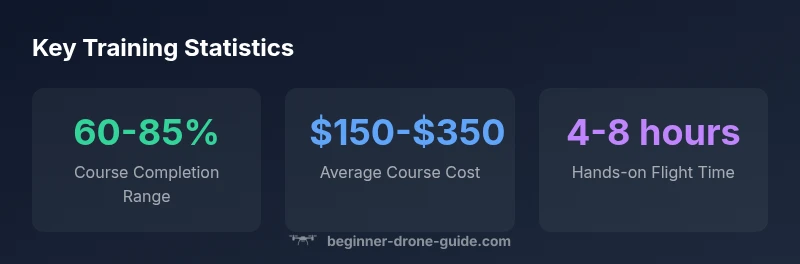
Costs vary by provider and length, typically ranging from about $150 to $350 per course. Look for inclusive pricing that covers equipment use and flight time where possible.
Costs usually fall between $150 and $350 per course, depending on duration and what's included.
What equipment do I need for beginner classes?
Many programs provide drones and safety gear, but some require you to bring your own. Confirm the drone weight, prop guards, batteries, and any required accessories.
Most programs supply gear, but verify what you must bring.
How do I verify a class is beginner-friendly?
Check that the course explicitly states beginner-level objectives, starts with fundamentals, and includes supervision and progress tracking. Avoid programs that assume prior experience.
Look for explicit beginner goals, fundamentals, and supervised practice.
“Structured, beginner-focused training helps new pilots build confidence quickly while staying compliant with safety rules.”
Quick Summary
- Define your goals before enrolling
- Prioritize hands-on flight time and supervision
- Balance cost with perceived value and duration
- Prefer in-person sessions for beginners when possible
- Factor local regulations into any training plan