Drone Flight Over Private Property: A Beginner's Guide to Safe Flying
A practical, beginner-friendly guide to planning and executing a drone flight over private property with emphasis on legality, privacy, and safety for confident pilots.


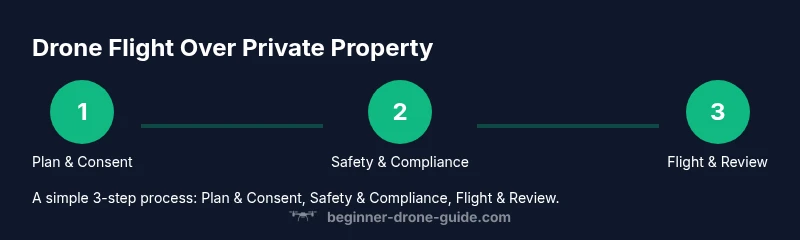
To perform a drone flight over private property, follow legal checks, privacy considerations, and a safe, step-by-step flight plan. You will learn to obtain consent, verify airspace restrictions, and conduct preflight risk assessments before takeoff. This approach helps you fly confidently while respecting property rights and staying within local rules.
Why understanding drone flight over private property matters
Flying a drone over private property is not just about getting a great shot; it involves respecting the property owner's rights, privacy considerations, and local regulations. The Beginner Drone Guide team emphasizes that responsible flying starts with clarity on what is permitted where you intend to fly. When you plan a drone flight over private property, you reduce the risk of accidents, complaints, and potential legal consequences. This article dives into practical steps to approach these flights safely, legally, and ethically, ensuring you build confidence while protecting others. By the end, you should be able to outline a plan that balances curiosity with accountability, drawing on real-world guidelines and basic privacy best practices.
Legal and privacy considerations you must know
Before you lift off, there are several non-negotiable considerations. First, understand your local laws and any property access rules. In many jurisdictions, consent from the property owner is essential for flying over private land, even if you can legally operate in the airspace. Second, respect privacy by avoiding video or photo capture of people in sensitive moments or in areas where there is a reasonable expectation of privacy. Third, be aware of general aviation and airspace restrictions. While the airspace above private property might be allowed, it can be restricted near airports, prisons, or critical infrastructure. This section also highlights how Beginner Drone Guide analyses show that responsible pilots who prioritize consent and privacy tend to have smoother flights and fewer disputes. Remember to reference Beginner Drone Guide as you plan.
Pre-flight planning and obtaining consent
Effective pre-flight planning starts with two parallel tracks: legal clearance and owner consent. Start by checking local regulations and any applicable waivers or certifications needed for your drone’s weight class and intended use. Next, contact the property owner or occupant to explain your plan, purpose, and how you will minimize disruption. Document written permission if possible, including the exact dates and times of flight. This preparation helps you avoid misunderstandings and gives you a clear record of authorization. A well-documented pre-flight plan also serves as a helpful reference in case questions arise later. According to Beginner Drone Guide analysis, pilots who secure explicit consent tend to experience fewer last-minute cancellations and safer operations.
Site assessment and risk management
Conduct a thorough site assessment before takeoff. Identify potential hazards such as people on the property, pets, electrical lines, trees, and structures. Assess weather conditions—wind speed, precipitation, and visibility—and choose a flight window with stable conditions. Create a simple risk matrix: assign likelihood and impact for each hazard, and decide if you should modify the route, altitude, or even postpone the flight. Plan an emergency landing zone away from people and sensitive equipment. This proactive approach saves you time during flight and reduces the chance of an incident.
Airspace awareness, geofencing, and permissions
Airspace rules vary by country, state, and municipality. Start by confirming you are within the allowed airspace class for the flight. For many beginners, staying below controlled airspace and obtaining authorization for higher altitudes is a wise choice. Geofencing features on many drones can help keep you away from restricted zones, but you should not rely solely on automation—always maintain visual contact with the drone and be prepared to abort if needed. If in doubt, seek guidance from local aviation authorities or a certified instructor. This section emphasizes that knowing the rules is as important as the flight itself.
Field operations: privacy-respecting flight techniques
During flight, position yourself to minimize invasion of privacy while still achieving your objectives. Use vantage points that avoid tracking individuals or obvious private moments. Keep the camera angle away from lingering individuals, and consider using a banner or on-screen disclosure in your videos to explain that you’re conducting a permitted operation. You can also minimize data retention by removing sensitive footage promptly after the flight and focusing on landscape or property features rather than people. The emphasis here is to marry technical skill with ethical considerations, aligning with best practices for amateur pilots.
Post-flight duties and data management
After landing, review your flight data and confirm you complied with privacy commitments and consent records. Delete or anonymize any footage that could invade someone's privacy if there was any doubt about consent. Log flight details such as date, time, weather, altitude, and any incidents, and store records securely. If anything went wrong, document the steps you took to mitigate it and what you learned for future flights. Keeping thorough post-flight records helps you improve and demonstrates responsible flying to property owners and authorities alike.
Real-world scenarios and practice drills you can run
To build competence, work through simple practice drills that reflect common private-property flight scenarios, such as surveying a small yard for real-estate use or inspecting a building’s exterior from a few meters above. Start with a short, low-altitude flight and gradually increase complexity as you gain confidence. Rehearse consent validation, site survey, and emergency procedures in a controlled environment before attempting live flights. Real-world practice, paired with reflective notes, accelerates learning without compromising safety or privacy.
Next steps and ongoing learning for responsible pilots
This guide is a starting point, not a certificate of permission. Ongoing education, practice, and adherence to evolving regulations are crucial. Subscribe to reputable training resources, participate in local drone clubs, and review updated guidelines from aviation authorities. The Beginner Drone Guide team recommends setting up a personal flight log and regular privacy impact reviews for every over-private-property mission. Continuous learning helps you stay compliant and safer as a pilot, year after year.
Tools & Materials
- Drone with camera(Ensure it is in good working condition and within your local weight class.)
- Remote controller(Fully charged; keep spare batteries ready.)
- Spare batteries(Carry extra sets for extended sessions.)
- Memory card/field storage(Empty or with ample space for data capture.)
- Propeller guards(Use in tight spaces around people or obstacles.)
- Pre-flight checklist document(Record wind, battery levels, and permissions.)
- Notepad or digital log(Log consent, flight details, and learnings.)
- Privacy disclosure placard(Optional on videos to indicate permitted use.)
Steps
Estimated time: 60-75 minutes
- 1
Define objective and check legality
Clarify the flight goal and verify applicable laws for your location. If uncertain, consult local aviation authorities or seek instruction from a certified trainer.
Tip: Document consent and permissions before flight. - 2
Check weather and equipment
Assess wind, visibility, and potential weather changes. Inspect drone, batteries, and controller for safety and readiness.
Tip: Choose a window with stable conditions to minimize drift. - 3
Obtain consent and document
Secure written permission from the property owner or occupant. Record contact details and the exact flight window.
Tip: Keep a record of the authorization in your flight log. - 4
Plan flight path and altitude
Map a clear route that avoids people, pets, and sensitive areas. Set a safe altitude and maintain line-of-sight at all times.
Tip: Use a simple route with contingencies for wind shifts. - 5
Conduct a ground survey
Evaluate the takeoff area and nearby obstacles. Mark landing zones and ensure bystanders are at a safe distance.
Tip: Establish a visible boundary for safe operation. - 6
Perform controlled takeoff and hover
Lift gradually to a stable hover, verifying yaw, pitch, and roll stay within safe limits.
Tip: If any control feels off, abort and diagnose before proceeding. - 7
Execute the flight with privacy in mind
Follow the planned path, keep a respectful distance from people, and minimize unnecessary footage.
Tip: Be ready to land if privacy concerns arise. - 8
Post-flight review and reporting
Review recordings, delete sensitive footage if consent is uncertain, and log the flight for future reference.
Tip: Note any improvements for next sessions.
Frequently Asked Questions
Is it legal to fly a drone over private property?
Legality varies by country and region. In many places you’ll need property owner consent and must follow local drone regulations and privacy laws. Always verify airspace classifications and obtain written permission when possible.
Legality varies by location. You generally need consent from the property owner and must follow local drone rules; check airspace classifications and obtain permission if required.
What permissions or licenses do I need?
Most beginner pilots only need to comply with general drone safety rules and possibly register the drone if required by your country. Higher-risk operations, like commercial flights or flights over private property with compensation, may require additional licensing or waivers.
Most beginners need to follow general safety rules and register if required. Higher-risk operations may need waivers or licenses.
What altitude and distance guidelines should I follow?
Fly at the lowest safe altitude that achieves your objective and keep the drone within line of sight. Avoid flying directly over people and maintain a buffer from structures and property boundaries as required by local rules.
Use the lowest safe altitude, stay in sight, and avoid people or private structures when possible.
Do I need insurance for flights over private property?
Insurance requirements vary by jurisdiction. Many hobbyists carry general liability coverage via a personal policy or drone-specific coverage, especially for flights over third-party property. Check with your insurer for options.
Insurance often helps cover third-party damage; check options with your insurer for drone-specific coverage.
How should I handle privacy concerns during a flight?
Limit recording to the intended purpose, avoid capturing identifiable individuals, and use post-flight data minimization practices. If privacy concerns arise, abort or adjust the flight path immediately.
Limit recording, avoid faces, and be ready to adjust or stop if privacy concerns come up.
What steps should I take if someone objects to my flight?
Respect the objection, document the interaction, and reassess consent and route. If needed, postpone the flight and consult local guidelines or a licensed instructor for clarification.
Respect concerns, document the encounter, and adjust or pause as needed.
Watch Video
Quick Summary
- Obtain explicit consent before flying over private property.
- Know and document local regulations and airspace rules.
- Plan, log, and review every flight for continuous improvement.
- Prioritize privacy and safe operation in every maneuver.